Introduction
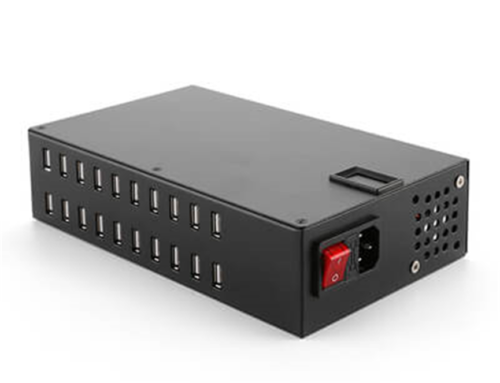
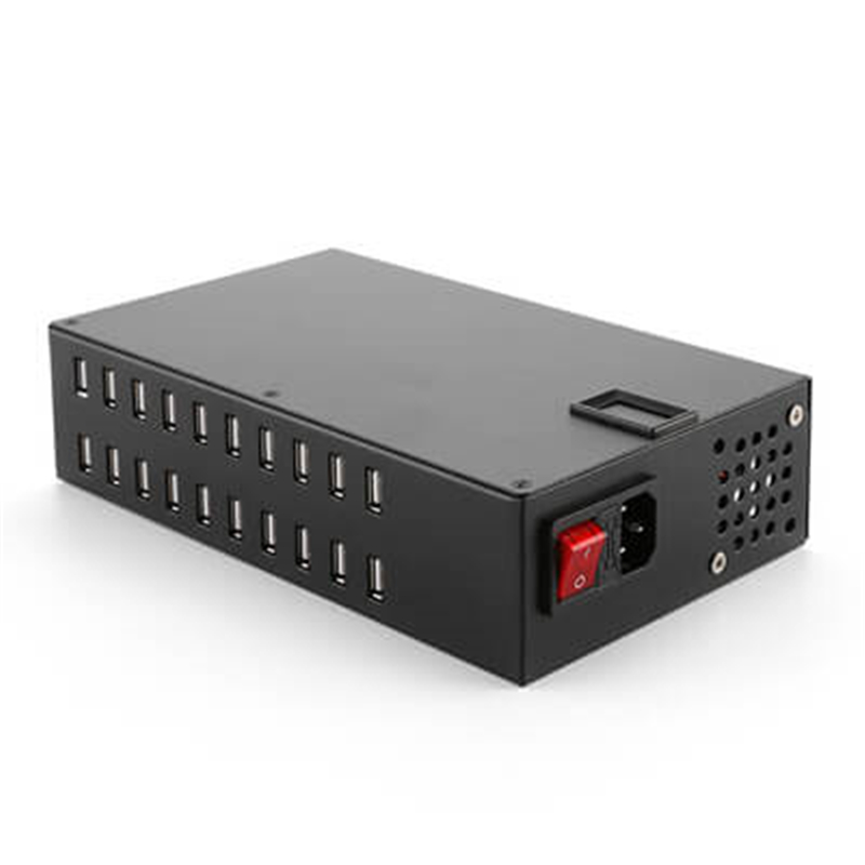
22 Port USB Hub provides a high-capacity solution for expanding USB connectivity and connecting multiple peripherals to a computer. External drives, keyboards, mice, USB flash drives, card readers, printers, testing equipment, and other peripherals can quickly consume the limited USB connections available on a computer.
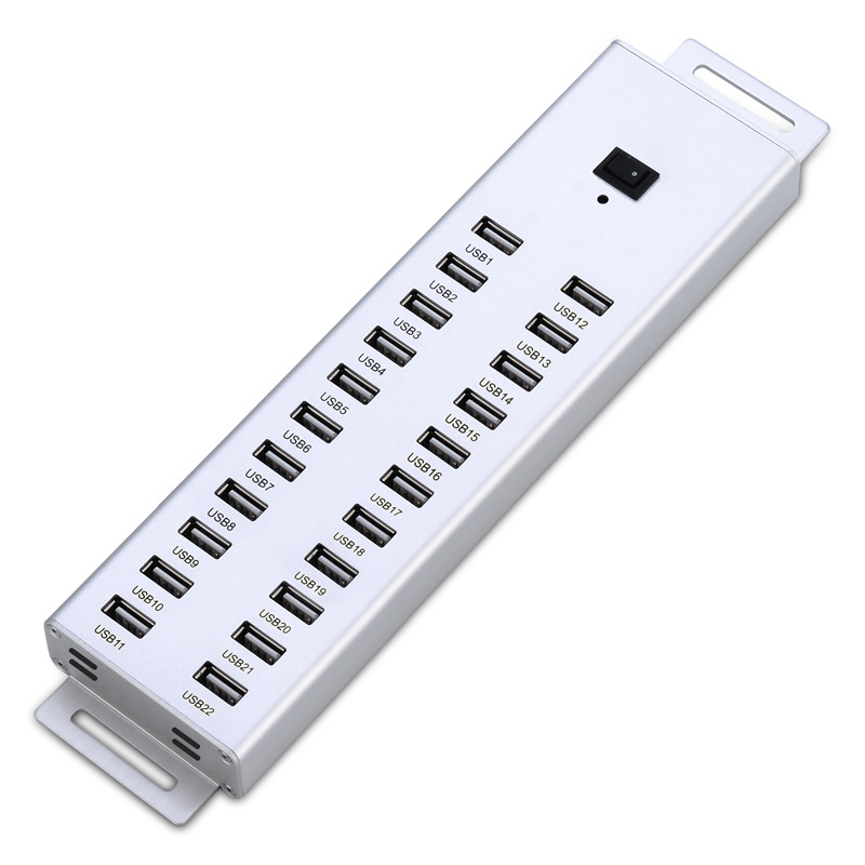
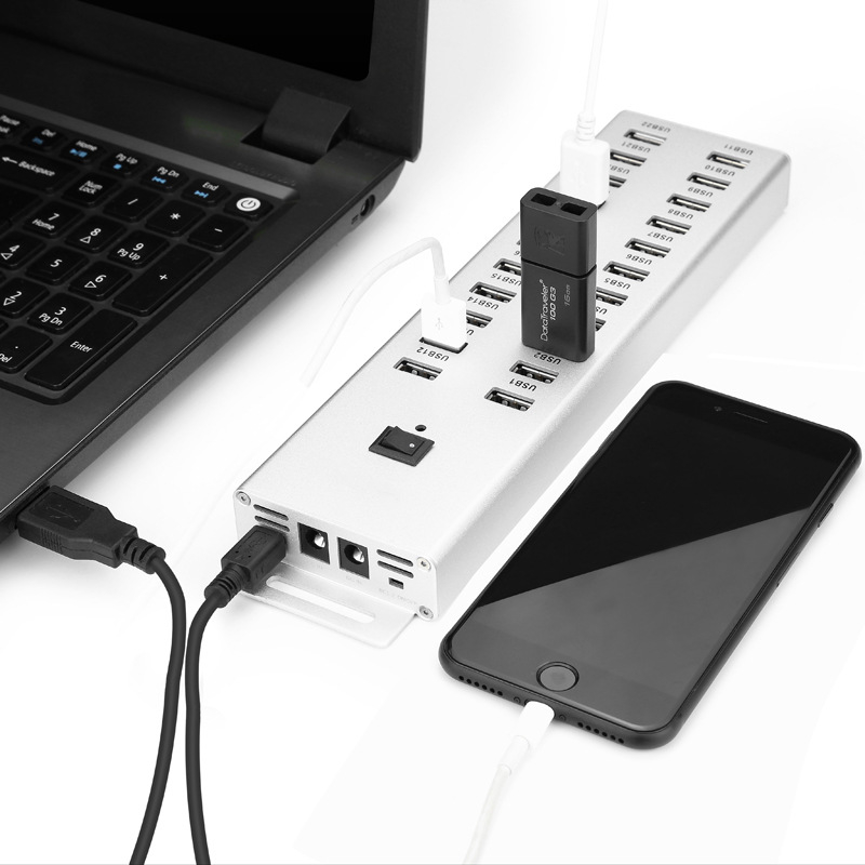
The 22 Port USB 2.0 HUB provides a high-capacity solution for expanding USB connectivity. With 22 USB ports, it is designed for environments where a large number of USB devices need to be connected to a centralized hub.
The product is categorized as a USB 2.0 HUB and Data & Hub, making it suitable for general USB connectivity and data-related workflows. Its high port count can be particularly useful in professional workstations, IT environments, laboratories, service areas, educational facilities, and other locations where multiple USB peripherals are used.
Because the supplied product information does not specify power-supply capacity, individual-port charging output, transfer-rate details beyond the USB 2.0 classification, mounting hardware, cooling system, or specific device compatibility, those specifications should be confirmed separately before purchase.
What Is a 22 Port USB 2.0 HUB?
A 22 Port USB 2.0 HUB is a USB expansion device designed to provide a large number of additional USB connections from a compatible host computer or system.
Instead of repeatedly connecting and disconnecting individual peripherals from a computer’s built-in USB ports, users can connect multiple devices to the hub and manage them from one centralized location.
The key defining feature of this product is its 22-port configuration.
This high port count makes it particularly useful for situations where many USB peripherals need to remain connected at the same time.
Typical examples can include:
- USB flash drives
- External storage devices
- Keyboards
- Mice
- Printers
- Card readers
- USB accessories
- Testing equipment
- Other compatible USB peripherals
The exact devices that can be connected depend on the requirements of the host computer, the hub, the USB devices, and the available power.

Key Feature: 22 USB Ports
The biggest advantage of this product is its 22 USB-port capacity.
A standard computer may only provide a limited number of USB connections. A high-capacity hub allows users to expand the number of available USB connections without repeatedly reaching behind the computer or disconnecting existing equipment.
For a workstation with numerous peripherals, this can make device management much more convenient.
A centralized 22-port configuration can be useful for:
- IT workstations
- Testing stations
- Computer laboratories
- Offices
- Educational environments
- Technical workspaces
- Device-management areas
- Service centers
- Shared workstations
The actual number of simultaneously usable devices can depend on the computer, hub architecture, device power requirements, and system resources.
USB 2.0 Connectivity
The 22 Port HUB is categorized as a USB 2.0 HUB.
USB 2.0 is a widely used USB standard designed for connecting computers and peripherals for data communication.
USB 2.0 can support a wide range of common peripherals, including input devices, storage accessories, printers, and other USB-compatible equipment.
However, users should remember that a USB 2.0 hub does not increase the performance capability of a connected USB device.
For example, connecting a USB 2.0 device through the hub means the device continues to operate according to its own supported USB standard.
Similarly, users should not assume that a USB 2.0 hub provides USB 3.x-level transfer performance.
High-Capacity USB Expansion for Workstations
One of the main reasons to choose a 22-port hub is convenience.
Without an external hub, users may have to:
- Connect a device directly to the computer.
- Disconnect another peripheral when the available ports are full.
- Reconnect devices whenever another peripheral is required.
A high-capacity hub provides an alternative approach.
Multiple peripherals can be connected to the hub, creating a more centralized workstation setup.
This can be especially useful for professionals who regularly switch between different USB devices or need several peripherals available simultaneously.
Applications of the 22 Port USB 2.0 HUB
IT Departments
IT professionals often work with numerous USB peripherals during device setup, maintenance, testing, and troubleshooting.
A high-port-count hub can help create a centralized connectivity point for these workflows.

Computer Laboratories
Educational and training environments may use multiple USB devices for practical lessons, testing, and computer-based activities.
The 22-port design can help expand connectivity where additional USB access is required.
Office Workstations
Modern office desks can contain keyboards, mice, printers, external storage, USB headsets, card readers, and other peripherals.
A multi-port hub can help consolidate these connections.
Technical Workstations
Technicians and engineers may need to connect multiple USB devices while testing or configuring equipment.
A high-capacity USB hub can make the workstation easier to organize.
Device Testing
Testing environments can require several USB-connected devices at the same time.
The 22-port configuration provides substantial connectivity capacity for compatible testing setups.
Technical Specifications
| Specification | Details |
| Product | 22 Port USB 2.0 HUB |
| Number of Ports | 22 |
| USB Standard | USB 2.0 |
| Product Category | Data & Hub |
| Hub Type | USB 2.0 HUB |
| Connectivity Purpose | USB device expansion |
| Charging Output | Not specified |
| Power Supply | Not specified |
| Individual Port Current | Not specified |
| Mounting | Not specified |
| Cooling | Not specified |
| Data Transfer Rate | Specific rate not provided |
| Intended Use | Multi-device USB connectivity |
Note: The available product information only identifies the hub as a 22-port USB 2.0 device. Exact electrical, power, transfer, mounting, and physical specifications should be confirmed from the product datasheet before purchase.
Understanding USB 2.0 Hub Performance
A hub provides additional USB connections, but it does not create unlimited bandwidth.
When multiple devices communicate through the same hub, available USB bandwidth is shared according to the system architecture and connected-device activity.
This means that actual data-transfer performance can vary depending on:
- Number of active devices
- Type of connected devices
- Data being transferred
- Host computer
- USB controller
- Cables
- Operating system
- Software
- Overall system workload
For simple peripherals such as keyboards and mice, USB 2.0 connectivity is generally suitable for their typical data requirements.
For high-volume data-transfer applications, users should evaluate whether USB 2.0 provides the required performance.
22 Port Hub vs. Standard USB Hub
| Feature | 22 Port USB 2.0 HUB | Standard USB Hub |
| Port Count | 22 | Usually fewer |
| USB Standard | USB 2.0 | Depends on model |
| Connectivity Expansion | High capacity | Varies |
| Multiple Peripherals | Designed for many devices | Depends on port count |
| Charging Capability | Not specified | Depends on model |
| Data Transfer | USB 2.0 | Depends on model |
| Professional Workstation Use | Suitable for high-port requirements | Depends on configuration |
| Power Specifications | Not provided | Varies |
The primary distinction is the 22-port capacity. Users who need only a few additional connections may not require such a high-port-count hub, while users with many peripherals can benefit from centralized connectivity.

Benefits of a High-Port-Count USB Hub
Centralized Connectivity
Instead of spreading devices across multiple locations, users can connect many compatible peripherals through one hub.
Reduced Port Switching
A large number of available ports can reduce the need to repeatedly disconnect one device to connect another.
Better Workspace Organization
Centralizing USB connections can help create a cleaner and more organized workstation.
Flexible Peripheral Management
Users can keep multiple compatible USB devices connected and ready for use.
Suitable for Shared Workstations
A high-capacity hub can be useful in environments where several USB peripherals are regularly used by the same workstation.
How to Use a 22 Port USB 2.0 HUB
Setting up a USB hub is generally straightforward, although the exact installation procedure depends on the specific hardware configuration.
Step 1: Choose the Location
Place the hub where the connected USB devices can be accessed comfortably.
Step 2: Connect the Hub
Connect the hub to the appropriate USB connection on the host computer according to the manufacturer’s instructions.
Step 3: Connect USB Devices
Attach compatible peripherals to the available USB ports.
Step 4: Allow Device Recognition
The computer’s operating system should detect compatible USB devices according to its normal device-recognition process.
Step 5: Test the Connected Devices
Confirm that the required peripherals are recognized and functioning correctly.
If a device does not operate correctly, check the USB cable, device requirements, available power, operating-system support, and manufacturer documentation.
Best Practices for Using a 22 Port USB Hub
Check Device Requirements
Before connecting many peripherals, verify their power and connectivity requirements.
This is especially important for devices that consume more power than simple USB peripherals.
Avoid Overloading the Hub
Because the supplied specifications do not state the hub’s power-supply capacity, users should not assume that all 22 ports can provide high-power charging simultaneously.
Use Suitable Cables
Good-quality USB cables can help maintain reliable connectivity and reduce communication problems.
Organize Cables
With 22 potential connections, cable management becomes increasingly important. Labeling cables and grouping devices can make troubleshooting easier.
Consider Bandwidth
If several devices transfer large amounts of data simultaneously, USB bandwidth can become a limiting factor.
For high-speed storage or other bandwidth-intensive applications, users should confirm that USB 2.0 meets their requirements.
What to Consider Before Buying
Number of Ports
If you regularly need to connect more than a few peripherals, the 22-port configuration can provide substantial expansion capacity.
USB Standard
The product is categorized as USB 2.0. Confirm that USB 2.0 performance is suitable for your devices and workflow.
Power Requirements
The available specification does not state the hub’s power-supply rating or individual-port output. If you intend to connect power-hungry devices, verify these details before purchasing.
Data Requirements
Consider how much data your devices transfer. USB 2.0 may be suitable for many everyday peripherals but may not be the appropriate choice for every high-speed storage workflow.
Physical Installation
If the hub will be installed in a fixed workstation, verify its physical dimensions and mounting options, since these details were not provided.
Device Compatibility
Check compatibility with the operating system, peripherals, cables, and software used in your environment.
Who Can Benefit from a 22 Port USB 2.0 HUB?
This high-capacity hub can be relevant to users and organizations that regularly manage numerous USB-connected peripherals.
Potential users include:
- IT professionals
- Office administrators
- Computer laboratories
- Schools and training centers
- Technical teams
- Service centers
- Device-testing environments
- Shared workstations
- Businesses with multiple USB peripherals
- Electronics and computer technicians
For a user who only needs one or two additional USB ports, a smaller hub may be more appropriate. The 22-port design is primarily useful when high connection capacity is an important requirement.
Frequently Asked Questions
How many USB ports does this hub have?
The product provides 22 USB ports.
Is the hub USB 2.0?
Yes. The product is categorized as a USB 2.0 HUB.
What is the maximum data-transfer speed?
The supplied product information does not provide a specific transfer-rate figure. Because it is a USB 2.0 hub, users should verify the exact manufacturer’s specification if a particular data-transfer speed is required.
Does it charge smartphones or tablets?
The available specifications do not state a dedicated charging output or per-port charging current. Charging capability should therefore be confirmed before using it as a charging solution.
Does it have a built-in power supply?
A power-supply specification was not provided. Users should confirm whether the particular configuration is externally powered before purchasing.
Can I connect 22 devices simultaneously?
The hub has 22 USB ports, but the practical number of simultaneously usable devices depends on the devices, available power, host computer, USB architecture, and system resources.
Is it suitable for offices?
Yes. A high-port-count USB hub can be useful in offices where a workstation needs to connect many compatible USB peripherals.
Is it suitable for IT environments?
Yes. Its high number of USB ports makes it potentially useful for IT workstations and other multi-device environments, provided the connected devices are compatible with USB 2.0 and the hub’s power capabilities.
Is it a USB 3.0 hub?
No. The supplied product information categorizes it as a USB 2.0 HUB. Users requiring USB 3.x performance should select a hub designed for the appropriate USB standard.
Conclusion
The 22 Port USB 2.0 HUB is designed for users who need a large number of USB connections in a centralized setup.
Its defining feature is its 22-port capacity, providing substantial USB expansion for offices, IT environments, technical workstations, computer laboratories, service centers, and other multi-device locations.
As a USB 2.0 hub, it is suited to compatible peripherals and connectivity workflows where USB 2.0 performance meets the application’s requirements. The high port count can help reduce the need for repeated port switching and provide a more organized way to manage multiple USB devices.
Because the supplied specifications do not include details such as power-supply capacity, charging output, exact data-transfer rate, cooling, or mounting, these details should be verified before purchase when they are important to the intended installation.
For organizations and professionals looking for high-capacity USB connectivity, the 22 Port USB 2.0 HUB provides a practical centralized approach to expanding the number of available USB connections.