Introduction
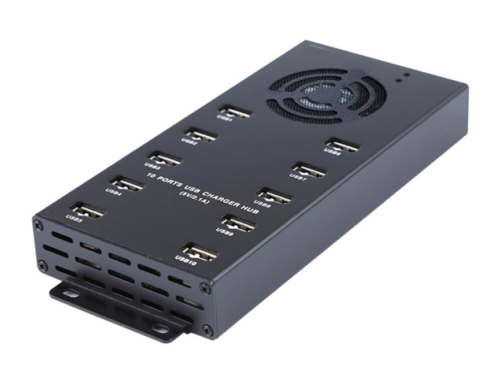
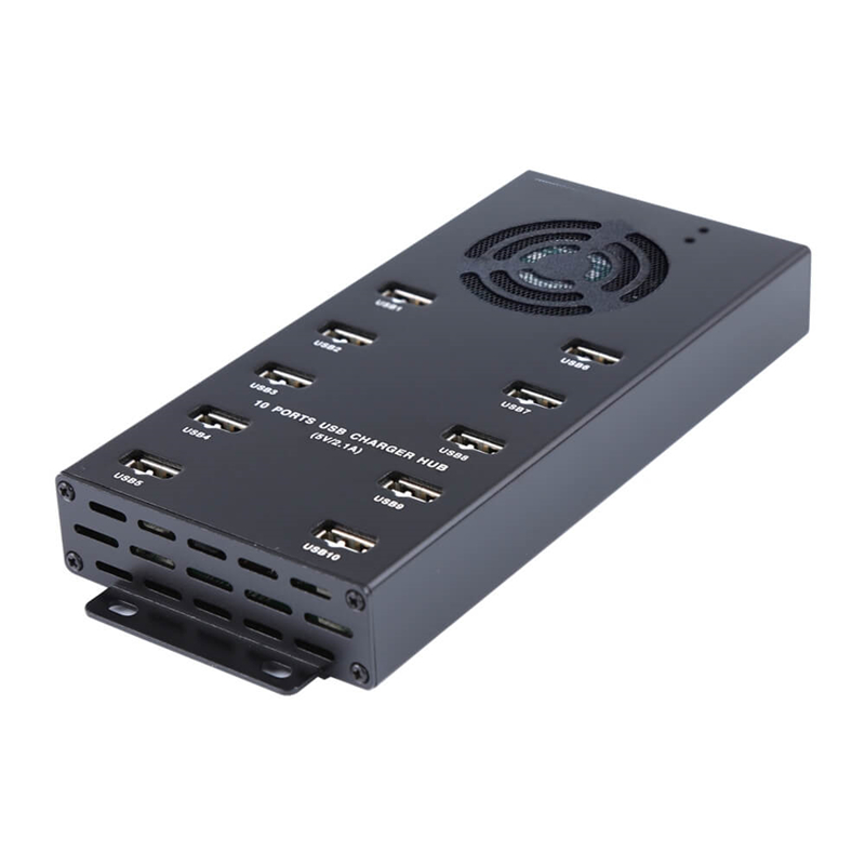
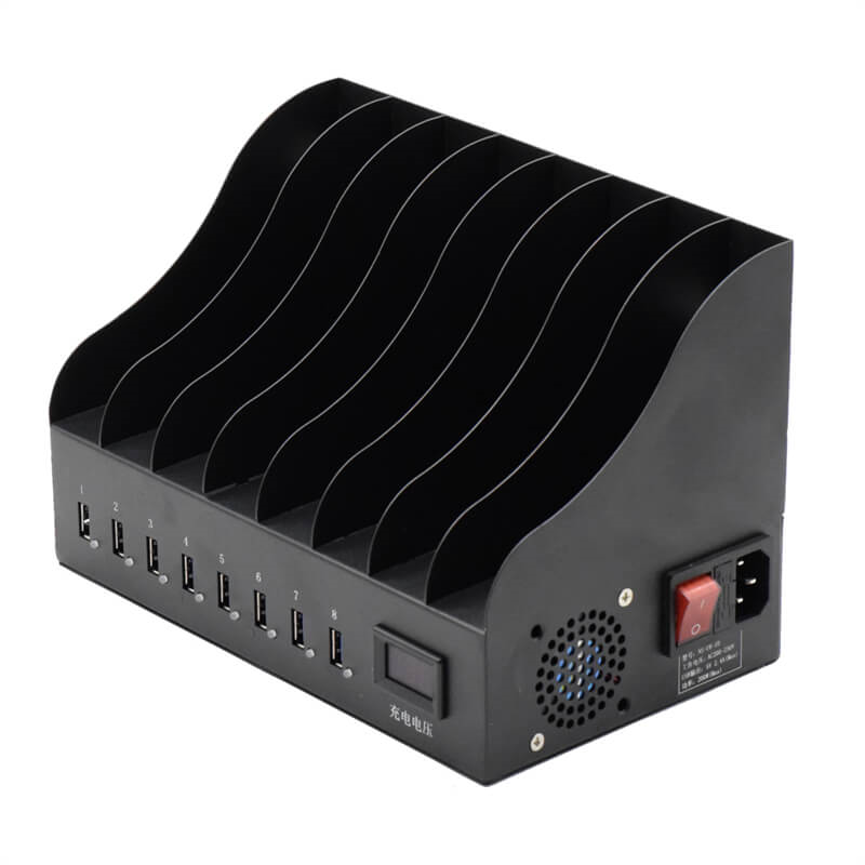
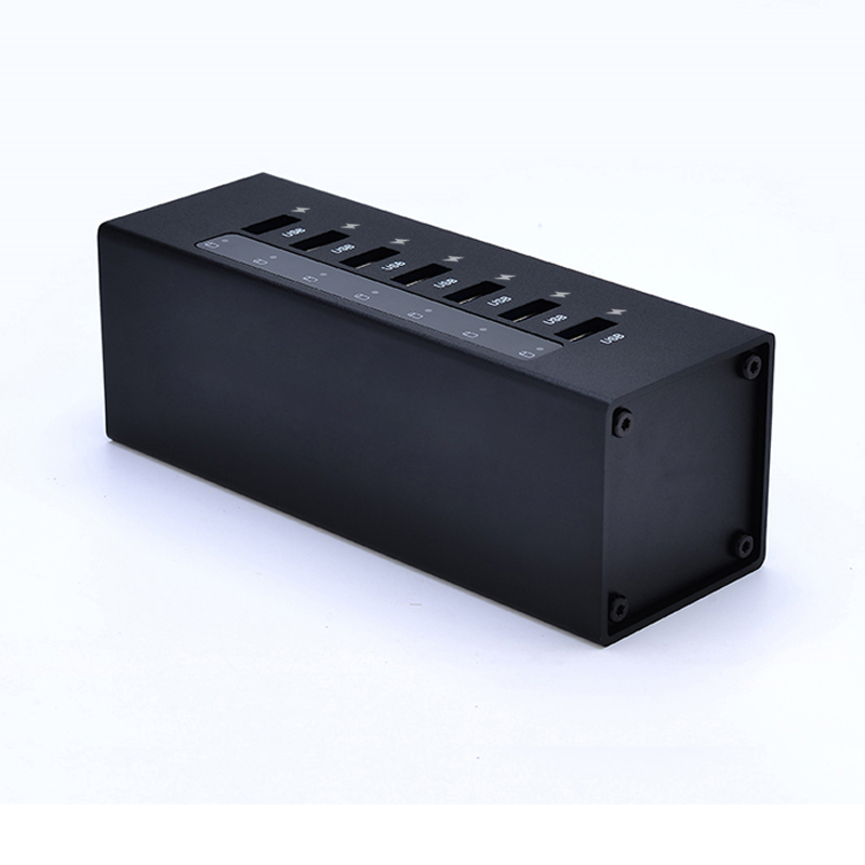
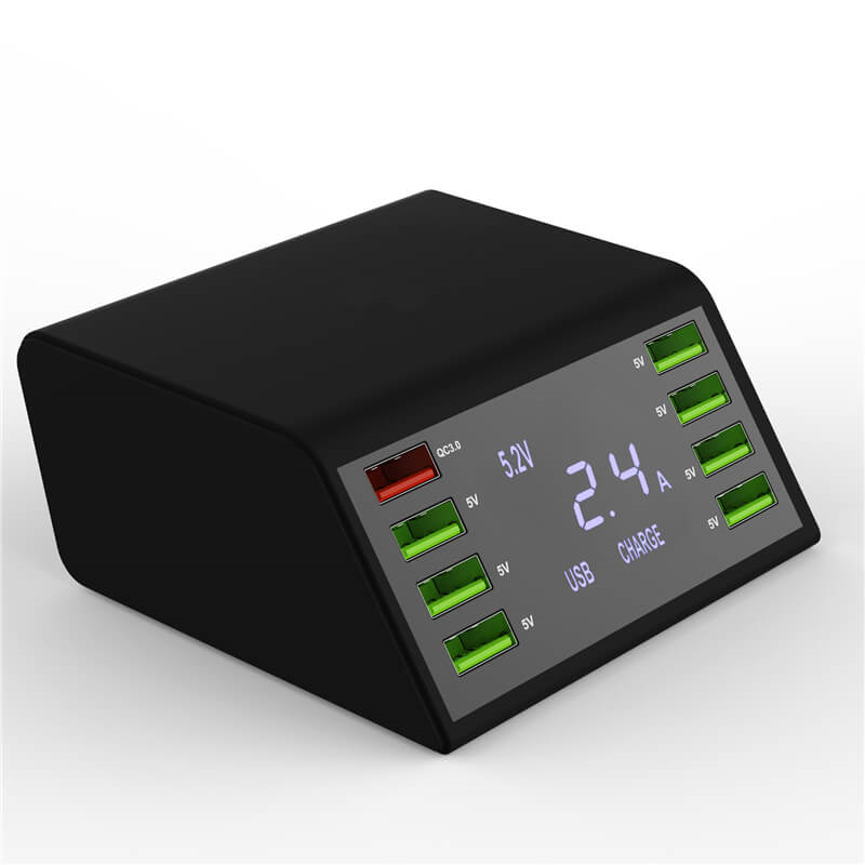
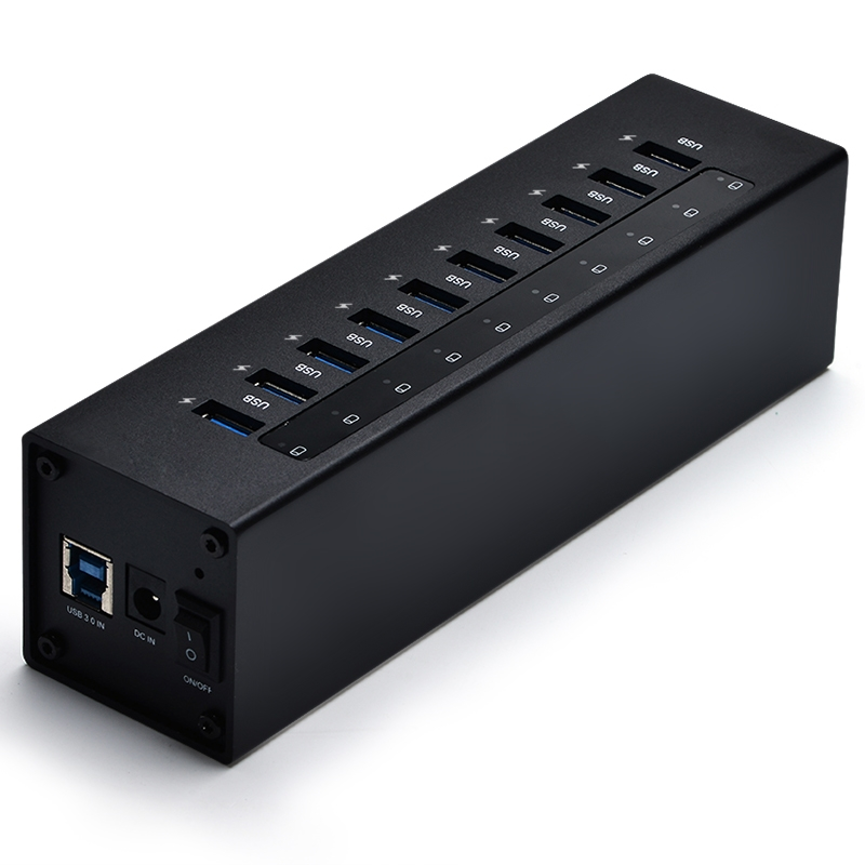
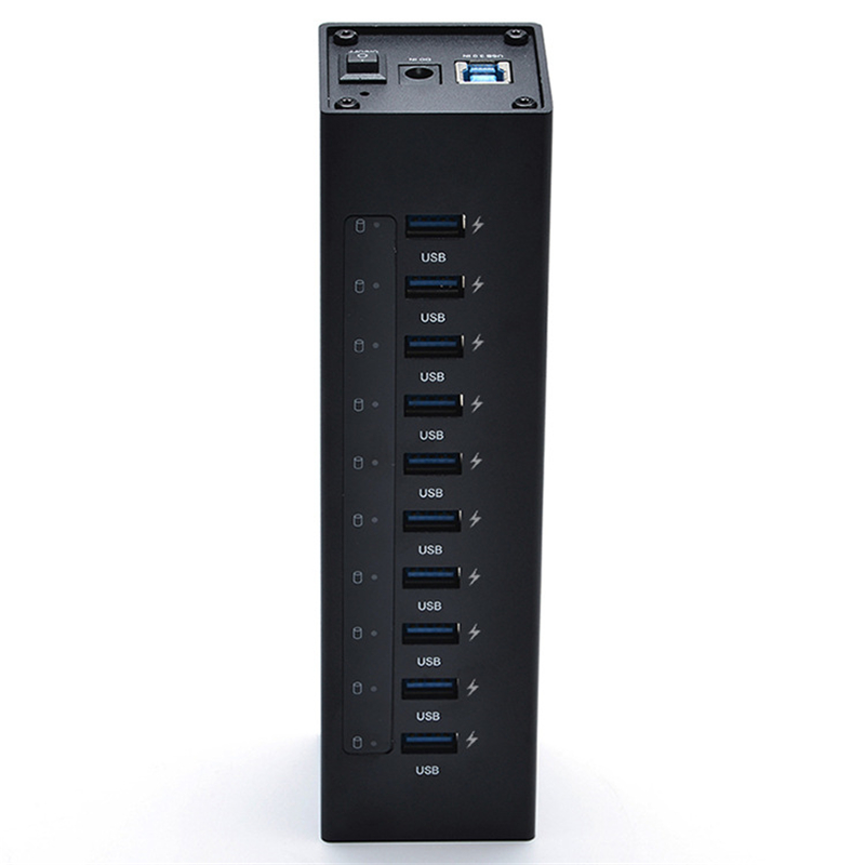
The 10 Port USB 3.0 HUB B-10A provides a practical way to expand USB connectivity by adding 10 additional USB SuperSpeed ports.
The 10 Port USB 3.0 HUB B-10A provides a practical way to expand USB connectivity by adding 10 additional USB SuperSpeed ports. Designed around the USB 3.0 standard, the hub supports a maximum data transfer rate of up to 5Gbps, making it suitable for applications where multiple USB devices need high-speed data connectivity.
The B-10A also features an industrial-grade rugged metal enclosure, giving it a durable physical design for demanding environments. Its over-current detection and protection circuit adds another important layer of protection by helping detect excessive current conditions.
Whether used for a professional workstation, technical environment, data-transfer setup, or applications involving multiple USB devices, the B-10A combines high-speed connectivity with a rugged design and 10-port expansion.
What Is the 10 Port USB 3.0 HUB B-10A B-10A?
The B-10A is a 10-port USB 3.0 hub designed to expand the number of USB connections available to a host system.
Instead of relying only on the limited number of USB ports built into a computer or other host device, the B-10A provides 10 additional USB SuperSpeed ports. This allows users to connect multiple compatible USB devices through a single hub.
The hub complies with the Universal Serial Bus 3.0 Specification and supports a maximum theoretical data transfer rate of 5Gbps.
Its rugged metal enclosure makes the B-10A particularly relevant to professional and industrial-style installations where durability and organized connectivity are important.
Key Product Highlights
- Model: B-10A
- 10 additional USB SuperSpeed ports
- Compliant with USB 3.0 standards
- Maximum data transfer rate of up to 5Gbps
- Industrial-grade rugged metal enclosure
- Over-current detection and protection circuit
- Designed for multi-device USB connectivity
- Suitable for professional and industrial-style environments
Key Specifications
| Specification | Details |
| Product | 10 Port USB 3.0 HUB |
| Model | B-10A |
| USB Standard | USB 3.0 |
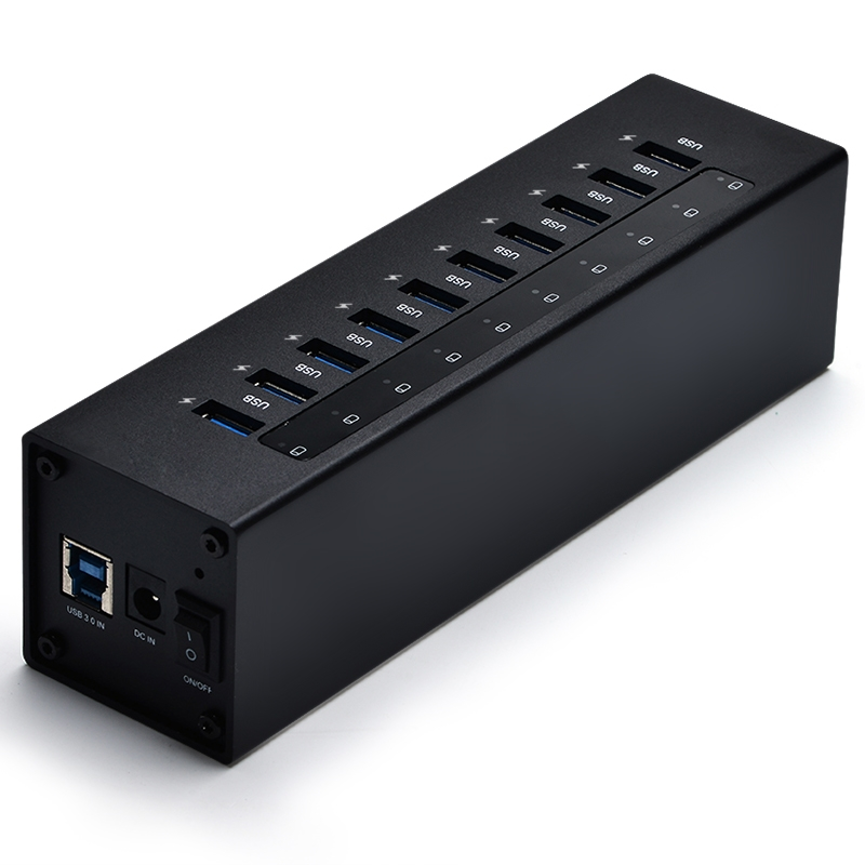
| Number of Ports | 10 additional USB SuperSpeed ports |
| Maximum Data Transfer Rate | Up to 5Gbps |
| Enclosure | Industrial-grade rugged metal |
| Protection | Over-current detection and protection circuit |
| USB Compliance | Universal Serial Bus 3.0 Specification |
| Product Category | Data & Hub / USB 3.0 HUB |
Important: The stated 5Gbps is the maximum data transfer rate supported by the USB 3.0 standard. Actual transfer speeds can vary depending on the host computer, connected device, storage media, USB cable, file type, and overall system configuration.
10 SuperSpeed USB 3.0 Ports for Expanded Connectivity
One of the main advantages of the B-10A is its 10-port configuration. Many modern computers and workstations have a limited number of USB connections, which can become inconvenient when several peripherals need to be connected simultaneously.
The B-10A addresses this limitation by providing 10 additional USB SuperSpeed ports.
This expanded connectivity can be useful when working with multiple USB peripherals, storage devices, data-transfer equipment, or other compatible accessories.
Instead of repeatedly disconnecting one device to connect another, users can keep multiple compatible devices connected through the hub, creating a more organized workstation.
Why 10 Ports Matter
A higher port count is particularly useful in environments where USB connectivity is frequently required.
For example, a technical workstation may need to connect several storage devices and peripherals at the same time. A data-management setup may also require multiple USB connections during a transfer or testing workflow.
The B-10A provides the physical port expansion needed for these multi-device environments.
USB 3.0 and Up to 5Gbps Data Transfer
The B-10A is compliant with USB 3.0 standards and supports a maximum data transfer rate of up to 5Gbps.
USB 3.0 is commonly associated with the SuperSpeed USB specification and provides significantly greater theoretical bandwidth than older USB 2.0 connections.
This makes the B-10A suitable for tasks where data needs to move between a host system and connected USB devices efficiently.
Understanding the 5Gbps Rating
The 5Gbps figure represents the maximum theoretical interface data rate. It should not be interpreted as a guaranteed real-world file-copy speed.
Actual performance depends on several factors, including:
- Host computer capabilities
- Connected USB device
- Storage device performance
- USB cable quality
- File sizes and types
- Host system workload
- USB device compatibility
- Shared bandwidth among connected devices
For example, if a USB 2.0 device is connected through the B-10A, that device remains limited by its own USB 2.0 capabilities. Connecting an older device to a USB 3.0 hub does not upgrade the device itself to USB 3.0 performance.
Industrial-Grade Rugged Metal Enclosure
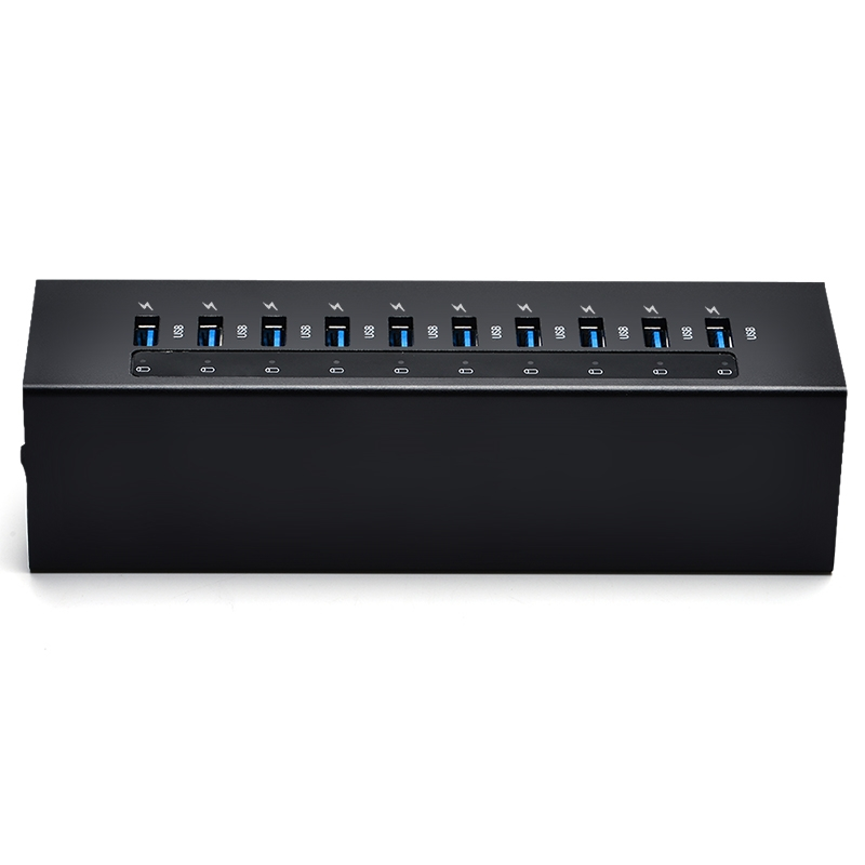
The B-10A features an industrial-grade rugged metal enclosure, providing a stronger physical housing than a typical lightweight consumer USB hub.
A metal enclosure can be especially useful in professional installations where equipment may be handled frequently or installed in a fixed technical environment.
The rugged construction complements the hub’s intended role as a multi-port connectivity solution for professional, technical, and industrial-style applications.
Benefits of a Rugged Enclosure
A durable enclosure can help provide:
- Better physical protection
- A professional appearance
- Greater suitability for technical workspaces
- More confidence in frequent-use environments
- A practical design for fixed installations
The metal housing also makes the B-10A a natural fit for workstations where durability is more important than a small, lightweight consumer design.
Over-Current Detection and Protection
Another important feature of the B-10A is its over-current detection and protection circuit design.
USB-connected equipment can have different power and current requirements. An excessive-current condition can create an undesirable situation for connected hardware.
The B-10A’s protection circuitry is designed to detect and protect against over-current conditions.
This feature is particularly relevant in multi-device environments because several USB peripherals may be connected to the hub at the same time.
Why Over-Current Protection Matters
Protection features can be valuable when a hub is being used as a central connection point for multiple devices.
While users should always operate USB equipment within the manufacturer’s specifications, built-in over-current protection provides an additional layer of system protection.
It is important to distinguish over-current protection from other electrical protection features. The supplied specifications specifically identify over-current detection and protection; they do not specify additional protections such as over-voltage, short-circuit, or surge protection.
Practical Applications of the B-10A
The 10 Port USB 3.0 HUB B-10A can be useful in a range of professional and technical scenarios.
1. Professional Workstations
Modern workstations can involve multiple USB peripherals and storage devices. The B-10A provides 10 additional USB 3.0 ports, helping users organize their connectivity around one multi-port hub.
2. Data Transfer Workflows
High-speed USB connectivity can be useful when transferring files between compatible storage devices and a host computer.
The up-to-5Gbps interface makes the B-10A suitable for workflows that benefit from USB 3.0 bandwidth.
3. SSD and Storage Applications
The supplied product tags include SSD card duplicator, indicating relevance to storage-oriented workflows.
When used with compatible storage equipment, a multi-port USB 3.0 hub can provide additional USB connections for data-management tasks.
However, the B-10A itself should not automatically be described as an SSD duplicator. The supplied specifications identify it as a USB 3.0 HUB, while the SSD card duplicator tag indicates a related application or positioning.
4. IT and Technical Environments
IT departments and technical workstations frequently need to connect multiple USB devices for testing, configuration, maintenance, or data transfer.
The B-10A’s 10-port design can simplify these environments by increasing the available USB connections.
5. Industrial-Style Installations
The rugged metal enclosure makes the B-10A appropriate for environments where a more durable housing is preferred over a basic consumer-style plastic hub.
B-10A vs. a Standard USB Hub
Not every USB hub is designed for the same environment. A basic hub may focus primarily on providing a few additional USB connections, while the B-10A combines a higher port count with USB 3.0 SuperSpeed connectivity and a rugged enclosure.
| Feature | B-10A | Basic USB Hub |
| Number of Additional Ports | 10 | Varies |
| USB Standard | USB 3.0 | Varies |
| Maximum Interface Rate | Up to 5Gbps | Varies |
| Enclosure | Rugged metal | Varies |
| Over-Current Protection | Yes, specified | Varies |
| Professional/Industrial Design | Yes | Varies |
| Multi-Device Connectivity | Yes | Yes |
The B-10A’s combination of 10 ports, USB 3.0 connectivity, rugged construction, and over-current protection makes it particularly suited to users who need more than basic USB expansion.
How to Use a 10 Port USB 3.0 HUB
Using a multi-port USB hub is generally straightforward.
Step 1: Connect the Hub to the Host
Connect the B-10A to the compatible host system using the appropriate USB connection and cable for the installation.
Step 2: Connect USB Devices
Connect compatible USB 3.0 or other supported USB devices to the available ports.
Step 3: Check Device Recognition
Allow the host operating system to detect the connected devices. Depending on the device and operating system, additional software or drivers may be required.
Step 4: Begin Your Workflow
Once the devices are recognized, they can be used for their intended functions, such as data transfer, storage access, or peripheral connectivity.
Step 5: Monitor Connected Equipment
When using multiple devices simultaneously, ensure that all connected equipment is compatible with the hub and operates within its intended specifications.
Best Practices for Using the B-10A
To get the most reliable performance from a USB 3.0 hub, users should follow several practical guidelines.
Use Suitable USB Cables
A high-speed USB 3.0 connection requires compatible cabling. Using an unsuitable or lower-standard cable can affect achievable performance.
Use USB 3.0-Compatible Devices for Maximum Speed
The 5Gbps maximum interface rate applies to compatible USB 3.0 connections. Older USB devices may operate at their own supported standard and speed.
Avoid Confusing Interface Speed with Real-World Speed
The 5Gbps specification is a theoretical maximum interface rate. File-transfer performance will normally be lower because of protocol overhead, storage limitations, device performance, and other system factors.
Keep High-Bandwidth Workloads in Mind
When several devices are transferring data simultaneously, overall system performance can depend on how the host system and USB architecture manage shared bandwidth.
Check Device Compatibility
Before using the B-10A in a specialized environment, confirm that the connected devices and host system support the required USB standards and operating requirements.
What to Consider Before Choosing a 10-Port USB Hub
When selecting a multi-port USB hub, consider more than the number of ports.
Port Count
If several USB devices need to remain connected simultaneously, a 10-port design can be more convenient than a smaller hub.
USB Standard
Users who regularly transfer data should check the USB standard supported by both the hub and connected devices.
Data Transfer Requirements
If high-speed data transfer is important, USB 3.0 connectivity and the stated up-to-5Gbps maximum interface rate are key considerations.
Physical Construction
For demanding environments, a rugged metal enclosure may be preferable to a lightweight consumer-oriented design.
Protection Features
Over-current detection and protection can be an important consideration for multi-device installations.
Frequently Asked Questions
What is the B-10A USB hub?
The B-10A is a 10-port USB 3.0 HUB designed to add 10 additional USB SuperSpeed ports to a compatible host system.
How many ports does the B-10A have?
The B-10A provides 10 additional USB SuperSpeed ports.
What is the maximum data transfer rate?
The B-10A supports a maximum data transfer rate of up to 5Gbps, based on the USB 3.0 specification.
Is the B-10A a USB 3.0 hub?
Yes. The B-10A is compliant with USB 3.0 standards and the Universal Serial Bus 3.0 Specification.
Does the B-10A have over-current protection?
Yes. The product specification identifies an over-current detection and protection circuit design.
Is the B-10A suitable for industrial environments?
The B-10A features an industrial-grade rugged metal enclosure, making its physical design suitable for professional and industrial-style applications.
Can I connect USB 2.0 devices to the B-10A?
USB 3.0 hubs can generally work with compatible earlier USB devices, but the connected device operates according to its own supported USB standard and performance capabilities. For the best available USB 3.0 performance, use compatible USB 3.0 devices and cables.
Does 5Gbps mean every connected device will transfer data at 5Gbps?
No. 5Gbps is the maximum theoretical USB 3.0 interface rate. Actual performance depends on the host, connected devices, cables, storage performance, workload, and other system factors.
Is the B-10A an SSD card duplicator?
The product tags identify SSD card duplicator as a related tag, but the supplied technical specifications describe the B-10A as a 10-port USB 3.0 HUB. It should therefore not be presented as a dedicated duplicator unless the manufacturer provides additional functionality confirming that capability.
Conclusion
The 10 Port USB 3.0 HUB B-10A is designed for users who need expanded USB connectivity combined with high-speed data capability and a durable physical design.
With 10 additional USB SuperSpeed ports, USB 3.0 compliance, and a maximum data transfer rate of up to 5Gbps, the hub provides a practical connectivity solution for professional workstations, technical environments, data-transfer workflows, and other multi-device applications.
Its industrial-grade rugged metal enclosure adds durability, while the over-current detection and protection circuit provides an important layer of protection for multi-device operation.
For users who need more USB connections without giving up USB 3.0 SuperSpeed capability, the B-10A offers a purpose-built solution focused on connectivity, durability, and efficient data access.