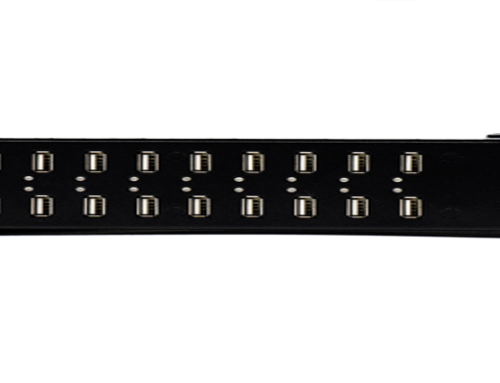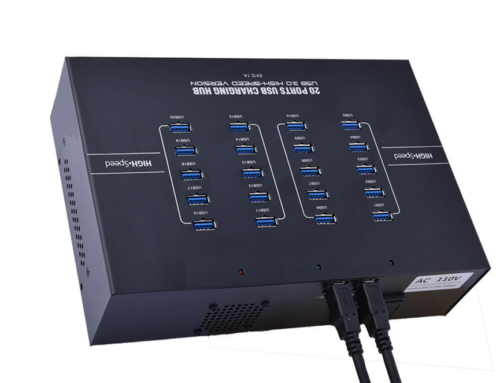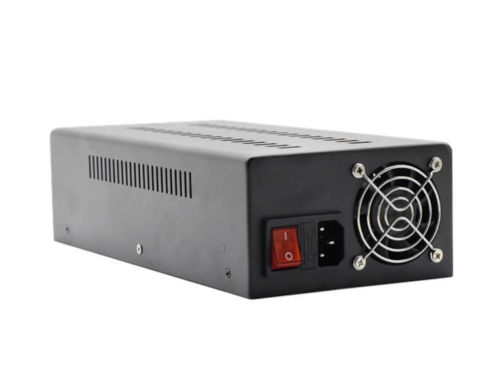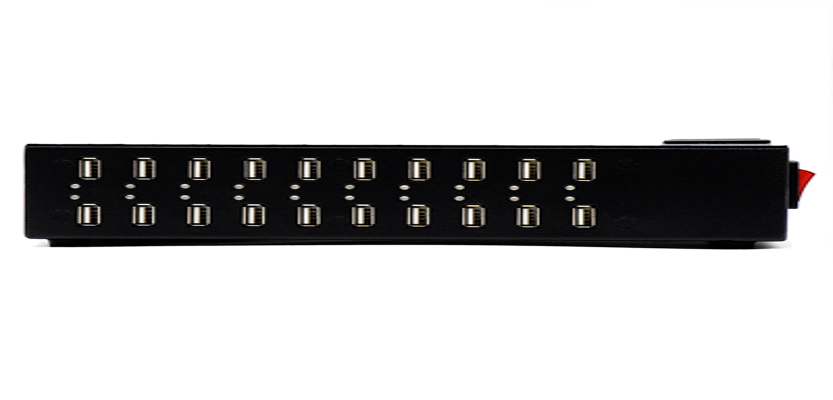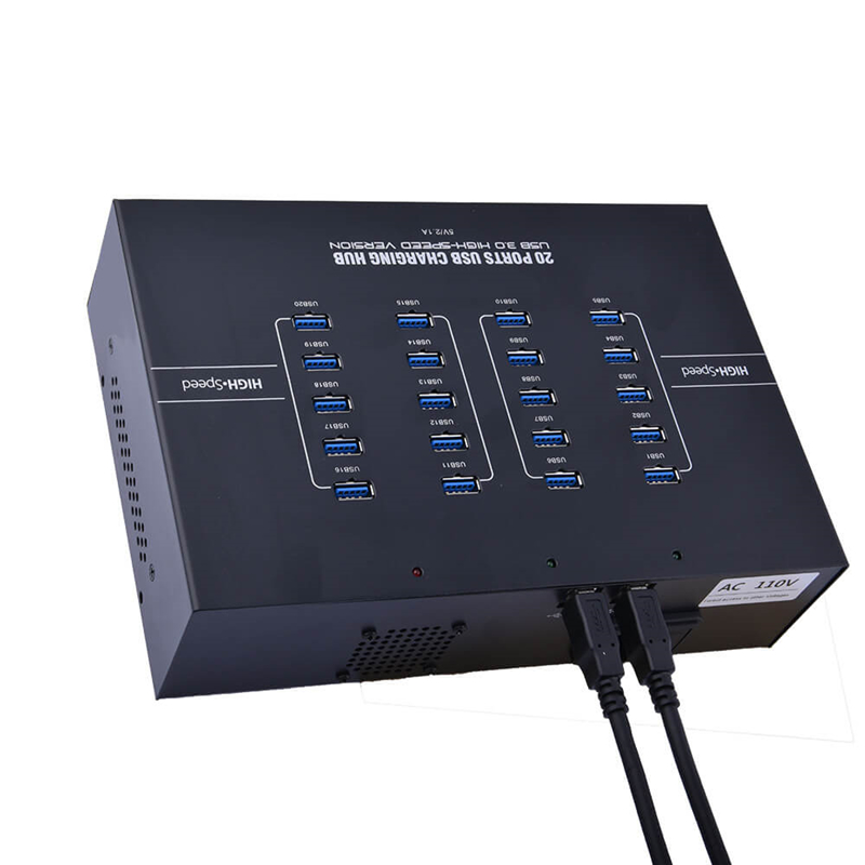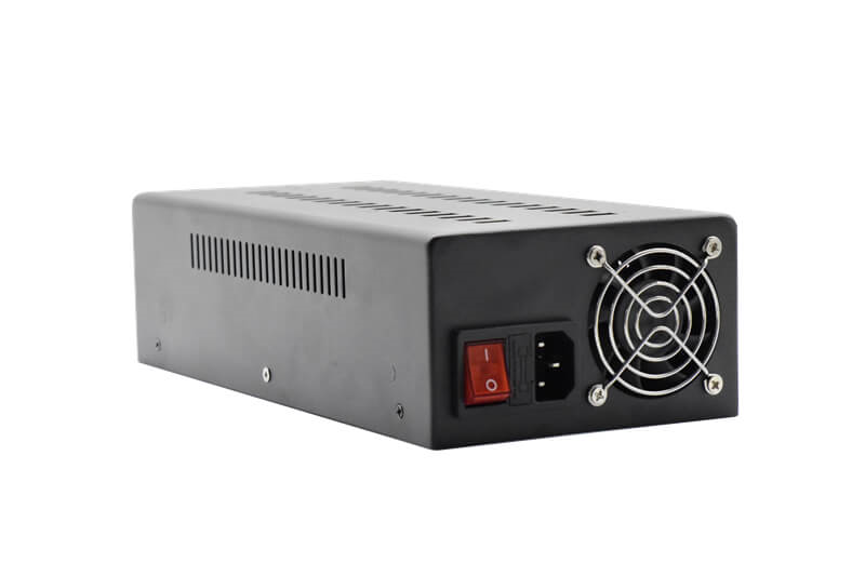
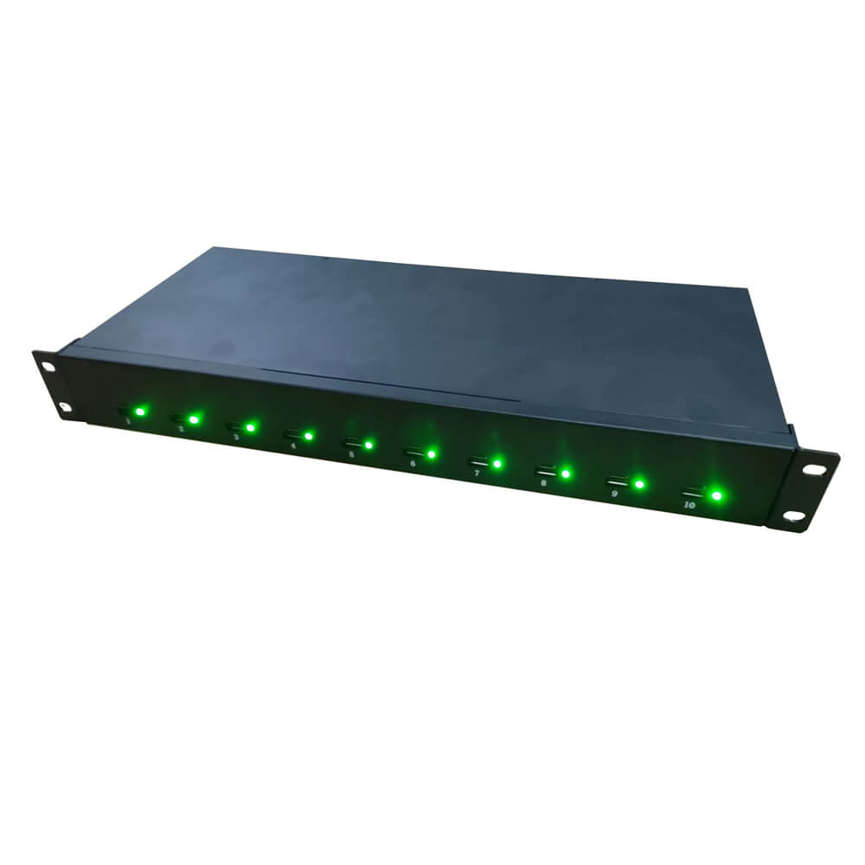
20 Port USB Charger 400W provides a centralized charging solution with 10 USB-A and 10 USB-C ports for multiple devices.A centralized multi-port charging solution can simplify this process by bringing multiple charging connections into one organized unit.
The 20 Ports USB Charger 400W combines 10 USB-A ports and 10 USB-C ports in a single charging platform. Its USB Type-C ports support USB Power Delivery (PD) 2.0, while built-in smart IC technology identifies the connected device’s power requirements and helps provide an appropriate charging output.
With a stated 400W system power capacity, multiple devices can be charged from one centralized unit. The charger also incorporates protection against over-voltage, input under-voltage, output short circuits, output over-current, and system over-temperature conditions, making it suitable for environments where reliable multi-device charging is important.
What Is a 20 Ports USB Charger 400W?
The 20 Ports USB Charger 400W is a high-capacity multi-device charging solution designed to charge multiple USB-powered devices from one centralized unit.
It provides two different connector types:
- 10 USB-A ports
- 10 USB-C ports
The combination is particularly useful for organizations or users managing a mixture of older USB-A-compatible devices and newer USB-C devices.
The USB-C side supports USB Power Delivery 2.0, with several output profiles ranging from 5V to 20V. This allows compatible USB-C devices to negotiate an appropriate power level rather than relying on a single fixed charging output.
The charger is also equipped with a smart IC chip that identifies the power requirements of connected devices.
20 Port USB Charger: Key Specifications
| Specification | Details |
| Product Type | 20 Ports USB Charger |
| Total Ports | 20 |
| USB-A Ports | 10 |
| USB-C Ports | 10 |
| Total Power | 400W |
| USB-C Technology | USB Type-C Power Delivery 2.0 |
| PD Output Profiles | 5V 2.39A / 9V 2.39A / 12V 2.31A / 15V 2.07A / 20V 2.07A |
| Smart IC | Yes |
| Over-Voltage Protection | Yes |
| Input Under-Voltage Protection | Yes |
| Output Short-Circuit Protection | Yes |
| Output Over-Current Protection | Yes |
| System Over-Temperature Protection | Yes |
| Compatibility | Apple phones, tablets, laptops and compatible USB devices |
| Category | Type C Charger |
10 USB-A and 10 USB-C Ports
One of the most useful aspects of this charger is its combination of 10 USB-A and 10 USB-C ports.
USB-A remains widely used across smartphones, tablets, accessories, and other electronics. At the same time, USB-C has become increasingly common across modern phones, tablets, laptops, and other portable devices.
By combining both connector types, the charger can accommodate different generations of devices without requiring separate charging stations. The 20 Port USB Charger provides an organized solution for multi-device charging.
USB-A Ports
The 10 USB-A ports provide charging connections for compatible USB-A devices and accessories.
This makes the charger useful in environments where users still have devices equipped with traditional USB charging cables.
USB-C Ports
The 10 USB-C ports are designed for compatible Type-C devices and support USB Power Delivery 2.0.
USB-C describes the physical connector, while USB Power Delivery is the charging protocol that allows compatible devices and chargers to negotiate supported voltage and current levels.
This distinction is important because not every USB-C port automatically supports the same charging capabilities.
Understanding the USB PD 2.0 Output Profiles
The USB-C ports support the following stated PD output profiles:
| Voltage | Current | Approx. Power |
| 5V | 2.39A | 11.95W |
| 9V | 2.39A | 21.51W |
| 12V | 2.31A | 27.72W |
| 15V | 2.07A | 31.05W |
| 20V | 2.07A | 41.40W |
These figures are calculated from the supplied voltage and current values using:
Power = Voltage × Current
For example:
20V × 2.07A = 41.4W
This means the highest listed individual USB-C PD profile is approximately 41.4W.
However, this should not be interpreted as a guarantee that every connected device will receive 41.4W. Actual charging depends on the device’s charging requirements, USB-C PD compatibility, cable capability, battery condition, and the charger’s power-management behavior.
400W Total Power Capacity
The charger is specified as a 400W USB charger.
The 400W figure should be understood as the stated system-level power capacity rather than assuming that every one of the 20 ports can continuously deliver its maximum theoretical output at the same time.
The listed USB-C profiles have different voltage and current combinations, and connected devices only request the power they are designed to accept. The 20 Port USB Charger is suitable for schools, offices, training centers, and IT departments.
For example, a compatible phone may request considerably less power than a laptop. A tablet may request another power level altogether.
Therefore, actual system performance depends on:
- Number of connected devices
- Device charging requirements
- USB-C PD negotiation
- Cable specifications
- USB-A device requirements
- Internal power distribution
- Total system load
This makes the 400W rating most useful as an indication of the charger’s overall power capacity.
Built-In Smart IC Technology
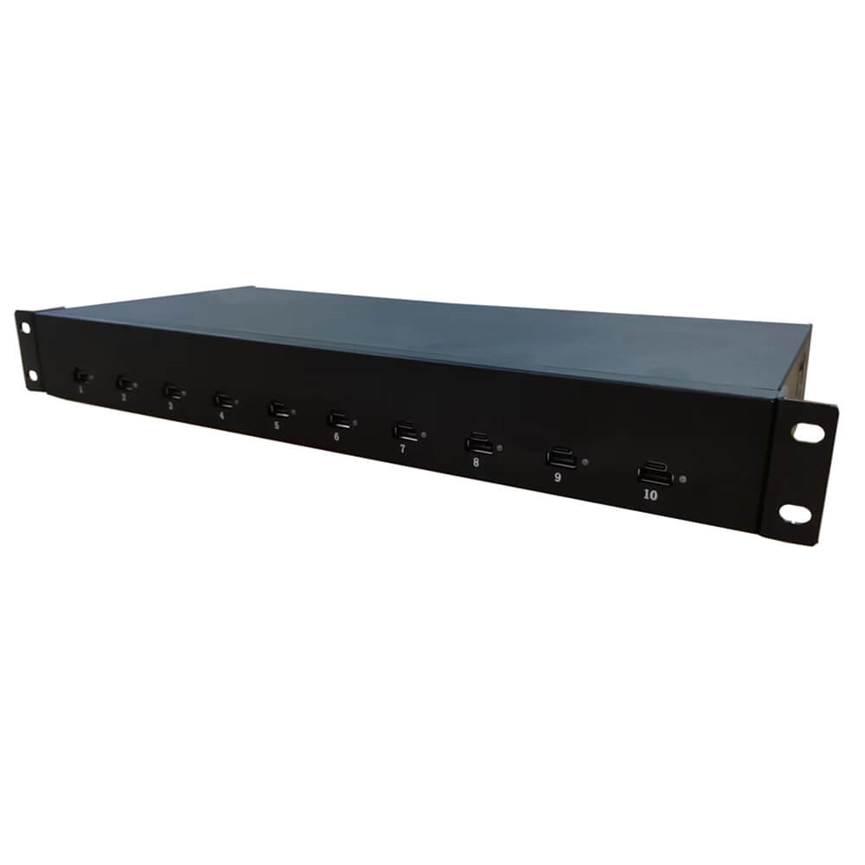
The charger features a built-in smart IC chip designed to identify the power requirements of connected devices.
Smart charging technology is important in a multi-device environment because different devices can have very different charging requirements.
For example, a charging station may simultaneously be connected to:
- Smartphones
- Tablets
- Wireless accessories
- USB-powered equipment
- USB-C tablets
- Compatible laptops
The smart IC helps the charging system respond appropriately to connected devices instead of treating every device as if it had identical power requirements.
Actual charging behavior still depends on the charging protocols supported by the device and cable.
Safety and Protection Features
Charging a large number of devices from a single power system requires appropriate electrical protection. The supplied specifications identify several protection mechanisms.
Over-Voltage Protection
Over-voltage protection helps protect connected equipment from excessive output voltage conditions.
This is particularly important when multiple electronic devices are connected to the same centralized charging system.
Input Under-Voltage Protection
Input under-voltage protection addresses situations where the incoming power supply falls below the expected operating level.
This can help support stable and reliable operation under abnormal input conditions.
Output Short-Circuit Protection
A short circuit can create an abnormal electrical condition. The charger includes output short-circuit protection designed to respond to such conditions.
Output Over-Current Protection
Different devices can have different current requirements. Over-current protection helps prevent excessive current conditions at the output.
System Over-Temperature Protection
Because high-power charging equipment can generate heat during operation, the charger also includes system over-temperature protection.
This is particularly relevant when many ports are being used simultaneously.
Universal Compatibility
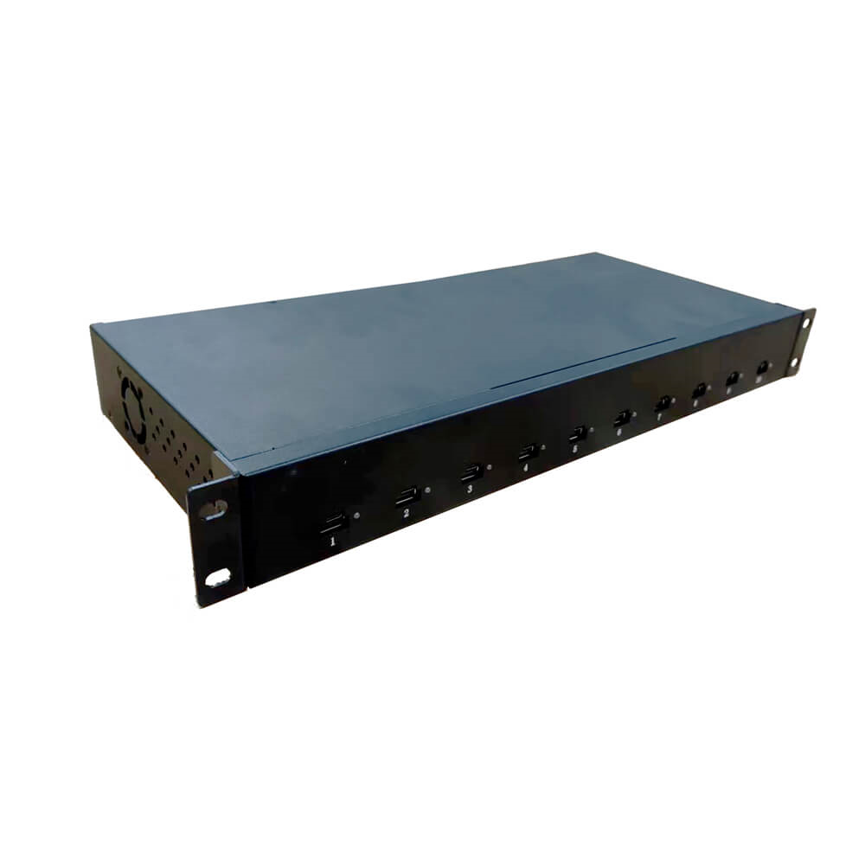
The product specifications identify compatibility with Apple phones, tablets, laptops, along with compatible USB devices.
The combination of USB-A and USB-C ports makes the charger suitable for mixed-device environments.
However, compatibility should always be considered at the device level. A USB-C connector alone does not guarantee that a particular laptop or tablet supports every USB PD profile listed by the charger.
For laptops especially, users should verify the required charging wattage and USB-C PD specification of the specific model.
Benefits of a 20-Port USB Charger
1. Charge Multiple Devices From One Unit
Instead of installing numerous individual chargers, users can centralize charging through one 20-port unit. The 20 Port USB Charger supports mixed USB-A and USB-C connections.
2. Supports Mixed USB Connections
The 10 USB-A + 10 USB-C configuration allows users to connect devices with different cable types.
3. USB-C Power Delivery
USB PD 2.0 support provides multiple voltage/current profiles for compatible USB-C devices.
4. Centralized Power Management
A single charging unit can make it easier to organize and manage devices in shared environments.
5. Smart Charging
The integrated smart IC helps identify connected devices’ power requirements.
6. Multiple Protection Mechanisms
Over-voltage, under-voltage, short-circuit, over-current, and over-temperature protection contribute to safer operation.
7. High Overall Power Capacity
The stated 400W capacity makes the unit suitable for environments where many devices need to be charged.
Applications of the 20 Ports USB Charger 400W
This type of high-capacity charger can be useful across a range of professional and educational environments. The 20 Port USB Charger supports mixed USB-A and USB-C connections.
| Application | How It Can Be Used |
| Schools | Centralized charging for tablets and student devices |
| Offices | Charging employee phones, tablets, and compatible laptops |
| Training Centers | Managing devices used during training sessions |
| Conference Rooms | Charging devices during meetings and presentations |
| Educational Institutions | Supporting shared technology equipment |
| Retail & Service Areas | Charging devices used by employees |
| Events | Providing centralized charging for multiple devices |
| IT Departments | Organizing charging for managed equipment |
| Shared Workspaces | Supporting mixed USB-A and USB-C devices |
| Commercial Environments | Centralized multi-device charging |
20-Port Charger vs Individual Chargers
A centralized charger can provide organizational advantages compared with maintaining many individual power adapters.
| Feature | 20 Ports USB Charger 400W | Individual Chargers |
| Charging Connections | 20 | Usually one per charger |
| USB-A Ports | 10 | Depends on charger |
| USB-C Ports | 10 | Depends on charger |
| Centralized Setup | Yes | No |
| USB-C PD | Yes, USB-C ports | Depends on charger |
| Cable Organization | Easier to centralize | Can become cluttered |
| Shared Charging | Excellent | Less convenient |
| Power Management | Centralized | Distributed |
| Mixed Device Support | USB-A + USB-C | Depends on adapters |
| Protection System | Integrated | Varies by charger |
The biggest advantage is organization. Instead of maintaining numerous power adapters, a single multi-port charging system can provide a centralized location for compatible devices.
How USB-C Power Delivery Works
USB-C PD charging involves communication between the charger and compatible device.
A simplified process is:
Connect Device → Identify Charging Capability → Negotiate PD Profile → Provide Appropriate Power → Continue Charging
For example, a compatible device may request a specific voltage and current supported by both the charger and the device.
The charger then supplies the negotiated power level.
This is different from assuming that a USB-C port always delivers its maximum available power. The device, cable, and charger all play a role in determining actual charging performance.
Why the Combination of USB-A and USB-C Matters
A charging station containing only USB-C ports can create challenges when users have older USB-A cables. Conversely, a USB-A-only station may not provide the charging capabilities expected by newer USB-C devices.
The 10 USB-A + 10 USB-C configuration creates a practical middle ground.
For organizations transitioning from older equipment to newer USB-C devices, this mixed-port design can help support both device generations from one charging platform.
Choosing a Multi-Port Charging Solution
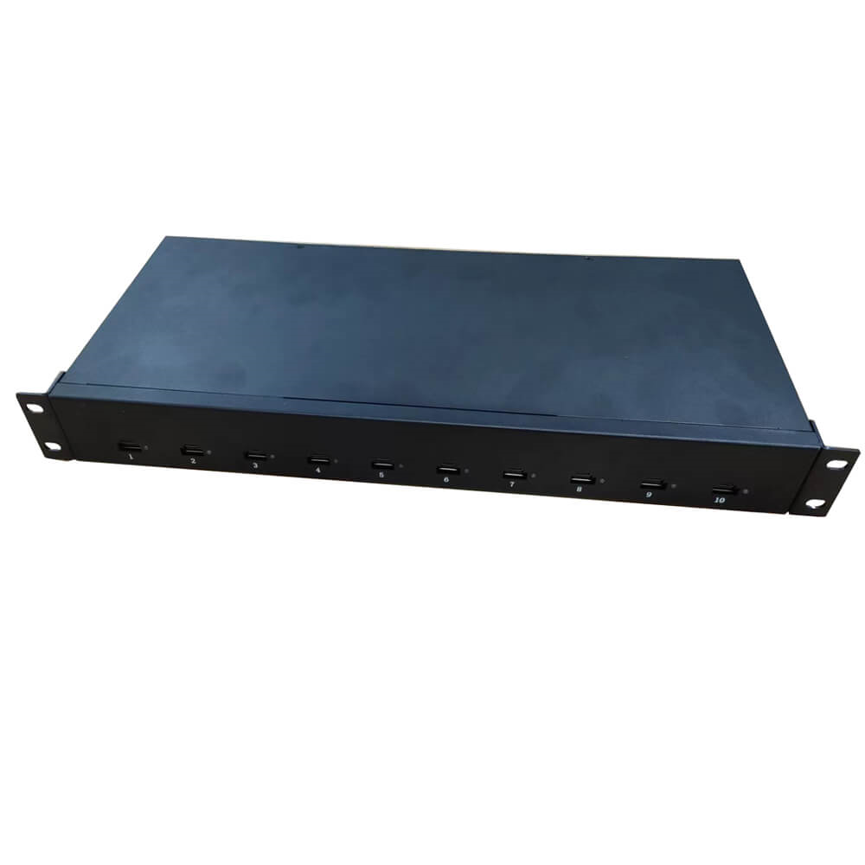
When selecting a centralized charger, consider more than the number of ports.
Port Configuration
Determine whether your devices primarily use USB-A, USB-C, or a combination of both.
Total Power
Look at the system-level power rating and compare it with the expected charging demand of all connected devices.
PD Support
For USB-C devices, verify which USB Power Delivery profiles are supported.
Device Requirements
Check the charging requirements of phones, tablets, and laptops before deployment.
Cable Quality
Use appropriate, compatible cables. A charger cannot provide the intended charging performance if the cable cannot properly support the required charging conditions.
Safety
Protection against over-voltage, over-current, short circuits, and excessive temperature is particularly important for high-capacity charging equipment.
Best Practices for Multi-Device Charging
For reliable day-to-day operation:
- Use compatible charging cables.
- Check the charging requirements of higher-power devices such as laptops.
- Avoid damaged cables or connectors.
- Keep the charger in a suitable operating environment.
- Do not block ventilation if the installation requires airflow.
- Monitor the charger if it is operating near its maximum system capacity.
- Disconnect damaged devices from the charging system.
- Follow the manufacturer’s installation and operating instructions.
Important Technical Considerations
The stated specifications contain both system-level and port-level values, so they should not be confused.
The 400W rating describes the overall charger power capacity, while the USB-C output profiles describe the available PD voltage/current combinations.
For the highest listed profile:
20V × 2.07A = 41.4W
That is the calculated maximum power of that particular listed PD profile—not necessarily the amount delivered to every USB-C port simultaneously.
Likewise, actual charging speed is influenced by the connected device, cable, charging protocol, battery condition, and total system load.
Frequently Asked Questions
How many devices can this charger support?
The charger has 20 charging ports: 10 USB-A and 10 USB-C. It is designed as a centralized solution for multiple USB-powered devices.
Is this a 400W charger?
Yes. The supplied product specification identifies the charger as a 400W USB charger. The 400W rating represents the stated total system power capacity.
Does it support USB Power Delivery?
Yes. The USB-C ports comply with USB Type-C Power Delivery 2.0 according to the supplied specifications.
What USB-C PD profiles are supported?
The listed profiles are 5V/2.39A, 9V/2.39A, 12V/2.31A, 15V/2.07A, and 20V/2.07A.
Does the charger work with Apple devices?
The supplied specifications state compatibility with Apple phones, tablets, and laptops, provided the device and cable support the relevant charging connection and protocol.
What does the smart IC chip do?
The built-in smart IC identifies the connected device’s power requirements and helps the charging system provide an appropriate charging output.
Does every USB-C device charge at 41.4W?
No. The 41.4W figure comes from the highest listed 20V/2.07A PD profile. Actual charging depends on the device’s supported charging profile, cable, and other system conditions.
What safety protections are included?
The charger provides protection against over-voltage, input under-voltage, output short circuit, output over-current, and system over-temperature conditions.
Conclusion
The 20 Ports USB Charger 400W provides a practical centralized charging solution for environments that need to manage a large number of devices. With 10 USB-A ports and 10 USB-C ports, it supports a mixture of traditional and modern charging connections from one unit. The 20 Port USB Charger provides an organized solution for multi-device charging.
Its USB-C Power Delivery 2.0 support provides multiple voltage and current profiles, while the built-in smart IC helps identify device power requirements. The stated 400W system capacity, combined with protection against over-voltage, under-voltage, over-current, short circuits, and excessive temperature, makes the charger suitable for demanding multi-device charging environments.
For schools, offices, training centers, conference rooms, IT departments, and other shared-device environments, a centralized 20-port design can reduce charger clutter while providing a more organized way to manage everyday device charging. As with any USB charging solution, actual performance depends on the connected device, cable, supported charging protocol, and total system load.