16 Port USB-C Charger TC-16 – Centralized USB-PD Charging for Multiple Devices
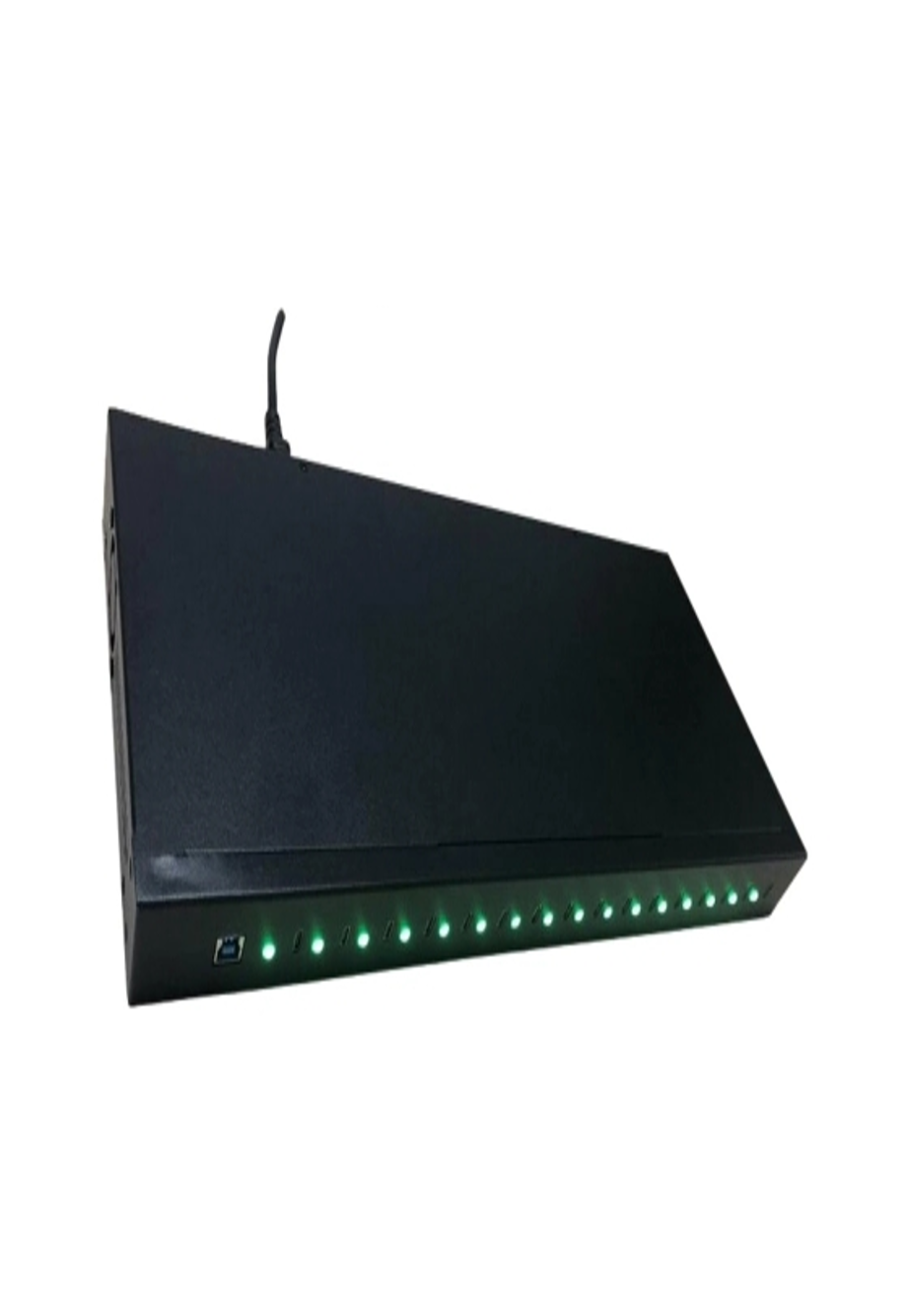
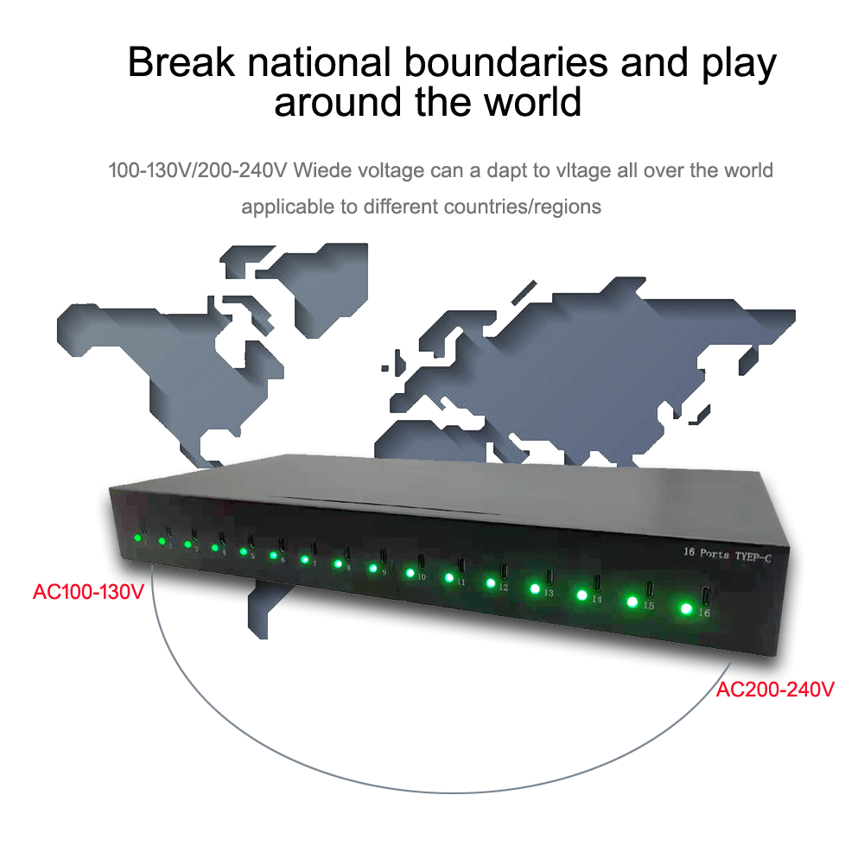
The 16 Port USB-C Charger TC-16 is designed to provide centralized USB-PD charging for multiple compatible tablets, smartphones, and other USB-C devices.
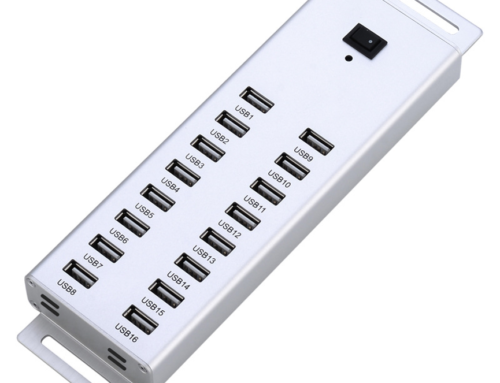
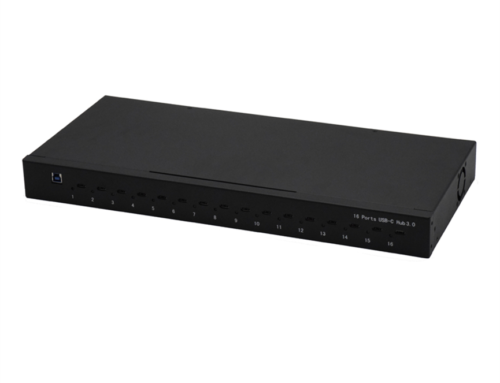
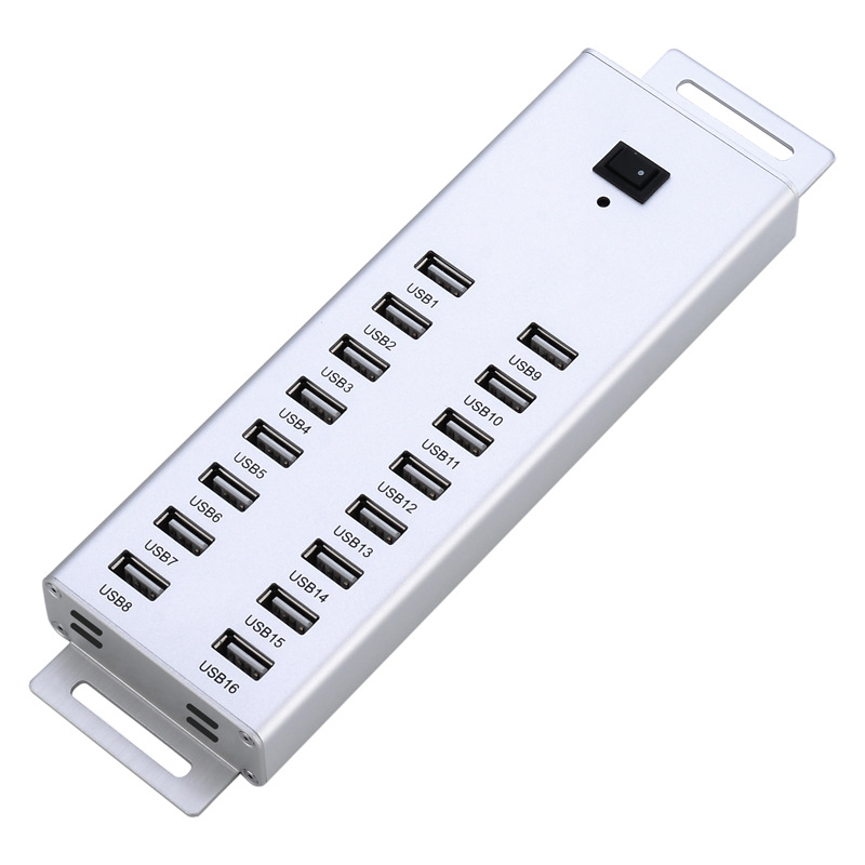
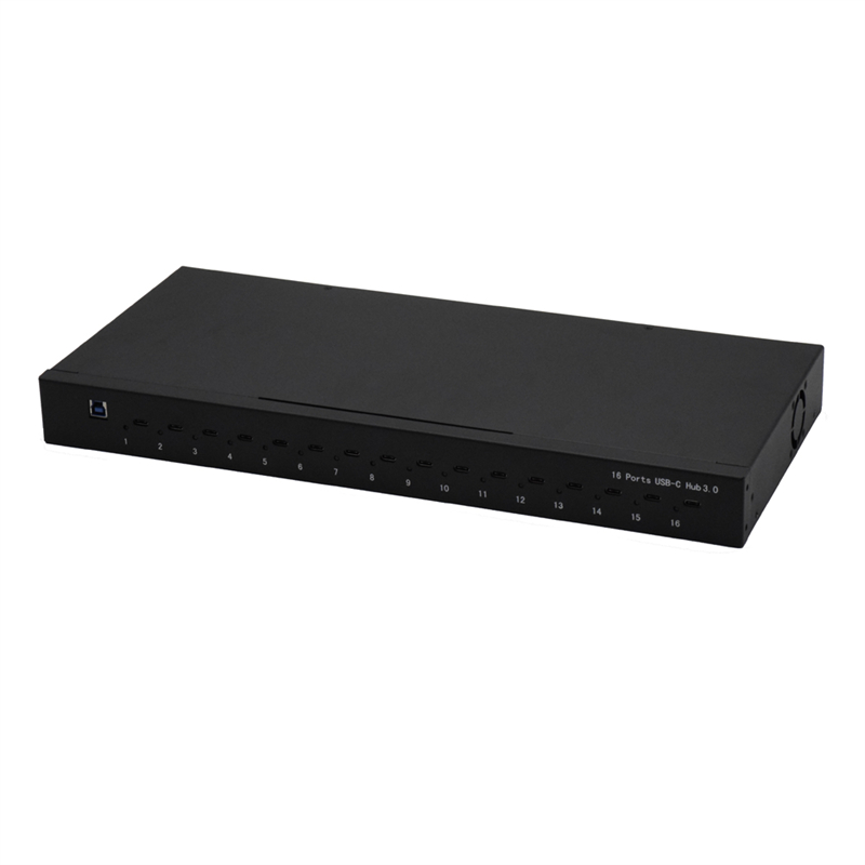
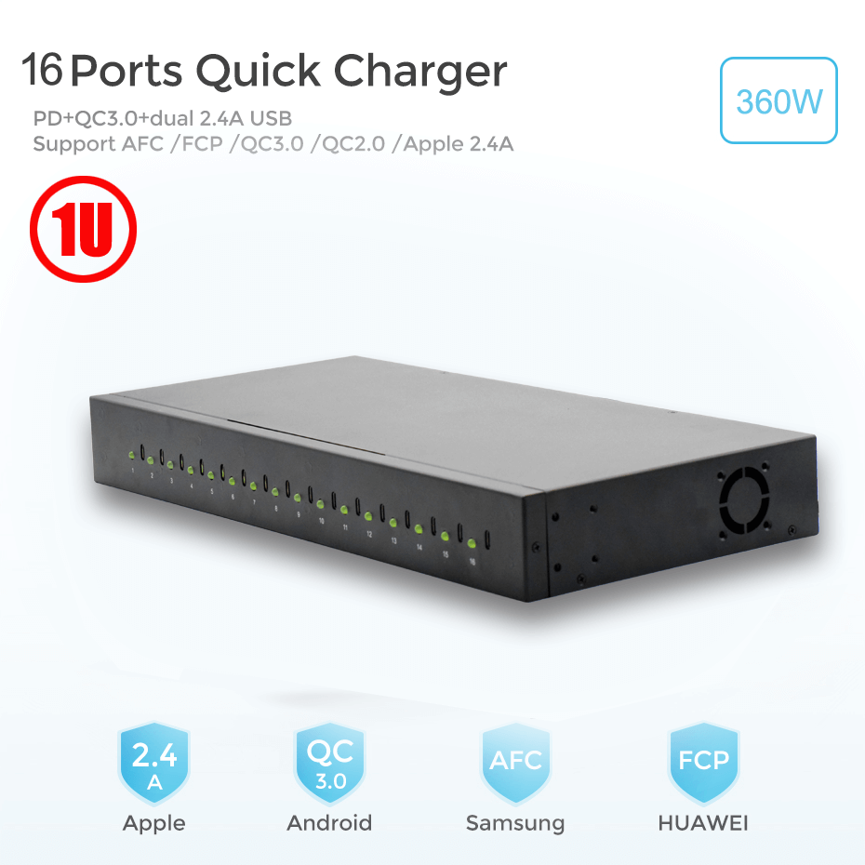
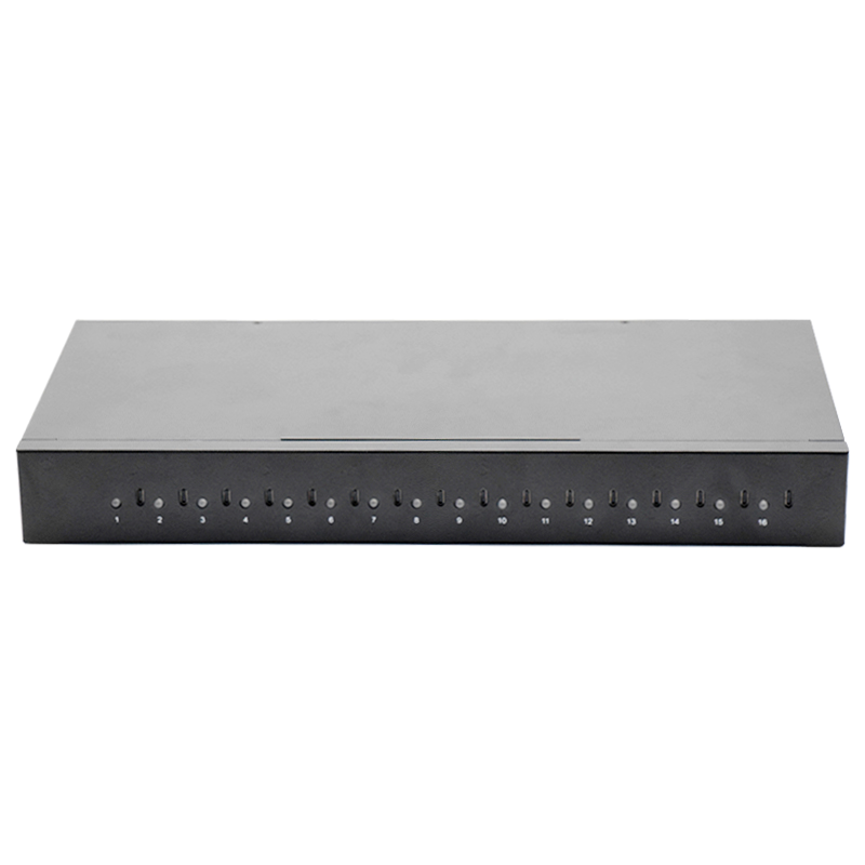
The Ladagogo TC-16 16 Port USB-C Charger is designed to charge up to 16 compatible tablets, smartphones, and other USB Type-C devices simultaneously. It features 16 downstream USB Type-C Power Delivery ports, with support for up to 20W per port.
The TC-16 also supports USB Power Delivery voltage levels from 5V to 20V, with the supplied specifications identifying charging profiles including 5V/4A, 9V/2.1A, and 12V/1.7A. This allows the charger to support different power requirements through USB-C PD rather than relying on a single fixed voltage.
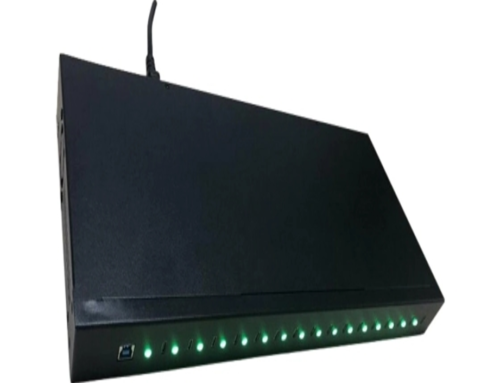
Designed for industrial and commercial charging applications, the unit can also be rack mounted into a standard 19-inch rack, making it suitable for organized multi-device installations.
What Is the TC-16 16 Port USB-C Charger?
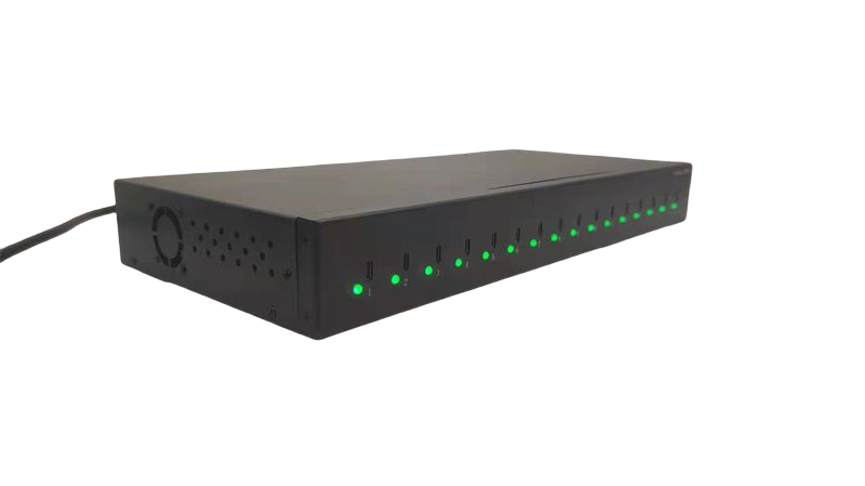
The TC-16 is a high-capacity 16-port USB Type-C Power Delivery charger designed for centralized charging of multiple USB-C devices.
Instead of using separate chargers for each device, organizations can use one centralized charging unit with 16 downstream USB-C PD ports.
This configuration can be useful in:
- Offices
- Schools
- Commercial facilities
- IT departments
- Device management environments
- Service centers
- Training facilities
- Industrial installations
- Shared workspaces
The product is specifically designed around USB-C Power Delivery, making it suitable for compatible devices that use USB-C PD charging.
Key Specifications
| Specification | TC-16 Details |
| Product | 16 Port USB-C Charger |
| Model | TC-16 |
| Number of USB-C Ports | 16 |
| Port Technology | USB Type-C Power Delivery |
| Maximum Power | Up to 20W per port |
| Maximum Charge Output | Up to 4A per Type-C port |
| Supported PD Voltage Range | 5V to 20V |
| Stated Charging Profiles | 5V/4A, 9V/2.1A, 12V/1.7A |
| Rack Compatibility | Standard 19-inch rack |
| Intended Use | Industrial and commercial charging |
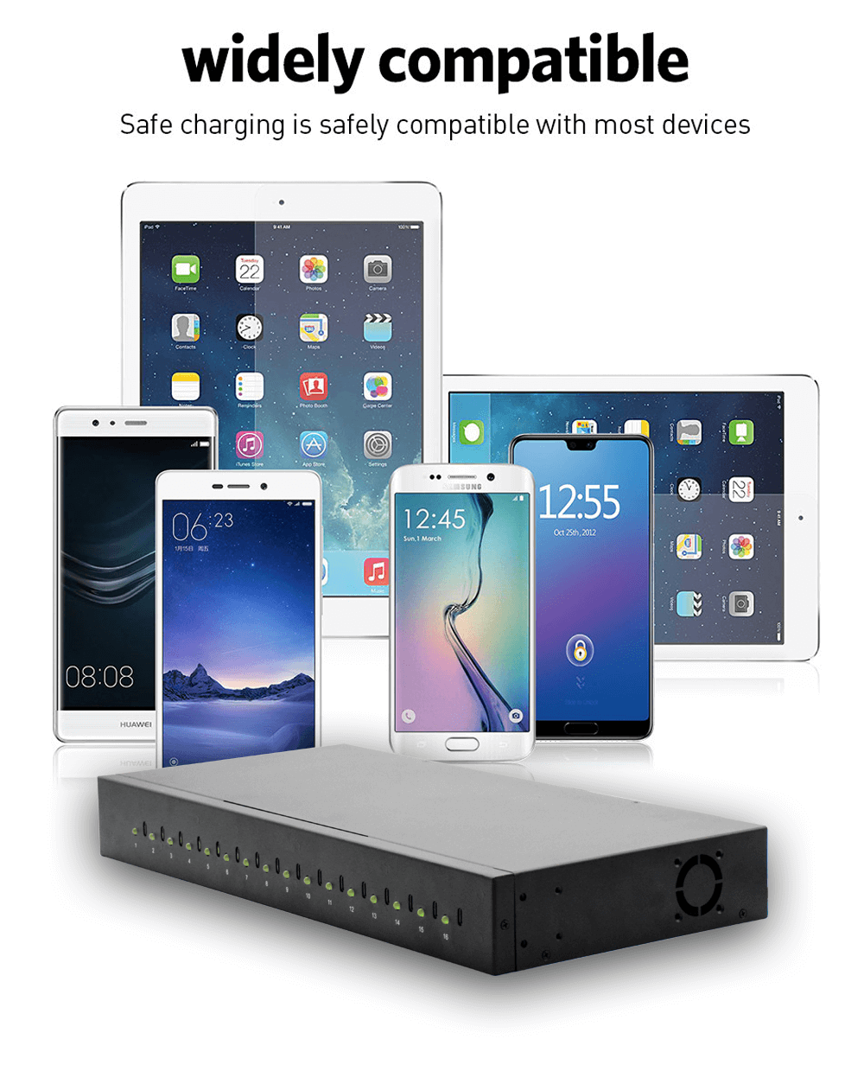
| Device Support | Tablets, smartphones, and other Type-C devices |
| Categories | Charger Series, Charging Cabinet, Type C Charger, USB C HUB |
16 Downstream USB-C Power Delivery Ports
The TC-16 provides 16 downstream USB Type-C Power Delivery ports, allowing up to 16 compatible devices to be connected for charging.
The high port count is useful for organizations that manage multiple USB-C devices at the same time.
For example, a school may need to charge a collection of tablets after classroom use. An office may have smartphones and USB-C devices that need to be charged during the workday. A commercial facility may need a centralized charging point for shared equipment.
Instead of managing numerous individual power adapters, the TC-16 provides a centralized USB-C charging infrastructure.
Up to 20W Per USB-C Port
Each Type-C PD port supports up to 20W per port according to the supplied specifications.
This is an important specification because the total charging capability of a multi-port charger should not be confused with the output of an individual port.
The stated maximum is:
Up to 20W per port
With 16 ports, the theoretical sum of the individual maximum port ratings would be:
16 × 20W = 320W
However, this calculation should not automatically be interpreted as a guaranteed 320W system output. The supplied product information specifies the individual port capability but does not provide a separate overall system power rating.
Actual power delivery depends on the connected devices, USB-PD negotiation, and the charger’s internal power-management design.
Maximum Charge Output of 4A Per Type-C Port
The TC-16 is specified with a maximum charge output of 4A per Type-C port.
Current and power should be considered together. The power delivered to a device depends on both voltage and current:
Power = Voltage × Current
The supplied charging profiles include:
| Voltage | Current | Approximate Power |
| 5V | 4A | 20W |
| 9V | 2.1A | 18.9W |
| 12V | 1.7A | 20.4W |
These figures help explain why the product is described as supporting up to approximately 20W per port.
The 4A figure therefore should not be interpreted as 4A being delivered at every supported voltage. USB-PD charging uses different voltage/current combinations depending on the charging profile and connected device.
USB Power Delivery from 5V to 20V
The TC-16 supports USB Power Delivery voltages from 5V to 20V according to the supplied specifications.
USB Power Delivery, commonly called USB-PD, is a charging protocol that allows compatible devices and chargers to negotiate an appropriate power level.
This is different from simply having a USB-C connector.
USB-C describes the physical connector and interface, while USB Power Delivery describes a power-management and charging protocol that operates over compatible USB-C connections.
The charger therefore provides USB-C ports with Power Delivery support rather than merely providing a physical Type-C connection.
USB-PD Charging Profiles
The supplied specifications identify the following examples:
- 5V/4A
- 9V/2.1A
- 12V/1.7A
- Voltage support from 5V to 20V
- Up to 20W per port
The actual charging profile selected depends on the connected device and the USB-PD negotiation between the charger and device.
This means a compatible smartphone may request a different voltage/current combination from a tablet or another USB-C PD device.
Users should also use suitable USB-C cables that are appropriate for their intended charging application.
Can the TC-16 Charge MacBooks and Chromebooks?
The supplied product information states that the TC-16 can charge Apple MacBooks, Chromebooks, and other USB-C PD power-hungry products.
However, the up-to-20W-per-port specification should be considered carefully for larger laptops.
Many USB-C laptops can require substantially more power than 20W, particularly during intensive use or when the battery is significantly depleted. Therefore, compatibility does not necessarily mean that every MacBook or Chromebook will charge at its normal maximum rate through a 20W port.
For larger USB-C laptops, users should verify the specific device’s minimum and recommended charging requirements before deployment.
The TC-16 is particularly straightforward for compatible tablets, smartphones, and other lower-power USB-C devices within its stated 20W-per-port capability.
Charging Up to 16 Devices Simultaneously
One of the biggest advantages of the TC-16 is its ability to support charging for up to 16 devices at the same time.
A centralized charging system can simplify device management because users can keep multiple devices in one designated charging area.
Potential charging applications include:
- 16 tablets
- Multiple smartphones
- USB-C accessories
- Compatible Chromebooks
- Other USB-C PD devices
The actual charging performance of all connected devices will depend on their individual power requirements and the charger’s power-management system.
Rack Mountable for 19-Inch Racks
The TC-16 is designed to be rack mountable into a standard 19-inch rack.
This feature makes the charger particularly relevant to commercial and industrial environments where equipment is installed in organized rack systems.
Rack mounting can provide several practical benefits:
Organized Installation
The charger can be positioned within a structured equipment environment rather than taking up workspace on a desk.
Centralized Device Charging
Multiple USB-C devices can be managed from a designated charging location.
Professional Deployment
Rack installation can create a cleaner and more organized charging infrastructure for commercial environments.
Space Management
Using rack space can help reduce desktop clutter when multiple charging devices would otherwise be required.
Before installation, users should confirm the physical rack requirements and available space for the specific installation.
Suitable for Industrial and Commercial Charging
The TC-16 is specified for industrial and commercial use charging applications.
This makes it suitable for environments where many devices need to be charged regularly rather than occasional personal use.
Offices
Businesses increasingly use USB-C devices such as smartphones, tablets, laptops, and accessories. A centralized charger can support shared device charging.
Schools and Education
Schools can use centralized charging infrastructure for compatible classroom tablets and other USB-C equipment.
IT Departments
IT teams managing multiple devices can establish a designated charging station for equipment used across an organization.
Service Centers
Repair and service environments may need multiple USB-C devices available for testing and charging.
Commercial Facilities
Retail stores, training centers, and other commercial environments can use centralized charging for shared devices.
Industrial Environments
The rack-mountable design is suitable for structured installations where equipment needs to remain organized and accessible.
Why Choose a 16 Port USB-C PD Charger?
A multi-port USB-C PD charger can offer several advantages over managing numerous individual adapters.
Centralized Charging
All compatible devices can be charged from one central location.
High Port Count
Sixteen USB-C ports allow multiple devices to be connected simultaneously.
USB-PD Support
Power Delivery enables compatible devices and the charger to negotiate an appropriate charging profile.
Rack Installation
The 19-inch rack-mountable design supports structured commercial and industrial installations.
Reduced Charger Clutter
Replacing multiple individual chargers with one centralized charging unit can simplify the physical charging setup.
Flexible Device Support
The charger is designed for tablets, smartphones, and other USB-C devices, with the supplied specifications also identifying MacBooks and Chromebooks as supported applications.
TC-16 vs Individual USB-C Chargers
| Feature | TC-16 16 Port USB-C Charger | Individual USB-C Chargers |
| Charging Ports | 16 | Usually 1 per charger |
| USB-C PD | Yes | Depends on charger |
| Maximum Port Output | Up to 20W | Varies |
| Maximum Port Current | Up to 4A | Varies |
| Rack Mounting | 19-inch rack compatible | Generally not |
| Multi-Device Charging | Yes | Requires multiple chargers |
| Centralized Installation | Yes | No |
| Commercial Deployment | Designed for commercial/industrial use | Depends on model |
| Device Management | Centralized | Distributed |
For environments with many compatible USB-C devices, the centralized approach can make charging infrastructure easier to organize.
How to Use the TC-16
Using the TC-16 as a centralized charging system can follow a simple workflow.
Step 1: Install the Charger
Mount the TC-16 in an appropriate standard 19-inch rack if rack installation is required.
Step 2: Connect Power
Connect the charger to an appropriate electrical supply according to the manufacturer’s installation instructions.
Step 3: Prepare USB-C Cables
Use suitable USB-C cables compatible with the devices being charged.
Step 4: Connect Devices
Connect tablets, smartphones, or other compatible USB-C PD devices to the available Type-C ports.
Step 5: Allow USB-PD Negotiation
Compatible devices and the charger can negotiate an appropriate supported charging profile.
Step 6: Monitor the Charging Environment
Maintain an organized charging area and make sure cables are not damaged or creating unnecessary strain on the ports.
Factors That Affect USB-C Charging Performance
Even when a charger supports up to 20W per port, actual charging performance can vary.
Important factors include:
Device Power Requirement
Different devices have different charging requirements. A device that needs more than 20W may not charge at its maximum expected rate through a 20W port.
USB-PD Compatibility
The device needs to support an appropriate USB-PD charging profile for the intended power level.
Cable Capability
USB-C cables can have different electrical and data capabilities. A suitable cable should be used for the charging requirement.
Battery Condition
Charging behavior can change depending on battery level, temperature, and the device’s internal charging system.
Power Management
When multiple devices are connected, the charger’s internal power-management system determines how available power is delivered.
Best Practices for the TC-16
Verify Device Requirements
Before deploying the charger across an organization, check the charging specifications of the devices that will be connected.
Use Suitable Cables
Choose appropriate USB-C cables for the connected devices and charging requirements.
Do Not Assume 20W Is Enough for Every Laptop
The stated 20W maximum per port is suitable for many lower-power devices, but larger laptops may require significantly more power.
Keep Cables Organized
Sixteen charging ports can create considerable cable clutter if cables are not properly organized.
Use Appropriate Rack Installation
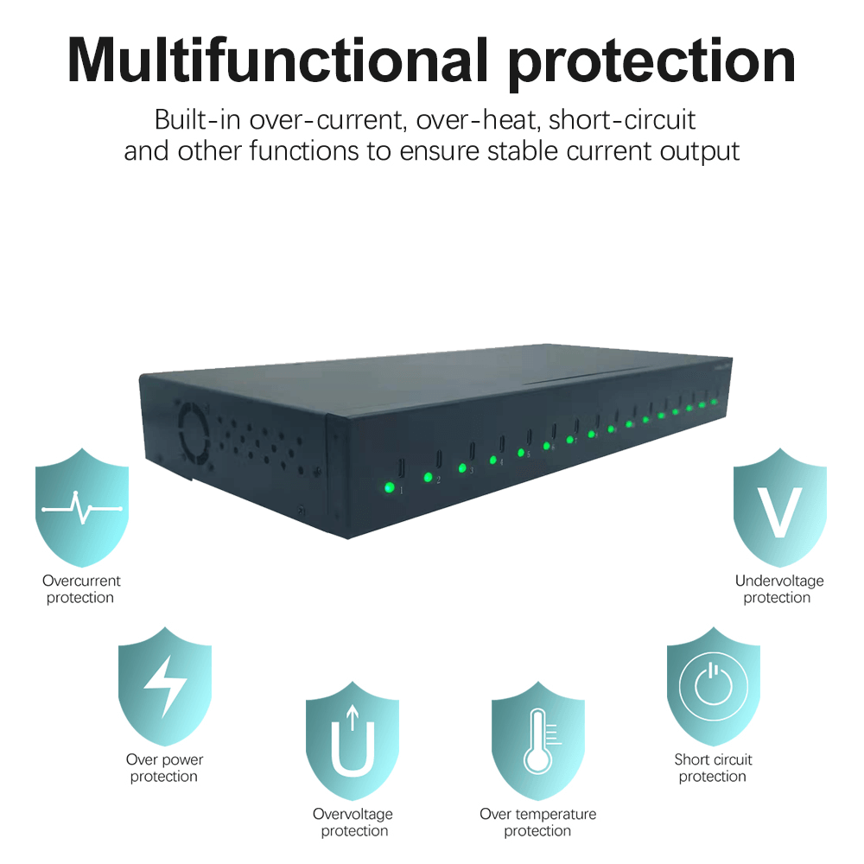
When rack mounting the unit, ensure that the rack provides suitable physical support, ventilation, and access to power and cables.
Avoid Unsupported Power Claims
The 20W figure should be treated as the maximum specified per-port capability rather than a guaranteed charging speed for every connected device.
Frequently Asked Questions
How many devices can the TC-16 charge?
The TC-16 has 16 USB Type-C Power Delivery ports and is designed to charge up to 16 compatible devices simultaneously.
What is the maximum output per port?
Each Type-C port supports up to 20W, according to the supplied specifications.
What is the maximum current per Type-C port?
The maximum stated charge output is 4A per Type-C port. The actual current depends on the voltage and charging profile being negotiated.
Which USB-PD voltages are supported?
The supplied specification states support for USB-PD voltages from 5V to 20V, with examples including 5V/4A, 9V/2.1A, and 12V/1.7A.
Is the TC-16 a USB-C charger or USB-PD charger?
It is a USB Type-C Power Delivery charger. USB-C refers to the connector, while USB-PD refers to the supported power-delivery protocol.
Can it charge tablets and smartphones?
Yes. The product is designed to charge compatible tablets, smartphones, and other Type-C devices.
Can it charge MacBooks?
The product information states that it can charge Apple MacBooks and Chromebooks. However, because each port is specified for up to 20W, users should verify the power requirements of a particular laptop before deployment.
Is the TC-16 rack mountable?
Yes. It is designed to mount into a standard 19-inch rack.
Is the TC-16 suitable for commercial use?
Yes. The product is specified for industrial and commercial charging applications.
Does every port always deliver 20W?
No. 20W is the maximum stated capability per port. Actual charging power depends on the connected device, USB-PD negotiation, cable, and available system power.
What is the difference between 4A and 20W?
Amperage and wattage describe different electrical characteristics. Power is calculated as voltage multiplied by current. For example, 5V at 4A equals 20W. At higher voltages, the supported current is lower, such as the stated 9V/2.1A and 12V/1.7A profiles.
Conclusion
The Ladagogo TC-16 16 Port USB-C Charger provides a centralized USB Power Delivery charging solution for organizations managing multiple Type-C devices.
With 16 downstream USB-C PD ports, up to 20W per port, a stated maximum current of 4A per Type-C port, support for USB-PD voltage levels from 5V to 20V, and compatibility with tablets, smartphones, and other USB-C devices, the TC-16 is designed for high-capacity multi-device charging.
Its 19-inch rack-mountable design further distinguishes it from ordinary desktop chargers, making it suitable for organized commercial and industrial installations.
The charger’s 20W-per-port capability can be particularly useful for compatible tablets, smartphones, and other lower-power USB-C devices. While the supplied specifications also identify MacBooks and Chromebooks as supported applications, users should verify the power requirements of individual laptop models because some USB-C laptops require more than 20W for normal or maximum-speed charging.
For businesses, educational facilities, IT environments, service centers, and other organizations that need to manage multiple USB-C devices, the TC-16 offers a centralized approach to charging. Its USB-PD support allows compatible devices to negotiate appropriate charging profiles, while the 16-port configuration reduces the need for numerous individual chargers.
For deployment, the most important considerations are device compatibility, USB-PD requirements, appropriate USB-C cables, total system power availability, and proper rack installation. Used within its stated specifications, the TC-16 provides a structured 16-port USB-C Power Delivery charging solution for commercial and industrial environments.