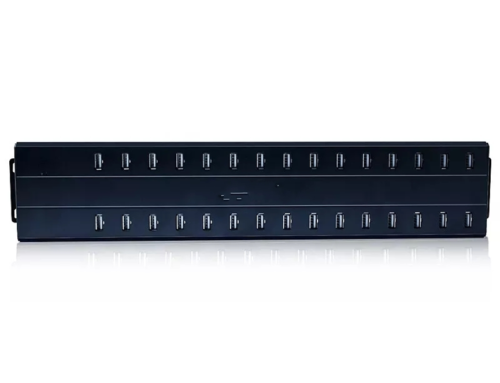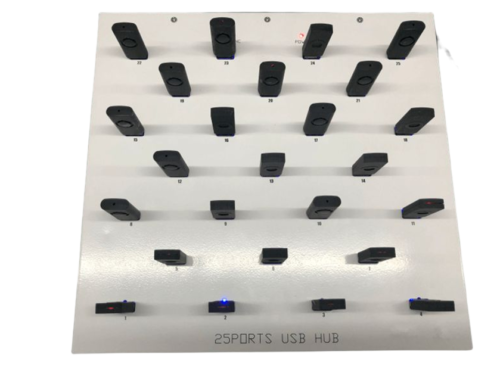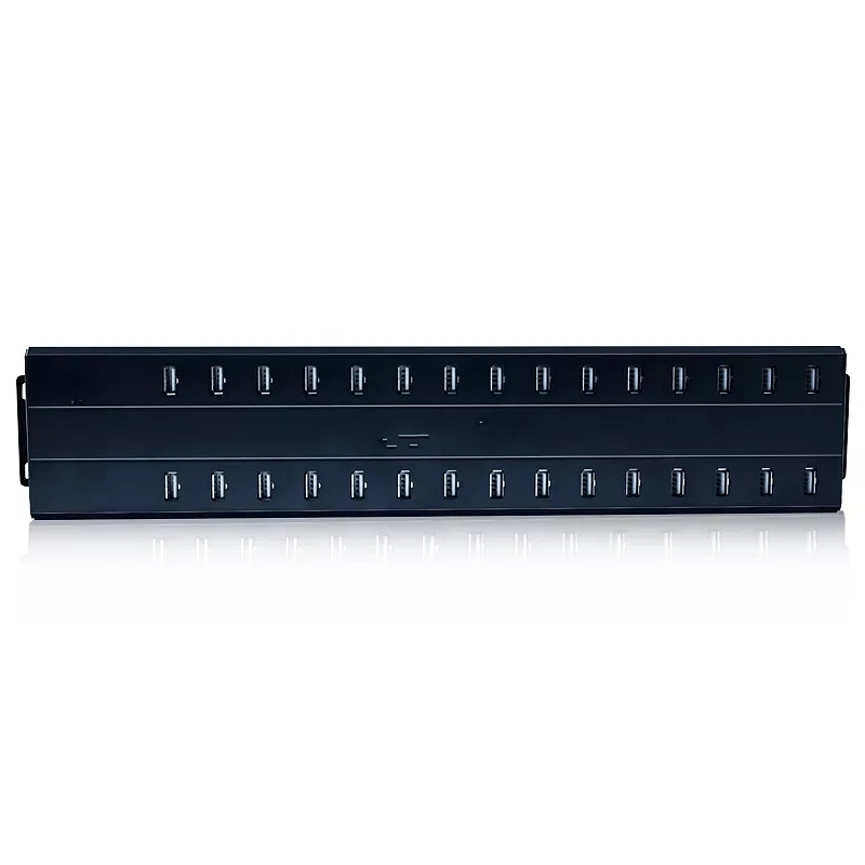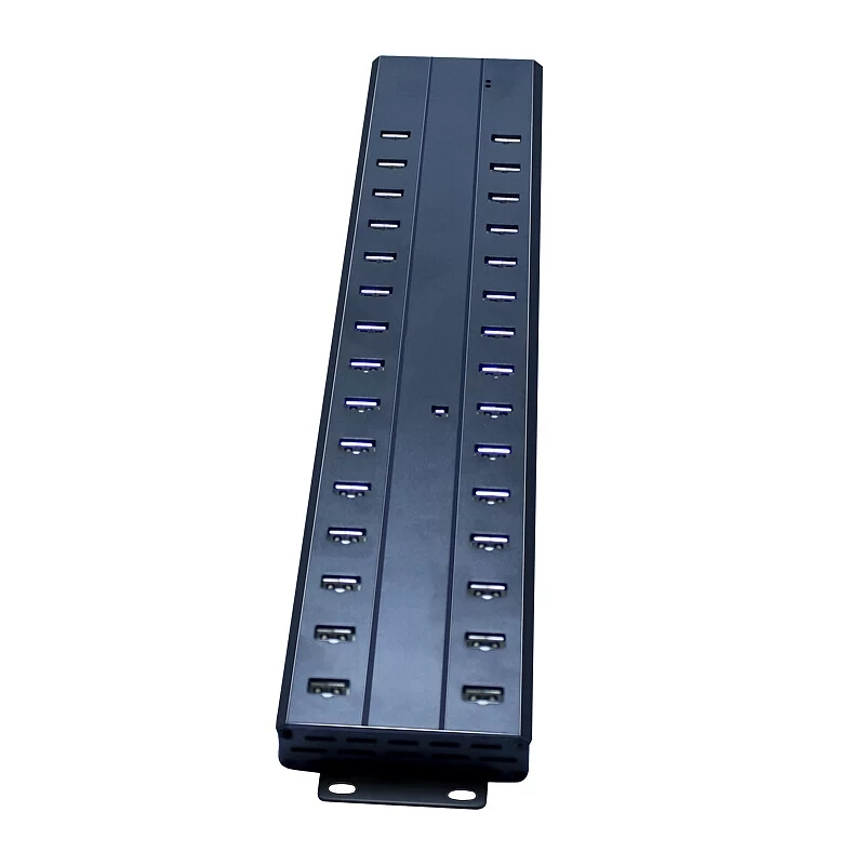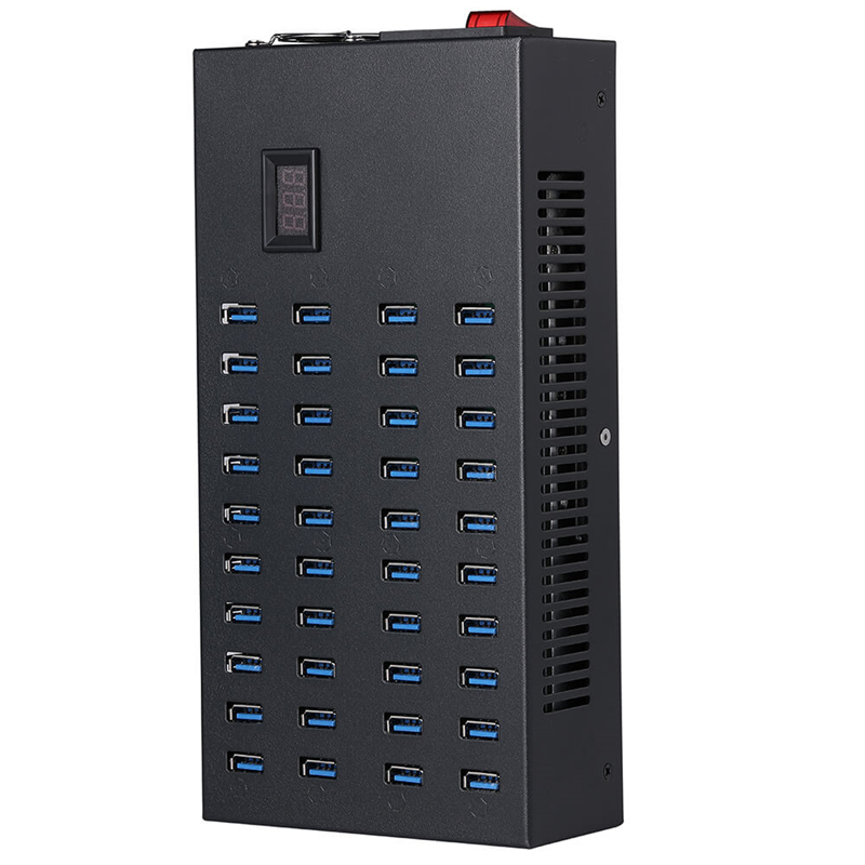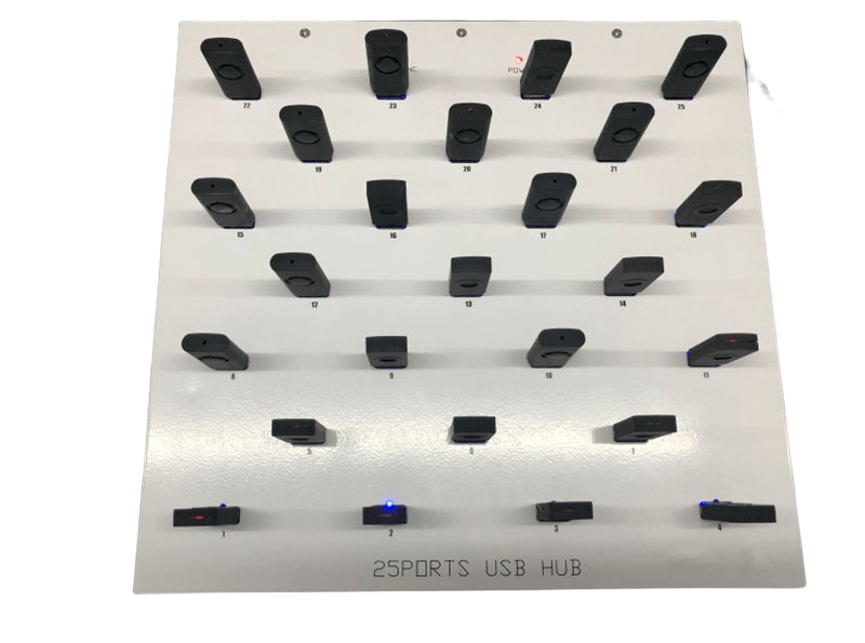
30 Port Solar USB Charger provides a centralized solution for charging multiple USB devices using solar input, battery storage, and multiple USB charging ports. The 30 Ports USB A Solar-Powered USB Charger combines solar panel input, battery energy storage, USB charging, and multiple charging ports in one centralized system.
Designed for charging multiple USB-powered devices, this solution provides 30 USB charging ports, with each output supporting up to 5V/2A according to the supplied specifications. It also supports 12V/24V DC/AC input, while an integrated battery stores energy for use when solar input is unavailable or inconsistent. The 30 Port Solar USB Charger combines solar input with battery storage for flexible charging.
With LED indicators, overvoltage and short-circuit protection, thermal protection, a durable aluminum housing, and a foldable solar panel, the system is designed around portability, organized charging, and energy flexibility.
What Is a 30 Ports USB A Solar-Powered USB Charger?
A 30 Ports USB A Solar-Powered USB Charger is a centralized charging system designed to charge multiple USB devices from a combination of solar and electrical power sources.
Unlike a conventional multiport charger that depends solely on a wall outlet, this system can receive energy from a solar panel and store that energy in an integrated battery. This makes it useful in situations where access to conventional electrical power may be limited or where portable charging is desirable.
The basic energy flow can be understood as:
Solar Panel → Energy Storage Battery → Charging System → USB Ports → Devices
The system can also accept 12V/24V DC/AC input, providing an additional power option when solar energy alone is not sufficient.
30 Port Solar USB Charger: Key Features
| Specification | Details |
| Product Type | 30 Ports USB A Solar-Powered USB Charger |
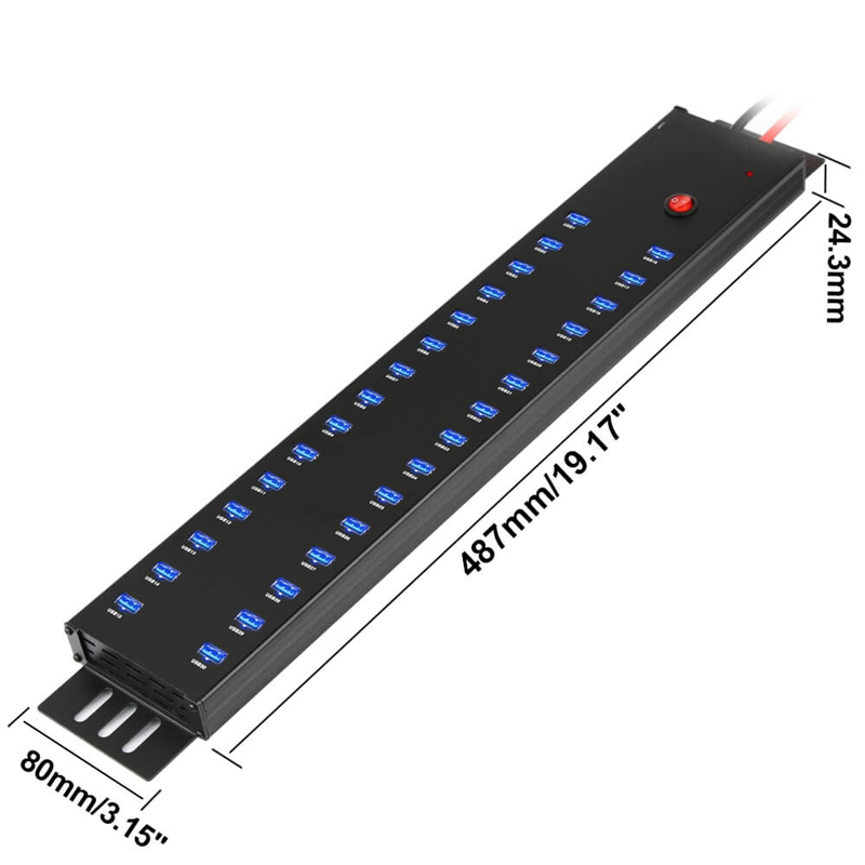
| Charging Ports | 30 USB ports |
| Solar Input | Supported |
| Additional Input | 12V/24V DC/AC |
| Battery | Integrated energy-storage battery |
| USB Output | 5V/2A |
| Indicators | LED power and charging indicators |
| Protection | Overvoltage and short-circuit protection |
| Thermal Protection | Supported |
| Housing | Durable aluminum |
| Solar Panel | Foldable |
| Main Use | Multi-device USB charging |
| Portability | Supported through foldable solar panel design |
Important: The supplied specifications identify the USB output as 5V/2A, but they do not specify whether 2A is available simultaneously from all 30 ports. Therefore, the 2A figure should be treated as the stated port-level capability rather than assuming 30 × 2A is available continuously.
30 USB Ports for Centralized Charging
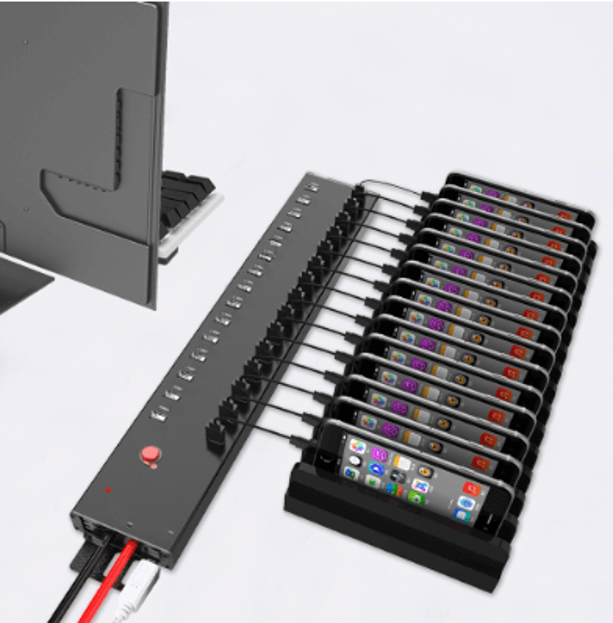
One of the main advantages of this charger is its 30-port configuration.
Instead of requiring users to carry and manage numerous individual wall chargers, a centralized charging system provides one organized location where multiple devices can be connected.
This can be especially useful when many smartphones, tablets, or other USB-powered devices need charging at the same time.
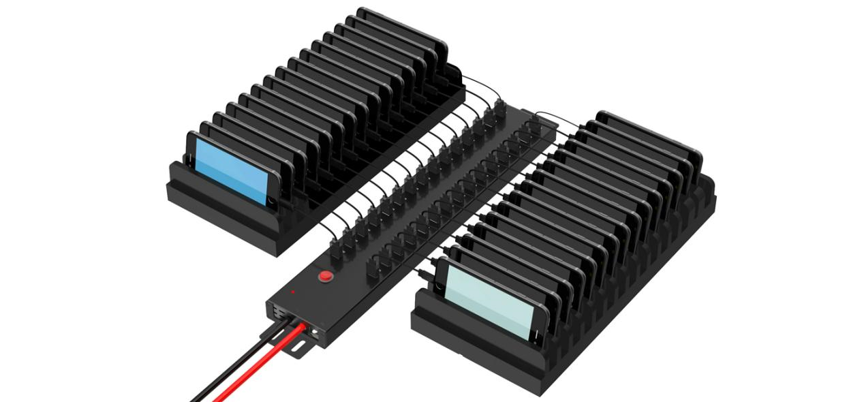
Potential advantages include:
- Centralized charging
- Reduced charger clutter
- Easier cable management
- Support for multiple users
- Convenient charging in shared environments
- Simplified access to stored power
The 30-port design makes the charger particularly suitable for environments where several devices need to remain available and charged.
Solar Panel Input for Renewable Charging
The solar panel input allows the charger to collect energy from sunlight.
Solar charging can be useful in outdoor environments, remote locations, temporary setups, travel situations, and emergency applications where access to conventional electricity may be limited.
The solar panel converts sunlight into electrical energy, which can then be used by the charging system and stored in the integrated battery. A 30 Port Solar USB Charger can be useful for outdoor events, travel, and temporary charging setups.
A simplified process is:
Sunlight → Solar Panel → Electrical Energy → Battery → USB Charging
Actual solar charging performance can vary depending on sunlight intensity, weather, panel orientation, shading, temperature, and the connected load.
Therefore, the solar panel should be viewed as an energy source whose available output can change throughout the day rather than as a constant power supply.
Integrated Battery for Energy Storage
The built-in battery is another important component of the system.
Solar energy is not always available. For example, charging conditions can change because of:
- Cloud cover
- Nighttime
- Indoor use
- Shading
- Poor panel orientation
- Seasonal changes
An integrated battery allows collected energy to be stored and used later.
This creates a more flexible charging workflow:
Solar Energy Available → Battery Charges → Stored Energy → USB Devices Charge
The battery also helps separate the timing of energy generation from the timing of device charging.
5V/2A USB Charging Output
According to the supplied specifications, the USB ports provide 5V/2A output.
The theoretical power at this voltage and current is:
5V × 2A = 10W
Therefore, a port operating at its stated maximum of 5V and 2A represents up to approximately 10W of theoretical output.
However, actual charging performance depends on the connected device, cable quality, device charging circuitry, battery condition, and the amount of power available from the overall charging system.
It is therefore important not to assume that every connected device will continuously draw 2A.
12V/24V DC/AC Input
In addition to solar input, the charger supports 12V/24V DC/AC input according to the supplied product specifications.
This provides an alternative way of supplying energy to the charging system.
Having multiple input options can make the system more flexible for different environments. Solar energy can be used when available, while another supported input source can be used when solar conditions are insufficient.
Before installation or connection, the exact input configuration, polarity, connector type, and electrical requirements should be confirmed against the manufacturer’s documentation.
LED Indicators for Power and Charging
LED indicators provide a simple way to monitor the system.
The supplied specifications state that the charger includes LED indicators for power and charging.
These indicators can help users quickly determine whether the system is powered and whether charging activity is taking place.
For shared charging environments, visual indicators can make the system easier to monitor without requiring users to inspect individual connections constantly.
The exact meaning of each LED status should be confirmed with the manufacturer’s documentation if specific colors or blinking patterns are used.
Safety Protection
A multi-device charging system needs appropriate electrical protection because multiple devices may be connected simultaneously.
This model includes several stated protection features.
Overvoltage Protection
Overvoltage protection helps protect connected components when the electrical voltage rises beyond the intended operating range.
Short-Circuit Protection
Short-circuit protection is designed to reduce the risk associated with abnormal electrical connections or short-circuit conditions.
Thermal Protection
Thermal protection helps manage excessive heat and is particularly relevant for a system containing a battery, charging electronics, and multiple connected devices.
The supplied specifications describe thermal protection as helping prevent overcharging. For accurate technical interpretation, thermal protection should be understood primarily as a temperature-related safety mechanism; battery charging control may involve additional circuitry.
Durable Aluminum Housing
The charger uses a durable aluminum housing to protect internal components.
An aluminum enclosure can provide a strong external structure while also helping the product withstand regular handling and transportation.
This is particularly relevant for a portable solar-powered charging system that may be moved between locations.
The housing can help protect the internal electronics from everyday physical contact while giving the charging station a professional appearance.
Foldable Solar Panel for Portability
Portability is an important part of the product design.
The foldable solar panel makes the solar component easier to transport and store compared with a permanently deployed panel.
This can be useful for:
- Outdoor events
- Travel
- Camping
- Remote work areas
- Emergency preparedness
- Temporary charging stations
- Educational activities
- Field operations
When not being used, the panel can be folded for easier transportation and storage.
Benefits of a 30 Ports Solar-Powered USB Charger
1. Centralized Multi-Device Charging
Thirty USB ports allow multiple devices to be connected to one charging system rather than requiring numerous separate chargers.
2. Solar Energy Capability
Solar input provides an alternative energy source for situations where conventional electricity is unavailable or inconvenient.
3. Battery Energy Storage
The integrated battery allows energy to be stored and used when solar generation is temporarily unavailable.
4. Portable Design
The foldable solar panel supports easier transportation and deployment.
5. Multiple Power Inputs
Support for solar and 12V/24V DC/AC input provides greater flexibility.
6. Built-In Protection
Overvoltage, short-circuit, and thermal protection provide additional safety measures for the charging system.
7. Organized Charging
A centralized 30-port configuration can reduce cable and charger clutter in shared environments.
Applications
The 30 Ports USB A Solar-Powered USB Charger can be useful in a range of environments where multiple USB devices need centralized charging. The 30 Port Solar USB Charger is designed for multi-device charging in shared environments.
| Application | How It Can Be Used |
| Outdoor Events | Provide centralized charging for attendees and staff |
| Camping | Support USB device charging using solar energy |
| Emergency Situations | Provide an alternative charging source |
| Remote Locations | Charge devices where grid electricity is limited |
| Schools | Centralize charging for compatible USB devices |
| Offices | Provide shared charging for smartphones and tablets |
| Travel | Offer portable multi-device charging |
| Field Operations | Support mobile devices in temporary locations |
| Community Events | Create a shared charging point |
| Temporary Worksites | Provide convenient USB charging |
Solar Charger vs. Conventional Multiport Charger
| Feature | 30 Ports Solar-Powered Charger | Conventional Multiport Charger |
| USB Charging | Yes | Yes |
| Number of Ports | 30 | Varies |
| Solar Input | Yes | Usually no |
| Battery Storage | Yes | Usually no |
| Alternative Input | 12V/24V DC/AC | Depends on model |
| Portability | Foldable solar panel | Depends on design |
| LED Indicators | Yes | Depends on model |
| Overvoltage Protection | Yes | Depends on model |
| Short-Circuit Protection | Yes | Depends on model |
| Thermal Protection | Yes | Depends on model |
The major difference is energy flexibility. A conventional charger generally relies on an electrical outlet, while this solar-powered model combines solar generation, battery storage, and USB charging.
How the Charging System Works
The overall charging process can be divided into several stages.
Step 1: Energy Collection
The foldable solar panel receives sunlight and converts it into electrical energy.
Step 2: Energy Storage
Available energy can be stored in the integrated battery.
Step 3: Power Management
The internal charging electronics manage the available energy for the USB charging system.
Step 4: Device Connection
Users connect compatible USB devices to the available ports.
Step 5: Charging
The USB outputs provide the stated 5V/2A capability for compatible connected devices.
Step 6: Monitoring
LED indicators provide information about power and charging activity.
This approach creates a centralized system that combines energy generation, storage, and device charging.
Important Factors to Consider Before Using the Charger
Before deploying a 30-port solar-powered charging station, users should consider several factors.
Check Device Compatibility
Confirm that the connected devices are compatible with the available USB output.
Consider Solar Conditions
Solar charging performance depends on sunlight. A shaded or poorly positioned panel will generally collect less energy.
Understand Total Power Availability
The 5V/2A specification describes the stated port-level output. It should not automatically be interpreted as 2A being available simultaneously on every port.
Consider Battery Capacity
For extended operation without sunlight, the battery’s capacity and charging time are important specifications to verify.
Confirm Input Requirements
When using the 12V/24V DC/AC input, verify the exact electrical requirements before connection.
Plan Cable Management
With 30 devices connected, appropriate cable organization becomes important for safe and convenient operation.
Best Practices for Solar-Powered Charging
For reliable everyday use, several practices can improve the charging experience.
- Position the solar panel where it receives strong, unobstructed sunlight.
- Keep the panel clean and free from heavy dust or debris.
- Avoid placing the charging system where ventilation is restricted.
- Use compatible, good-quality USB cables.
- Avoid exceeding the system’s supported electrical specifications.
- Inspect cables and connectors regularly for damage.
- Store the foldable solar panel securely when transporting it.
- Follow the manufacturer’s instructions for battery charging and storage.
- Avoid exposing electronic components to unnecessary moisture.
- Monitor unusual heat, odor, or electrical behavior and disconnect the system if necessary.
Why Choose a 30 Ports Solar-Powered USB Charger?
The combination of 30 USB charging ports, solar input, battery storage, multiple input options, portability, and built-in protection makes this type of charger particularly useful when centralized charging and energy flexibility are both important.
It can reduce dependence on individual charging adapters while giving users a practical option for charging multiple USB devices in locations where traditional electrical infrastructure may not always be convenient.
The foldable solar panel further improves portability, making the concept suitable for temporary and mobile charging environments.
Frequently Asked Questions
How many devices can the charger support?
The product has 30 USB charging ports, allowing up to 30 compatible devices to be connected. Actual simultaneous charging performance depends on available system power and connected-device requirements.
What is the USB output?
The supplied specification states 5V/2A USB output, equivalent to up to approximately 10W of theoretical power per port when operating at the stated maximum.
Does the charger work with solar energy?
Yes. It includes solar panel input and a foldable solar panel for collecting solar energy.
Does it have a battery?
Yes. The product includes a battery designed to store energy for later use.
Can it use another power source?
The supplied specifications list 12V/24V DC/AC input in addition to solar input.
Is the solar panel portable?
Yes. The solar panel is designed to be foldable, supporting easier transportation and storage.
Does the charger include safety protection?
Yes. The supplied specifications include overvoltage protection, short-circuit protection, and thermal protection.
What are the LED indicators for?
The LEDs indicate system power and charging activity. Exact indicator behavior should be checked in the manufacturer’s documentation.
Is the charger suitable for outdoor use?
Its solar-powered and foldable design makes it suitable for certain outdoor and mobile applications. However, the exact environmental/weather-resistance rating was not supplied, so users should not assume that the electronics are waterproof or weatherproof without manufacturer confirmation.
Conclusion
The 30 Ports USB A Solar-Powered USB Charger provides a centralized approach to multi-device charging while adding the flexibility of solar energy and battery storage. With 30 USB ports, 5V/2A output, solar panel input, 12V/24V DC/AC input, an integrated battery, LED indicators, safety protection, aluminum housing, and a foldable solar panel, it is designed for environments where portability and flexible power access are important. Overall, the 30 Port Solar USB Charger provides centralized charging with flexible power options.
Its combination of energy collection and storage makes it different from a conventional multiport USB charger. Solar energy can be collected when available, stored in the battery, and used to support USB charging when needed.
For organizations, outdoor users, temporary setups, and other shared environments, a centralized solar-powered charging station can provide a practical way to keep multiple compatible devices powered while reducing reliance on conventional charging infrastructure.