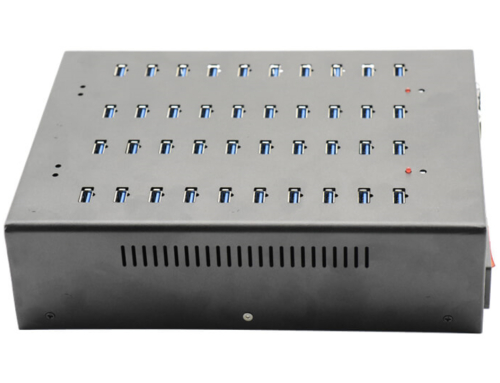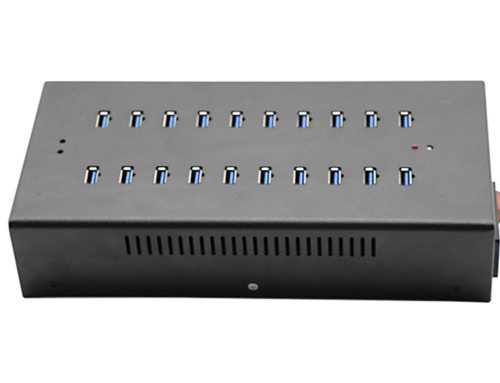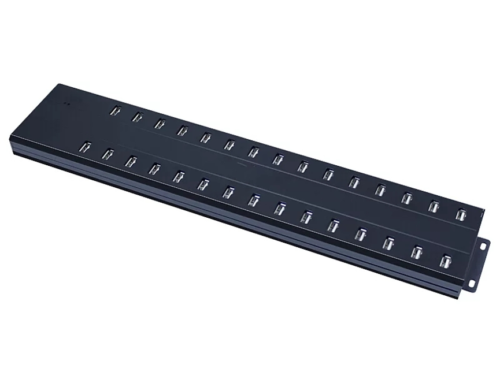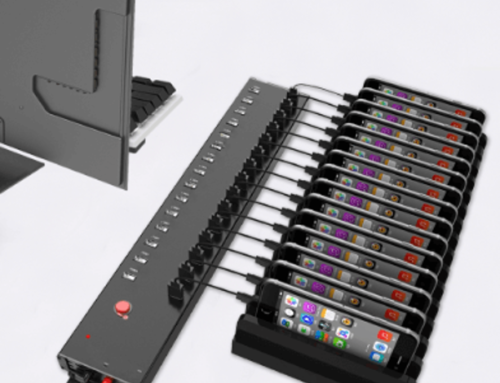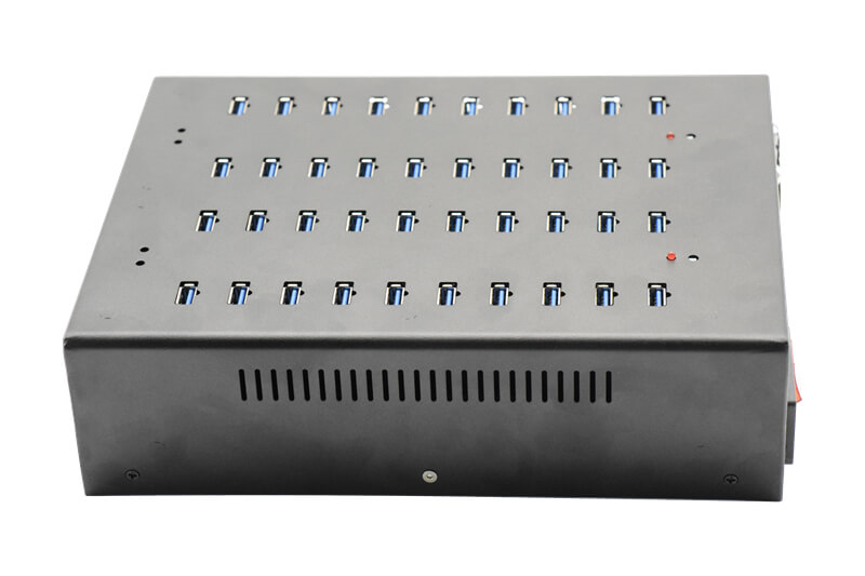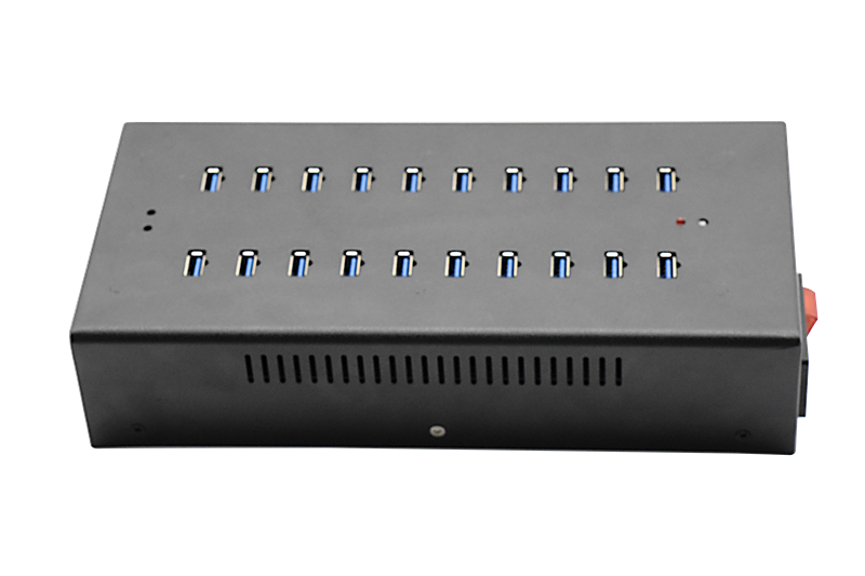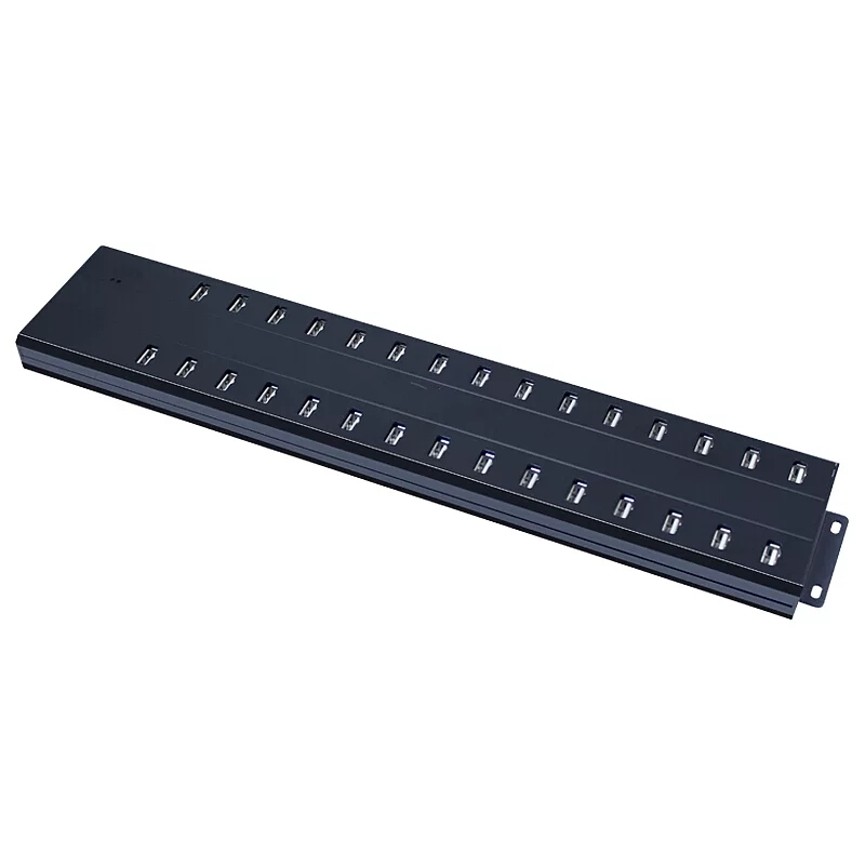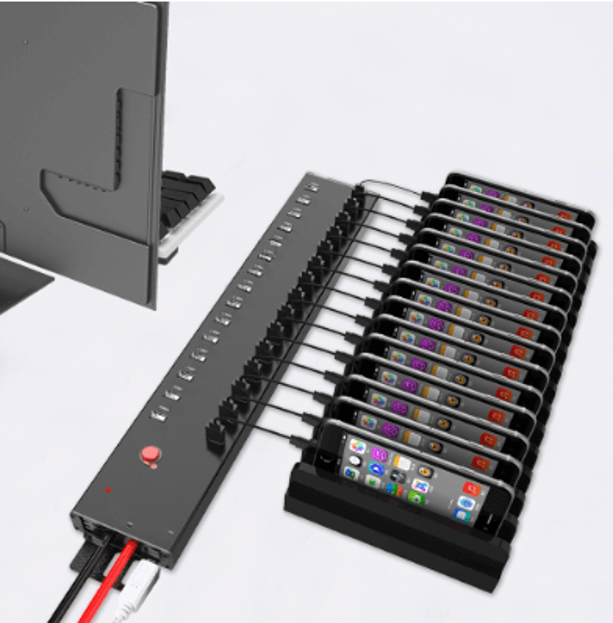
40 Port USB-C Charger is designed for centralized multi-device charging with solar or battery power flexibility.A high-capacity charging station can simplify this process by providing multiple charging ports from a centralized power system.
The 40 Ports Type C Charger – Solar Panel USB-C PD Charger is designed for high-capacity multi-device charging while offering the flexibility of solar or battery power. It uses a Type-C interface and supports several fast-charging protocols, including DCP, QC2.0, QC3.0, FCP, AFC, and PD.
Each port provides a stated output range of 5W to 22.5W, while the system accepts an 8–30V solar panel or battery supply. It also automatically adjusts output voltage and current according to connected-device requirements.
With a stated power factor of more than 95% and conversion efficiency above 85%, the charger is designed to make effective use of its available input power while supporting a wide range of mobile devices and laptops.
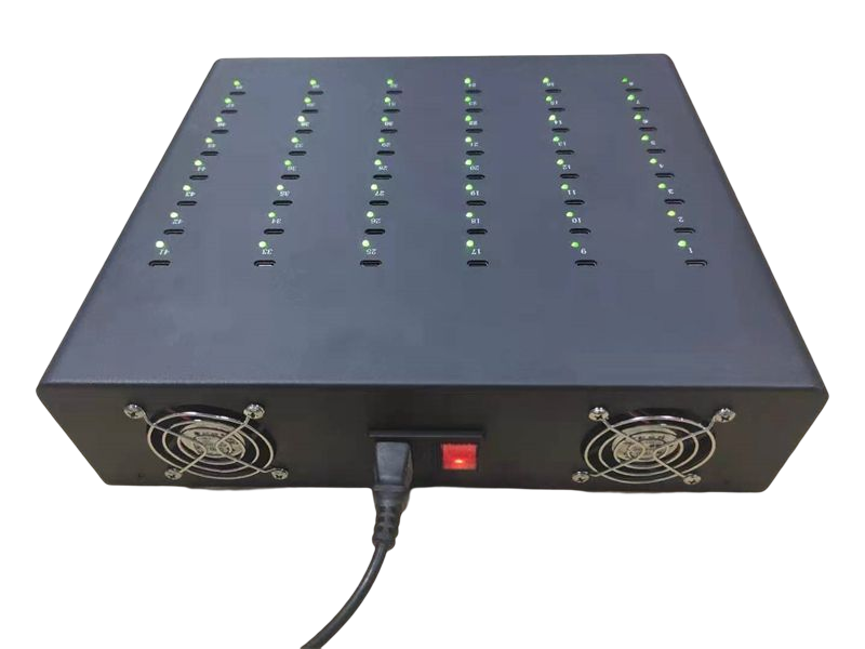
What Is a 40 Ports Type C Solar USB-C PD Charger?
The 40 Ports Type C Charger is a centralized charging system equipped with 40 Type-C interfaces.
Unlike a conventional wall charger intended for one or a few devices, this system is designed for environments where many devices need to be charged simultaneously.
Its solar-compatible power architecture allows it to receive power from an 8–30V solar panel or battery supply.
The basic operating flow is:
Solar Panel/Battery → Charging System → Power Management → 40 Type-C Ports → Connected Devices
The charger can automatically adjust voltage and current based on the charging requirements of compatible devices and supported protocols.
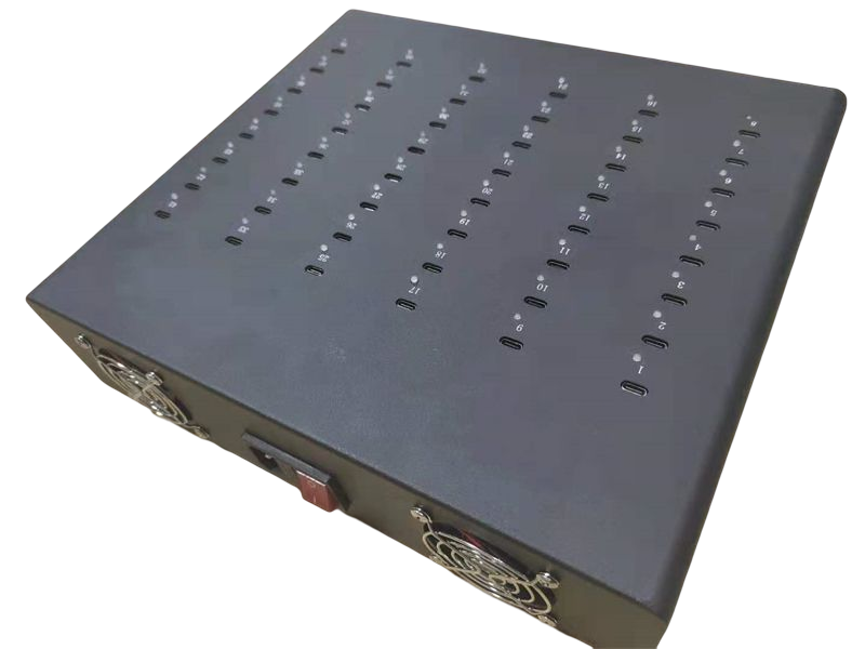
40 Port USB-C Charger: Key Features
| Specification | Details |
| Product Type | 40 Ports Type C Charger |
| Charging Interface | Type-C |
| Number of Ports | 40 |
| Input Source | 8–30V solar panel or battery supply |
| Port Output | 5–22.5W |
| Fast-Charging Protocols | DCP, QC2.0, QC3.0, FCP, AFC, PD |
| Typical Output | 5V 3.1A |
| Typical Output | 7V 2.4A |
| Typical Output | 9V 2A |
| Typical Output | 12V 1.75A |
| Power Factor | More than 95% |
| Conversion Rate | More than 85% |
| Output Control | Automatic voltage/current adjustment |
| Compatibility | Mobile phones and laptops |
| Main Categories | Charger Series, Desktop Multi-Port Charger, Solar-powered USB Charger, Type C Charger |
40 Type-C Charging Ports
The defining feature of this product is its 40 Type-C ports.
A large number of ports makes the charger suitable for centralized charging environments where multiple devices need power at the same time.
Potential use cases include:
- Schools and educational facilities
- Offices
- Training centers
- Technology labs
- Events
- Shared workspaces
- Outdoor charging stations
- Remote locations
- Solar-powered facilities
Instead of deploying many individual charging adapters, an organization can use one centralized charging system.
This can also make cable management and charging administration easier.
USB-C Interface
The charger uses the Type-C interface, which has become increasingly common across smartphones, tablets, laptops, power banks, and other electronic devices.
USB-C provides a reversible connector design, meaning the plug can be inserted in either orientation.
More importantly, USB-C can support different charging and communication capabilities depending on the device, cable, and charging protocol.
It is important to distinguish between the USB-C connector and USB Power Delivery (PD). USB-C describes the physical interface, while PD is a charging protocol that enables compatible devices and chargers to negotiate appropriate voltage and current.
This product supports PD alongside several other charging protocols.
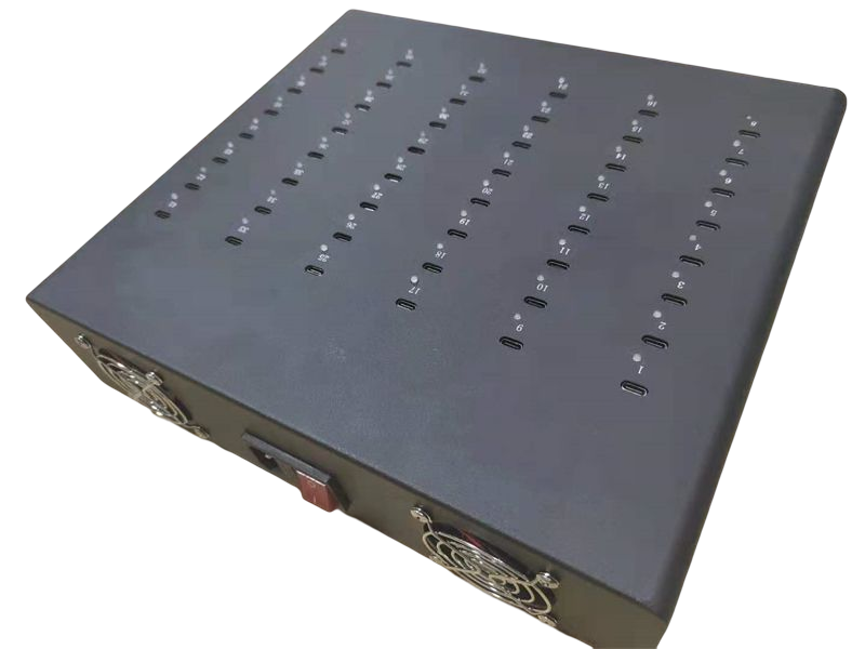
Multiple Fast-Charging Protocols
One of the strongest features of the 40-port charger is its support for several output charging protocols.
The supplied specifications list:
- DCP
- QC2.0
- QC3.0
- FCP
- AFC
- PD
Supporting multiple protocols can improve compatibility with different generations and brands of devices.
DCP
Dedicated Charging Port technology is commonly associated with USB charging applications and allows compatible devices to identify a suitable charging source.
QC2.0 and QC3.0
Qualcomm Quick Charge protocols can support higher charging voltages for compatible devices.
FCP
Fast Charge Protocol is associated with compatible Huawei charging ecosystems.
AFC
Adaptive Fast Charging is associated with compatible Samsung devices.
PD
USB Power Delivery is a widely used charging protocol for compatible USB-C devices, including many modern phones, tablets, and laptops.
Actual charging performance depends on whether the connected device, cable, and charger support the same protocol.
5W to 22.5W Output Per Port
According to the supplied specifications, each port has an output power range of:
5W–22.5W
This provides flexibility for devices with different power requirements.
The highest stated port-level output can be expressed as:
Maximum stated port output = 22.5W
However, 22.5W should be understood as the maximum stated capability of an individual port rather than a guarantee that every connected device will continuously receive 22.5W.
The device must support the relevant charging protocol and power level.
Understanding the Output Profiles
The supplied specifications provide several typical output combinations.
| Voltage | Current | Approx. Power |
| 5V | 3.1A | 15.5W |
| 7V | 2.4A | 16.8W |
| 9V | 2A | 18W |
| 12V | 1.75A | 21W |
These calculations use:
Power = Voltage × Current
For example:
12V × 1.75A = 21W
The stated maximum of 22.5W is therefore within the product’s specified per-port output range, although the exact output depends on the charging negotiation and connected device.
Automatic Voltage and Current Adjustment
The charger automatically adjusts its output voltage and current according to the connected device and supported charging protocol.
This is important because different devices do not necessarily require the same charging conditions.
For example, one device may use a lower-voltage charging profile while another compatible device may negotiate a higher-voltage USB-PD profile.
Automatic adjustment helps the charging system provide an appropriate supported output rather than delivering one fixed charging condition to every device.
Actual operation depends on the device, cable, and protocol negotiation.
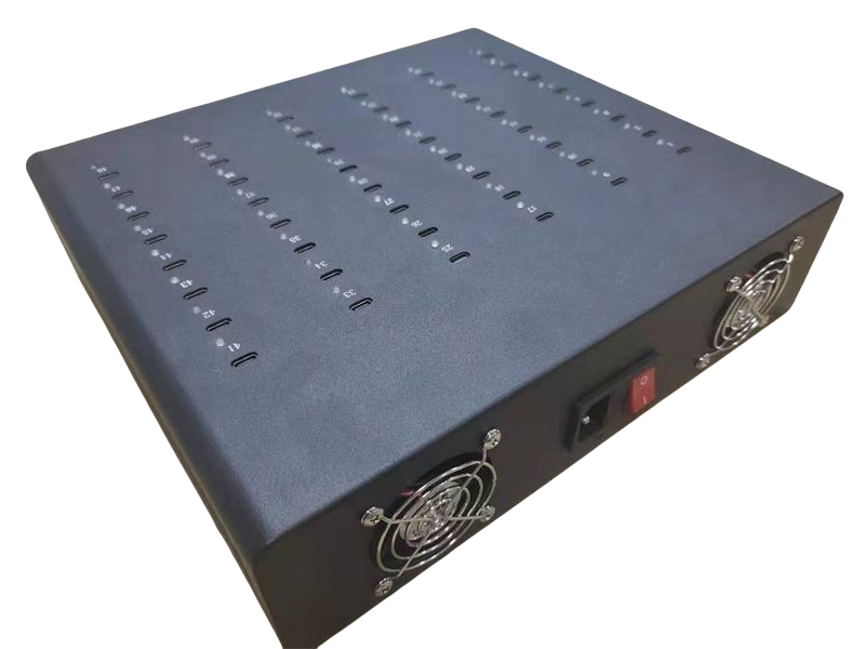
8–30V Solar Panel or Battery Supply
A major distinguishing feature of this charger is its 8–30V input range from a solar panel or battery supply.
This makes it particularly interesting for off-grid and portable charging applications.
A simplified solar charging arrangement can look like:
Solar Panel → 8–30V Input → 40-Port Charger → USB-C Devices
The system can also use a compatible battery as its power source.
This flexibility can be useful when grid electricity is unavailable, unreliable, or impractical.
Solar-Powered Multi-Device Charging
Solar energy provides an alternative way to supply the charging system.
During suitable sunlight conditions, a solar panel can generate electrical power that is supplied to the charger. The charger then converts the available input energy into the appropriate output for connected devices.
However, solar output is variable.
Actual available power depends on factors such as:
- Solar intensity
- Weather
- Panel orientation
- Shading
- Panel capacity
- Temperature
- Wiring
- Battery configuration
- Number of connected devices
Therefore, the charger should not be assumed to deliver maximum output on every port simply because the ports are capable of up to 22.5W.
Power Factor Above 95%
The supplied specifications state a power factor of more than 95%.
Power factor describes how effectively electrical power is being utilized from the input source, particularly in AC power systems.
A higher power factor generally indicates more effective use of supplied electrical power and can be beneficial in systems where power quality and efficient power utilization matter.
The stated value is:
Power Factor >95%
This specification should be interpreted according to the manufacturer’s testing conditions and applicable input configuration.
Conversion Rate Above 85%
The charger also specifies a conversion rate of more than 85%.
Conversion efficiency describes how much of the input energy is converted into usable output energy, with some energy inevitably lost as heat and through other system losses.
For example, if a conversion stage receives 100 units of energy, an efficiency above 85% indicates that more than 85 units are converted into usable output under the relevant test conditions.
Actual efficiency can vary depending on input voltage, output load, temperature, and operating conditions.
Compatibility With Phones and Laptops
The product is specified as being compatible with a variety of mobile phones and laptops.
USB-C PD is especially relevant for modern laptops and other higher-power devices.
However, compatibility should always be evaluated based on the specific device.
Some laptops require significantly more than 22.5W for normal operation or charging. A device may technically connect to a USB-C port but still charge slowly, charge only while powered off, or fail to maintain its battery level under heavy workloads if the available power is insufficient.
Therefore:
USB-C compatibility does not automatically mean every laptop can charge at its full rated speed.
Benefits of a 40-Port Solar USB-C Charger
1. High Port Capacity
Forty Type-C ports allow many devices to be connected to one centralized charging system.
2. Solar Power Compatibility
The 8–30V input allows integration with suitable solar panels.
3. Battery Compatibility
The charger can also be powered from a compatible battery supply.
4. Multiple Charging Protocols
DCP, QC2.0, QC3.0, FCP, AFC, and PD support broadens compatibility.
5. Automatic Power Adjustment
The charger can adjust voltage and current according to supported device requirements.
6. Up to 22.5W Per Port
Each port is specified for a 5–22.5W output range.
7. Centralized Charging
A single system can replace a large collection of individual charging adapters in suitable applications.
Applications
The 40 Port USB-C Charger is suitable for schools, offices, training centers, technology labs, and shared workspaces.
| Application | Potential Use |
| Schools | Charge tablets and compatible student devices |
| Offices | Centralized employee device charging |
| Technology Labs | Charge multiple test and development devices |
| Training Centers | Support large groups of users |
| Events | Provide shared charging facilities |
| Outdoor Areas | Use solar power for mobile charging |
| Remote Locations | Support devices without conventional grid access |
| Emergency Charging | Provide an alternative power source |
| Shared Workspaces | Centralize charging for users |
| Solar Installations | Integrate USB-C charging with renewable energy systems |
40-Port Charger vs. Individual Chargers
| Feature | 40-Port Solar USB-C Charger | Individual Chargers |
| Charging Ports | 40 | Usually 1–2 each |
| Centralized Charging | Yes | No |
| Solar Input | Yes | Usually no |
| Battery Input | Yes | Depends on charger |
| Type-C | Yes | Depends on charger |
| Multiple Protocols | DCP/QC/FCP/AFC/PD | Depends on model |
| Maximum Stated Port Output | 22.5W | Depends on model |
| Organization | Centralized | Multiple adapters |
| Large-Scale Charging | Suitable | Less convenient |
| Off-Grid Potential | Yes | Limited |
For large groups of devices, the centralized approach can simplify deployment and management.
Solar Charging Capacity and System-Level Power
One important distinction is the difference between per-port power and overall system power.
The product states that each port can provide 5–22.5W. However, this does not mean that 40 ports can automatically deliver 22.5W each at the same time.
For example, a theoretical calculation would be:
40 × 22.5W = 900W
This is only a mathematical sum of the maximum stated port capabilities. It should not be interpreted as the product’s confirmed 900W system output.
The actual total available output depends on the charger’s internal power architecture and the power available from the solar panel or battery supply.
This is especially important in solar-powered applications because the available input power can vary significantly.
How to Choose a Solar USB-C Charging System
Before deploying a high-capacity solar charging station, consider the following factors.
1. Solar Panel Capacity
The solar panel must provide sufficient power for the expected charging load.
2. Battery Capacity
If charging must continue when sunlight is unavailable, battery capacity becomes important.
3. Number of Devices
Forty ports are useful for large groups, but the number of simultaneously active devices should be matched to available system power.
4. Device Power Requirements
Phones may require less power than laptops. Make sure the charger can meet the requirements of the intended devices.
5. Charging Protocols
Check whether the devices support PD, QC, AFC, FCP, or other protocols provided by the charger.
6. Cable Quality
USB-C charging performance depends on cable capability as well as the charger and device.
7. Environmental Conditions
For outdoor deployment, consider sunlight, temperature, dust, moisture, and physical protection.
Best Practices for Solar USB-C Charging
For reliable operation, users should:
- Position the solar panel for maximum available sunlight.
- Keep solar panels clean.
- Avoid unnecessary shading.
- Use appropriate USB-C cables.
- Match the solar panel and battery to the charger’s 8–30V input requirements.
- Avoid assuming maximum output is available on every port simultaneously.
- Confirm laptop power requirements before deployment.
- Monitor system temperature during heavy operation.
- Use suitable battery protection and charging equipment where applicable.
- Follow the manufacturer’s installation and operating instructions.
Frequently Asked Questions
How many devices can this charger support?
The charger has 40 Type-C ports, allowing up to 40 compatible devices to be connected. Actual simultaneous charging depends on the available system power and device requirements.
What is the maximum output per port?
Each port is specified with an output range of 5W to 22.5W.
What solar input does it support?
The charger is designed to operate from an 8–30V solar panel or battery supply.
Does it support USB Power Delivery?
Yes. PD is one of the supported charging protocols listed in the supplied specifications.
Which other fast-charging protocols are supported?
The listed protocols include DCP, QC2.0, QC3.0, FCP, AFC, and PD.
Can it charge laptops?
It is specified as compatible with a variety of mobile phones and laptops. However, the maximum stated per-port output is 22.5W, so laptop compatibility and charging speed depend on the specific laptop’s power requirements.
Does it automatically adjust power?
Yes. The specifications state that the charger automatically adjusts output current and voltage.
What are the typical output profiles?
The supplied profiles are 5V/3.1A, 7V/2.4A, 9V/2A, and 12V/1.75A.
Is 22.5W available on every port simultaneously?
The specifications state up to 22.5W per port, but they do not provide a confirmed total system output rating. Therefore, simultaneous maximum output across all 40 ports should not be assumed.
Can a battery power the charger?
Yes. The supplied specifications state that it can be powered by an 8–30V battery supply in addition to a solar panel.
Conclusion
The 40 Ports Type C Charger – Solar Panel USB-C PD Charger combines high-capacity multi-device charging with solar and battery power flexibility. Its 40 Type-C ports, support for DCP, QC2.0, QC3.0, FCP, AFC, and PD, 5–22.5W per-port output, and 8–30V solar or battery input make it a versatile solution for centralized charging applications. The 40 Port USB-C Charger provides a centralized charging solution with flexible solar and battery power options.
The automatic adjustment of output voltage and current helps the charger accommodate different compatible devices, while the stated power factor above 95% and conversion rate above 85% highlight its focus on efficient power utilization.
Its strongest advantage is the combination of large charging capacity and off-grid power compatibility. This can make it valuable for schools, offices, technology facilities, events, remote locations, and solar-powered charging installations.
However, the 22.5W per-port figure should not be interpreted as a guaranteed 900W simultaneous system output. Actual performance depends on the available solar or battery power, internal power distribution, connected devices, charging protocols, and operating conditions.
For organizations seeking a centralized Type-C charging solution that can integrate with solar energy, the 40-port design offers a practical foundation for building a flexible and scalable multi-device charging environment.