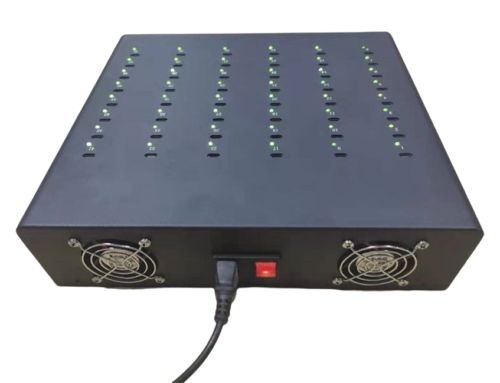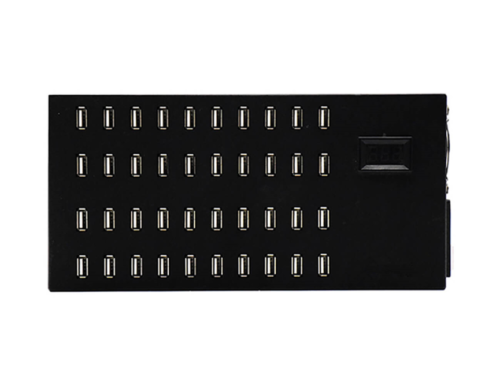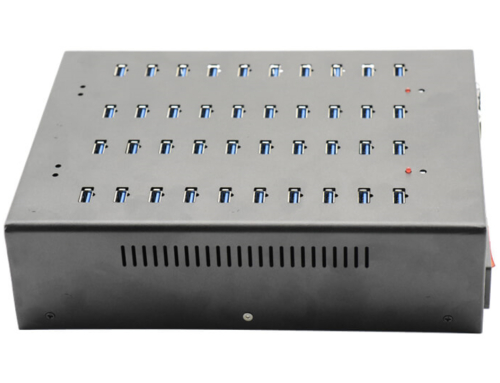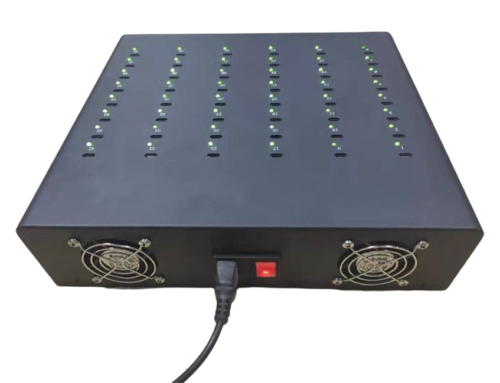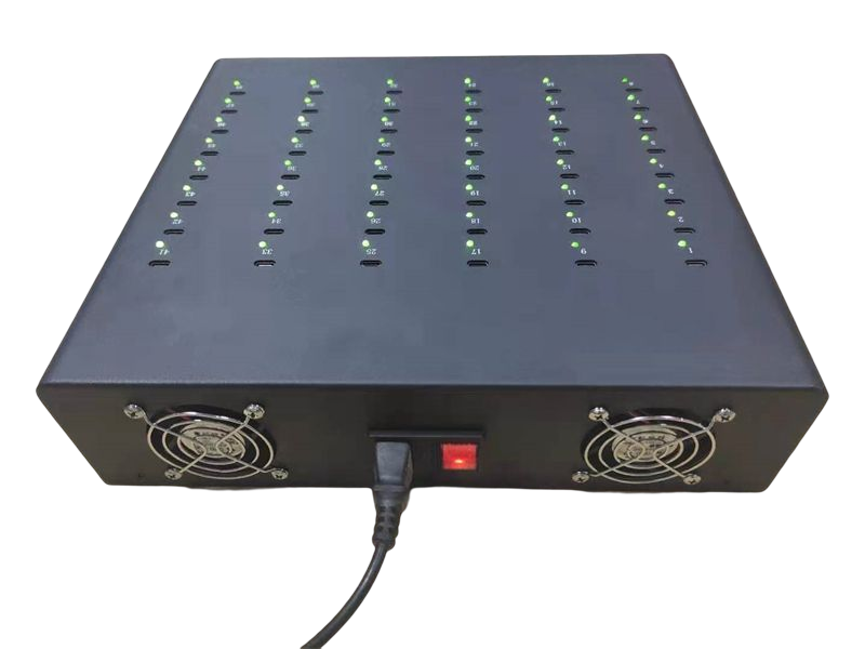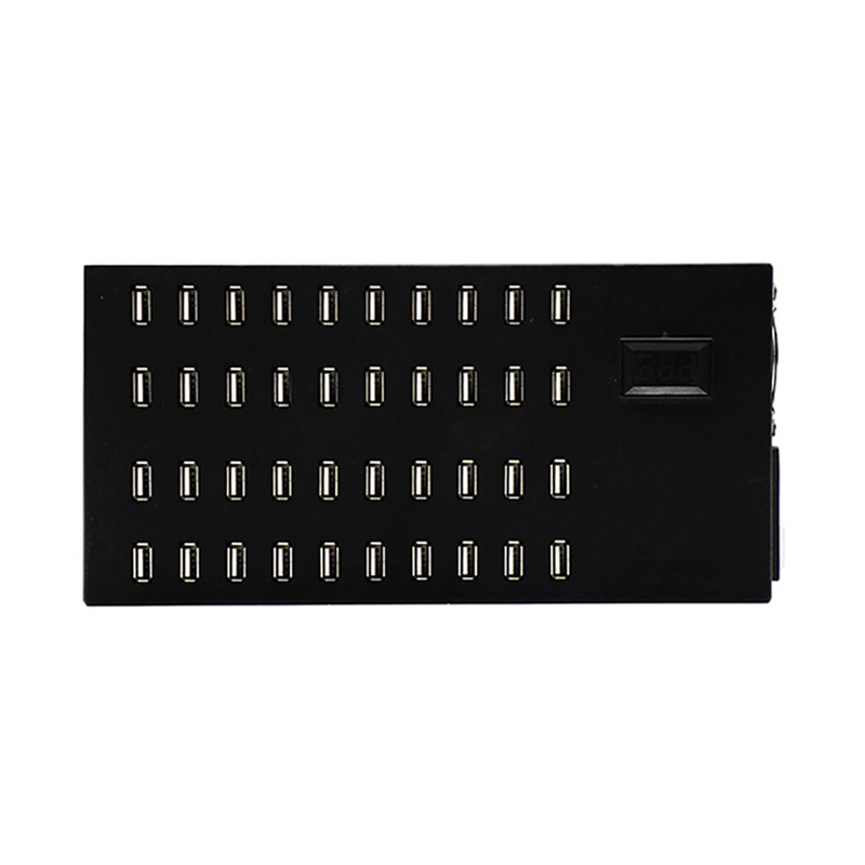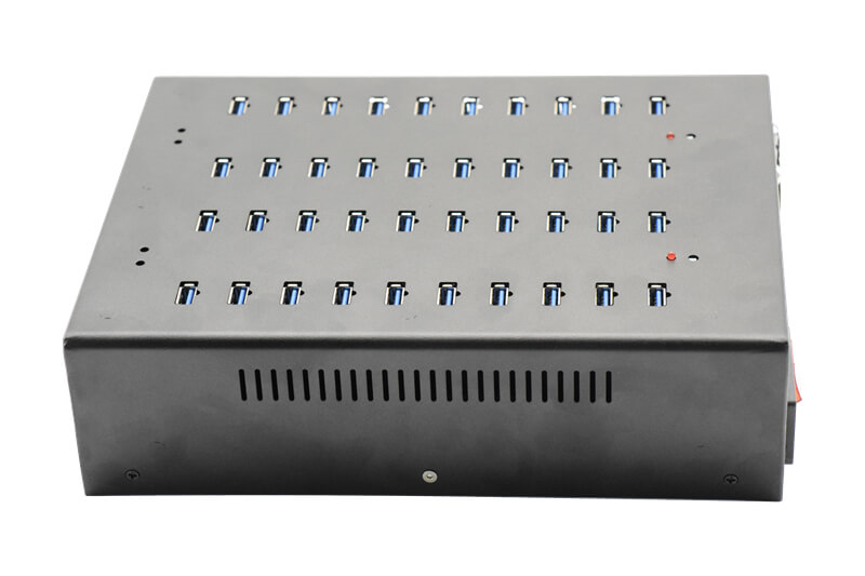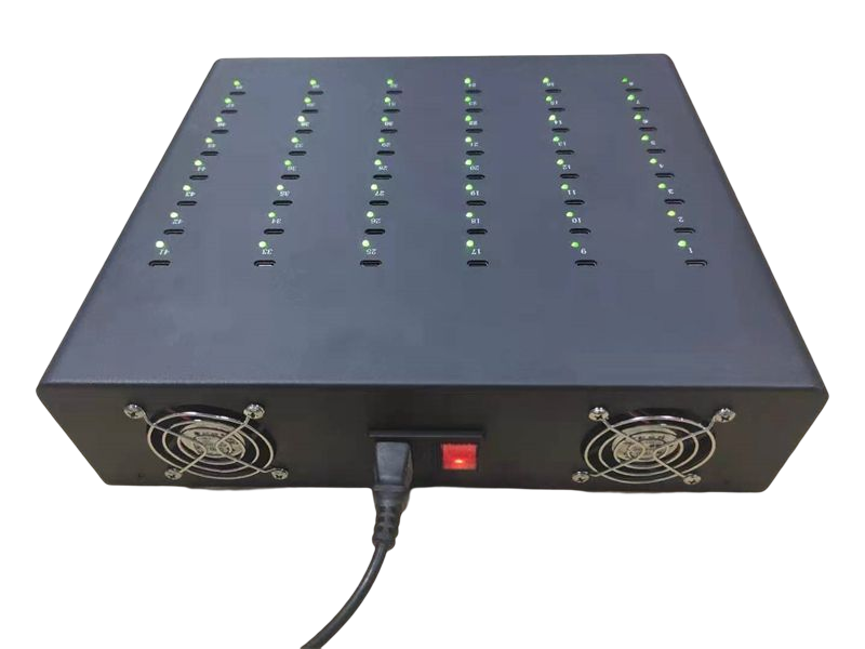
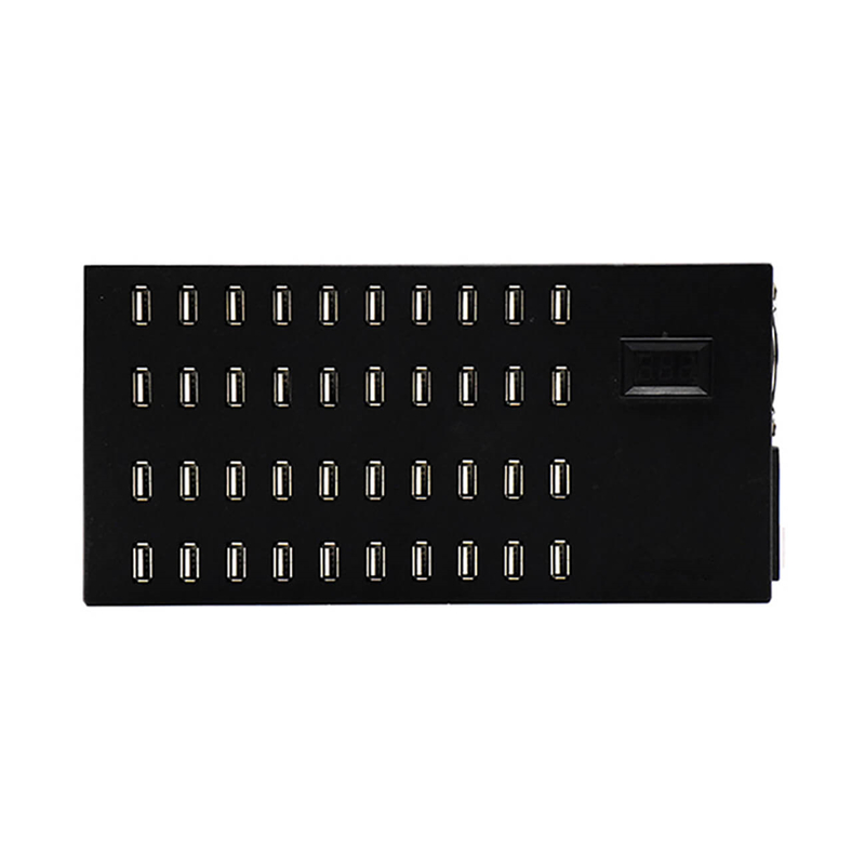
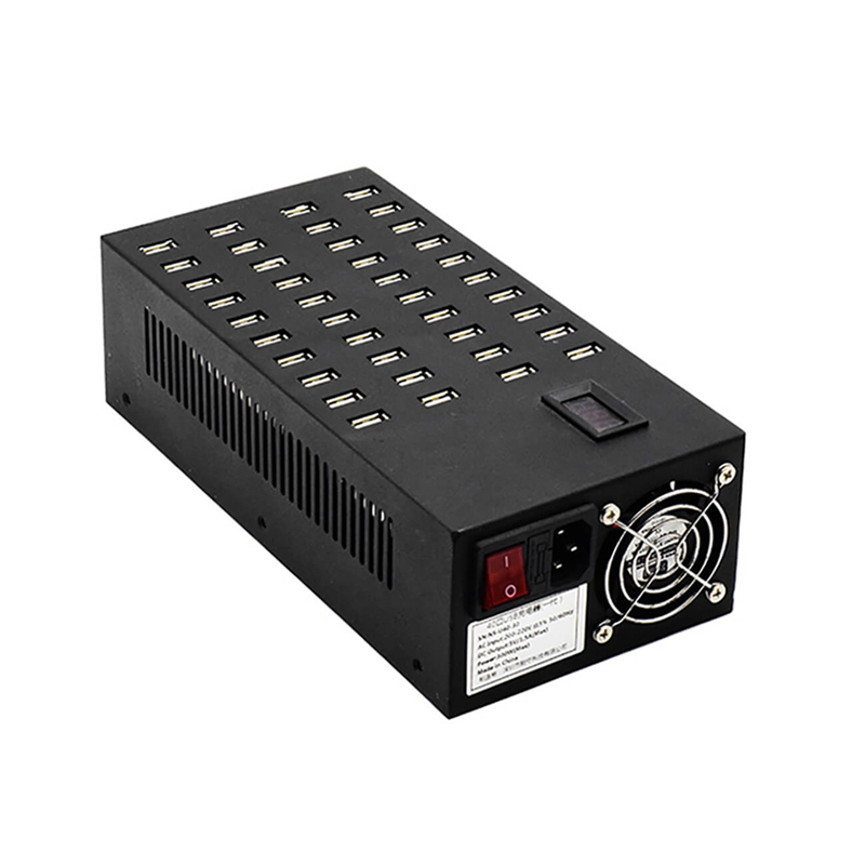
40 Port USB Charger C-40 is designed for high-capacity multi-device charging in schools, offices, training centers, events, and shared workspaces. A centralized multi-port charging station can simplify this process by providing a dedicated location for charging multiple devices at once.
The 40 Ports USB Charger Model C-40 is designed for high-capacity multi-device charging. It provides 40 charging ports and features a 300W power supply, making it suitable for environments where many devices need access to power from a centralized system.
Each port is specified with a 5V 2.4A output, while the overall system has a 300W power supply. This combination makes the C-40 a practical option for schools, offices, training centers, events, shared workspaces, and other environments with significant device-charging requirements. The 40 Port USB Charger is suitable for high-capacity charging environments.
The product is categorized under All Product, Charger Series, and Multiport USB Charger, with related tags including multi port USB charger, solar charging station, and USB charging station for multiple devices.
What Is the 40 Ports USB Charger C-40?
The C-40 is a centralized USB charging system with 40 ports designed to charge multiple compatible devices simultaneously.
Instead of distributing individual wall chargers across a room, users can connect multiple devices to one charging station.
Its basic charging structure can be represented as:
AC Power → 300W Power Supply → C-40 Charging System → 40 USB Ports → Connected Devices
This centralized approach can help organizations create a more organized charging environment.
The C-40 is particularly useful where multiple devices are used every day and need to remain charged and ready for use.
48 Port USB C Charger: Key Features
| Specification | Details |
| Product Name | 40 Ports USB Charger |
| Model | C-40 |
| Number of Ports | 40 |
| Power Supply | 300W |
| Output Per Port | 5V/2.4A |
| Theoretical Per-Port Power | 12W |
| Product Type | Multiport USB Charger |
| Primary Use | Charging multiple devices |
| Categories | All Product, Charger Series, Multiport USB Charger |
| Related Tags | Multi Port USB Charger |
| Related Tags | Solar Charging Station |
| Related Tags | USB Charging Station for Multiple Devices |
40 Charging Ports for Multiple Devices
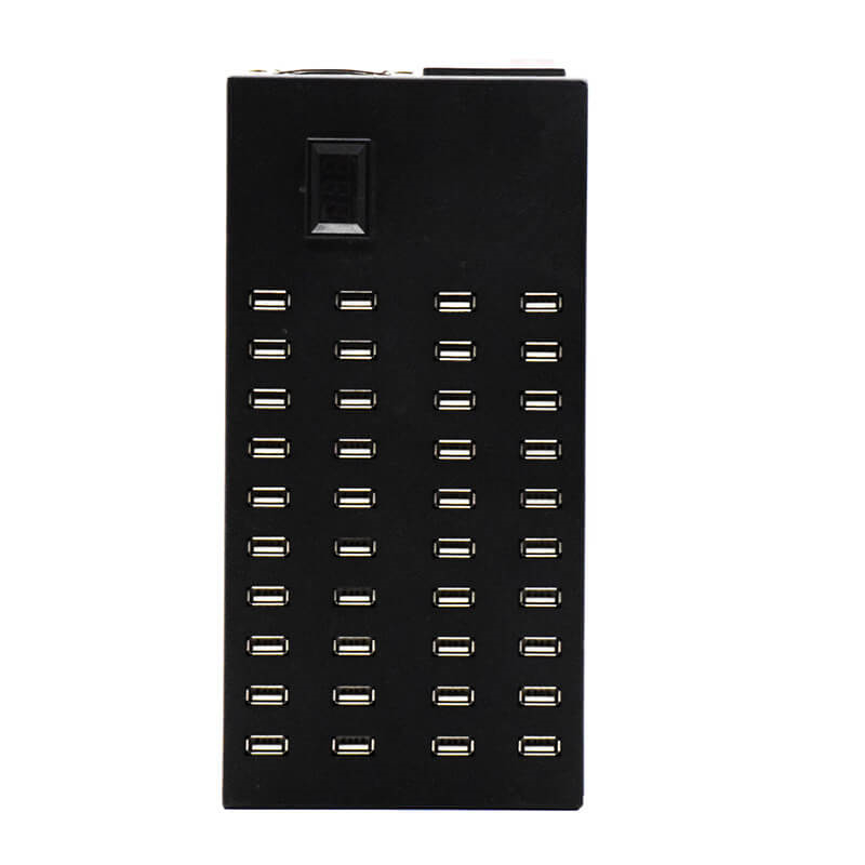
The most prominent feature of the C-40 is its 40-port capacity.
Forty charging connections allow a large number of compatible devices to be connected to one centralized charging unit.
This can be especially helpful in environments where devices are shared among students, employees, customers, or event participants.
Instead of managing dozens of individual adapters, a centralized charging station can provide one designated charging location.
Potential advantages include:
- High charging capacity
- Centralized device management
- Reduced adapter clutter
- Easier cable organization
- Convenient access for multiple users
- Better use of shared charging areas
300W Power Supply
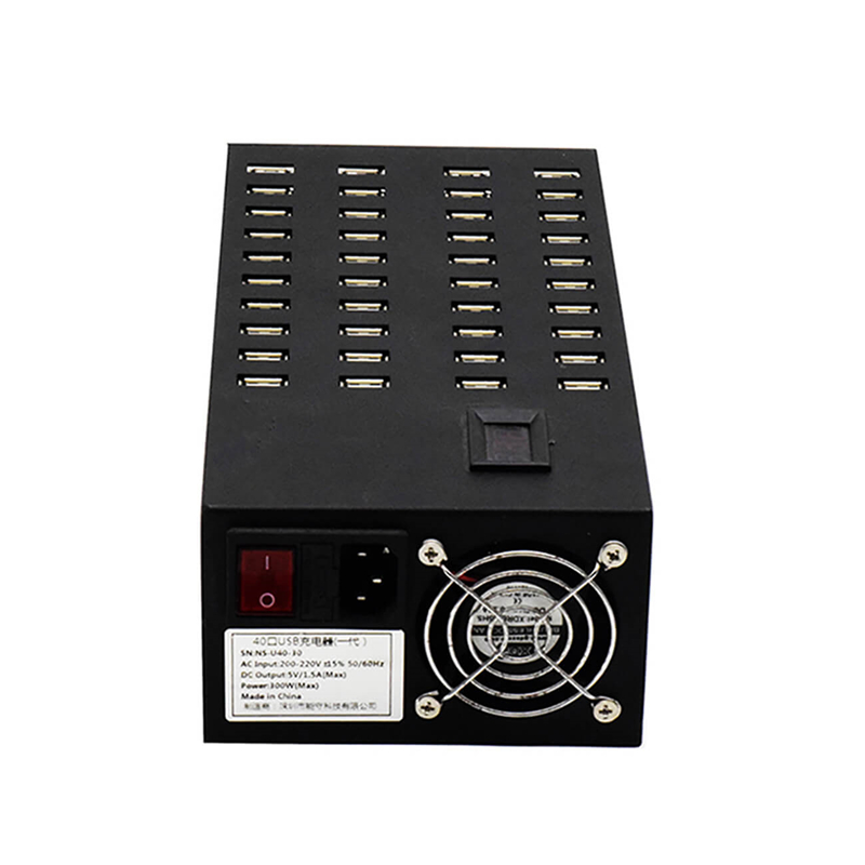
The C-40 is specified with a 300W power supply.
This is an important system-level specification because the total available power affects how many devices can be charged and how much power can be distributed across the connected ports.
It is important to distinguish between per-port output and overall system power.
The product specifies:
5V × 2.4A = 12W per port
If all 40 ports were mathematically assigned their maximum stated 12W output:
40 × 12W = 480W
However, the product’s overall power supply is rated at 300W.
Therefore, the 300W specification should be treated as the system-level power supply rating, while 5V/2.4A represents the stated per-port output capability.
The 12W-per-port figure should not be interpreted as 12W being continuously available on all 40 ports simultaneously. Schools and offices can use the 40 Port USB Charger to manage shared device charging.
Actual power distribution depends on the charger’s internal design and connected devices.
Understanding 5V/2.4A Output
Each port is specified to provide:
5V / 2.4A
Using the basic power formula:
Power = Voltage × Current
Therefore:
5V × 2.4A = 12W
This gives a theoretical maximum of approximately 12W per port when the port operates at its stated voltage and current.
Actual device charging can be lower depending on the connected device’s charging requirements, battery condition, cable, and internal charging circuitry.
A device that requires less current will not necessarily draw the full 2.4A.
Centralized Charging for 40 Devices
The C-40 is designed around the concept of centralized charging.
A centralized charging station can be particularly useful when a large number of devices are used within the same environment.
For example, a school may have dozens of tablets that need to be charged at the end of each class. Rather than providing an individual wall adapter for every device, a centralized 40-port charger can provide a designated charging area.
The same concept can be applied to:
- Smartphones
- Tablets
- USB-powered accessories
- Portable electronics
- Shared mobile devices
Device compatibility should always be confirmed before connecting equipment.
Benefits of the 40 Ports USB Charger
1. High Port Capacity
Forty ports provide substantial charging capacity for shared environments.
2. Centralized Charging
Multiple devices can be charged from one dedicated charging location.
3. 300W System Power
The 300W power supply provides substantial overall capacity for a high-port-count charging system.
4. 5V/2.4A Per-Port Output
The stated output provides up to approximately 12W of theoretical power per port.
5. Reduced Charger Clutter
Centralizing charging can reduce the number of individual adapters needed around a workspace.
6. Suitable for Shared Environments
The 40-port configuration can support environments where many users need charging access.
7. Scalable Charging Management
A single charging station can simplify the management of multiple devices compared with numerous independent chargers.
Applications of the C-40
The 40-port configuration makes the charger suitable for a variety of high-capacity charging environments.
| Application | Potential Use |
| Schools | Charging student tablets and mobile devices |
| Universities | Centralized charging for shared devices |
| Offices | Employee smartphone and USB device charging |
| Training Centers | Charging devices used during classes |
| Conference Rooms | Supporting multiple participant devices |
| Events | Shared charging stations for attendees |
| Retail Locations | Staff device charging |
| Hotels | Centralized device charging areas |
| Libraries | Charging access for visitors |
| Shared Workspaces | Convenient multi-user charging |
| Technology Labs | Charging multiple USB devices |
| Service Centers | Keeping mobile equipment powered |
C-40 vs. Individual USB Chargers
A centralized charger can offer several organizational benefits compared with multiple individual adapters.
| Feature | C-40 40-Port USB Charger | Individual USB Chargers |
| Number of Charging Ports | 40 | Usually 1–2 each |
| Centralized Design | Yes | No |
| System Power | 300W | Depends on individual chargers |
| Per-Port Output | 5V/2.4A | Depends on charger |
| Multi-Device Charging | Yes | Requires many adapters |
| Cable Management | Centralized | More scattered |
| Shared Charging | Convenient | Less organized |
| Space Management | One charging station | Multiple power adapters |
| Large-Scale Use | Suitable | More complex |
For environments with dozens of devices, the C-40 can provide a more organized alternative to deploying many individual charging adapters.
Why Centralized Charging Matters
Large numbers of devices create practical management challenges.
Without a centralized system, an organization may have:
- Many charging adapters
- Numerous power sockets
- Tangled cables
- Unclear device ownership
- Devices charging in different locations
- Difficulties monitoring charging areas
A centralized station provides a defined location for charging.
A simple workflow can be:
Device Collection → Connect to C-40 → Charge → Disconnect → Return to Use
This can make charging routines easier to manage, particularly in schools, offices, and shared facilities.
USB Charging Station for Multiple Devices
The product is tagged as a USB charging station for multiple devices, which accurately reflects its high-capacity configuration.
A charging station is more than simply a collection of USB ports. In a practical environment, it can become part of a device-management workflow.
For example, an organization can establish a dedicated charging area where devices are:
- Collected after use.
- Connected to available ports.
- Left to charge.
- Checked before the next use period.
- Returned to users.
This approach can help establish consistent charging procedures.
Solar Charging Station Tag
The product is also tagged as a solar charging station.
However, the supplied specifications for the C-40 identify a 300W power supply but do not specify solar input, solar-panel compatibility, battery input, or an integrated solar controller.
Therefore, the solar charging station tag should not be interpreted as confirmation that the C-40 itself includes a solar panel or built-in solar charging system. The 40 Port USB Charger provides a centralized charging solution for multiple devices.
If the charger is intended for integration with a solar installation, users should confirm the manufacturer’s supported input configuration and electrical requirements before deployment.
Understanding Total Power vs. Port Power
This is one of the most important technical considerations for the C-40.
The product provides two different power-related specifications:
Per-port: 5V/2.4A = approximately 12W
System-level: 300W power supply
These specifications describe different parts of the system.
The per-port value indicates the stated capability of an individual charging connection, while the 300W rating describes the overall power supply.
For example, if 20 devices were each drawing 10W:
20 × 10W = 200W
That would remain within a 300W system-level power budget, assuming the charger is designed to distribute that power accordingly.
If connected devices demand more power than the system can provide, internal power distribution may limit the available output.
Therefore, users should consider both the number of devices and their actual charging requirements.
Factors That Affect Real-World Charging
The stated 5V/2.4A output does not mean every connected device will always charge at exactly 2.4A.
Actual charging depends on several factors.
Device Requirements
Each device has its own charging circuitry and maximum supported input.
Cable Quality
Cable quality and specifications can affect charging performance.
Battery Condition
A device may draw different amounts of power depending on its battery level and charging stage.
Power Distribution
With 40 devices connected, the total available system power must be distributed among active ports.
Device Charging Technology
Different devices may support different charging technologies and current requirements.
Consequently, the manufacturer’s maximum ratings should be viewed as technical capabilities rather than guarantees of identical real-world charging behavior.
Choosing a 40-Port USB Charger
Before selecting a high-capacity USB charging station, consider the following factors.
Number of Ports
Determine how many devices need to be charged simultaneously.
The C-40 provides 40 ports, making it appropriate for relatively large charging requirements.
Total Power
Check the overall power supply rating.
The C-40 is rated at 300W.
Per-Port Output
Review the output provided by each port.
The C-40 specifies 5V/2.4A per port.
Device Compatibility
Make sure your devices are compatible with the charger’s output configuration.
Installation Environment
Consider where the charger will be placed and how cables will be organized.
Cable Management
Forty connected devices can generate significant cable volume, so cable routing and organization should be planned.
Best Practices for Using the C-40
To maintain a reliable charging environment:
1. Use Appropriate USB Cables
Use cables suitable for the connected devices and their charging requirements.
2. Avoid Damaged Cables
Replace cables with damaged insulation, connectors, or exposed conductors.
3. Keep the Charging Area Organized
Use cable-management methods to prevent tangling around the 40 ports.
4. Do Not Exceed System Capacity
Remember that the system is rated at 300W overall.
5. Monitor Device Compatibility
Make sure connected devices are designed for the charger’s output specifications.
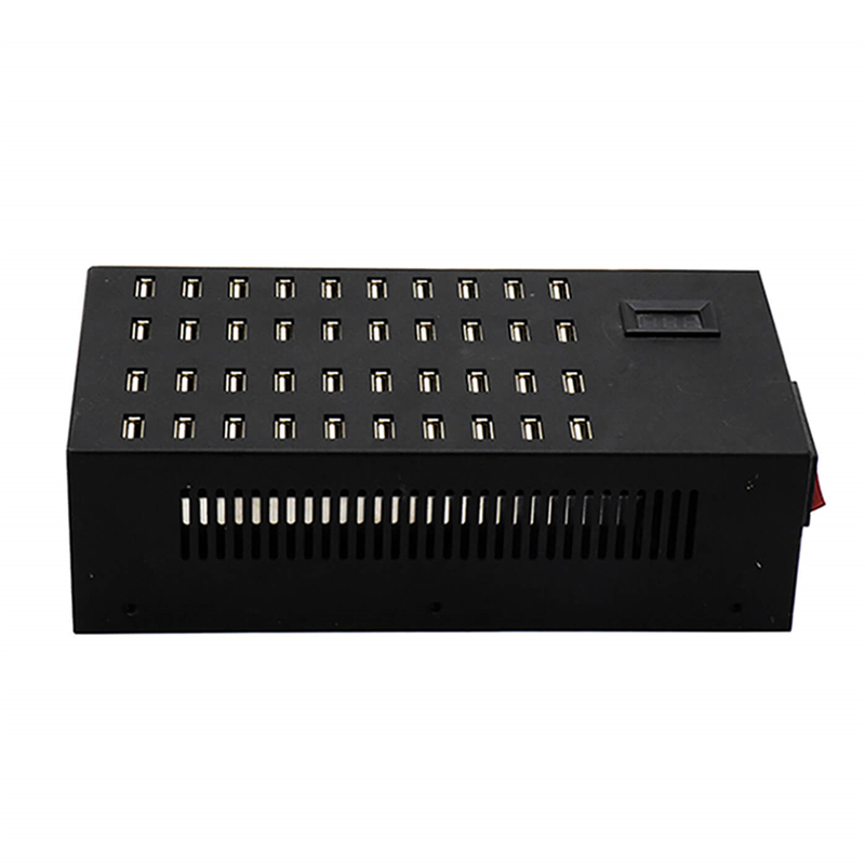
6. Provide Adequate Ventilation
Do not obstruct ventilation openings if the product design includes them.
7. Inspect Connections
Regularly check ports and cables for signs of wear.
8. Follow Manufacturer Instructions
Always follow the manufacturer’s installation, operating, and maintenance guidance.
Ideal Environments for the C-40
| Environment | Why a 40-Port Charger Helps |
| Schools | Large numbers of tablets and mobile devices |
| Offices | Shared employee charging |
| Universities | Student device charging |
| Events | High demand for temporary charging |
| Training Centers | Multiple devices used during sessions |
| Conference Facilities | Charging participant devices |
| Libraries | Public charging access |
| Shared Offices | Centralized charging |
| Retail | Staff device management |
| Technology Centers | Multiple USB-powered devices |
Frequently Asked Questions
What is the C-40?
The C-40 is a 40 Ports USB Charger designed for centralized multi-device charging.
How many devices can it charge?
It has 40 USB charging ports, allowing up to 40 compatible devices to be connected. Actual simultaneous charging performance depends on system power distribution and device requirements.
What is the power supply rating?
The C-40 has a stated 300W power supply.
What is the output of each port?
Each port is specified at 5V/2.4A.
How much power is 5V/2.4A?
Using the formula voltage × current:
5V × 2.4A = 12W
Therefore, the stated per-port output represents approximately 12W of theoretical maximum power.
Does 40 × 12W equal 480W?
Mathematically, 40 × 12W equals 480W, but this does not mean the C-40 can deliver 480W simultaneously. The product is specified with a 300W system power supply, so the overall system rating takes precedence when considering total available power.
Is it a fast charger?
The supplied information specifies 5V/2.4A output but does not identify a particular fast-charging protocol. Therefore, specific fast-charging claims should be avoided unless confirmed by the manufacturer.
Is it suitable for smartphones and tablets?
It is designed for charging multiple USB-powered devices. Exact compatibility depends on the devices’ charging requirements and the charger’s output specifications.
Is the C-40 solar-powered?
The product is tagged as a solar charging station, but the supplied specifications do not identify a solar input or integrated solar system. Solar compatibility should therefore be confirmed with the manufacturer.
Where can a 40-port charger be used?
It can be useful in schools, offices, training centers, events, conference rooms, shared workspaces, libraries, and other environments where many devices need centralized charging.
Conclusion
The 40 Ports USB Charger Model C-40 is designed to simplify high-capacity multi-device charging by bringing 40 USB charging ports together in one centralized system. With a 300W power supply and a stated 5V/2.4A output per port, it provides a practical charging platform for environments where many compatible devices need regular access to power.
Its high port count makes it particularly useful for schools, offices, universities, training centers, events, shared workspaces, and other organizations managing numerous mobile devices.
One of the most important specifications to understand is the difference between the 12W theoretical per-port capability and the 300W overall system power supply. The 300W rating means the 40 ports should not be assumed to deliver their maximum 12W simultaneously.
The product’s solar charging station tag may also make it relevant to solar-related applications, but because no solar input specifications were supplied, solar compatibility should be verified before deployment.
Overall, the C-40 offers a centralized approach to charging that can reduce adapter clutter, simplify device management, and provide convenient multi-device charging from one high-capacity USB charging station.