Introduction
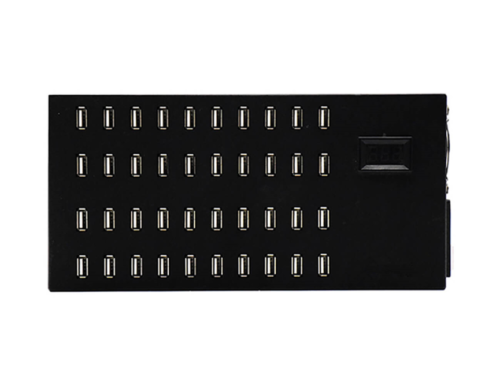
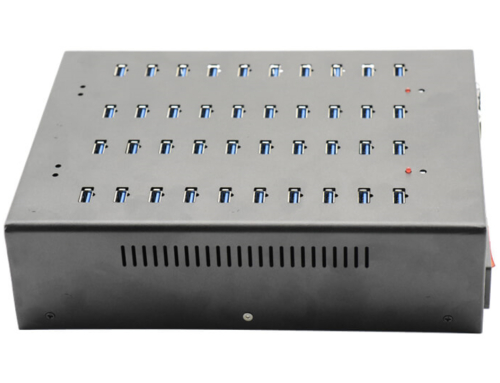
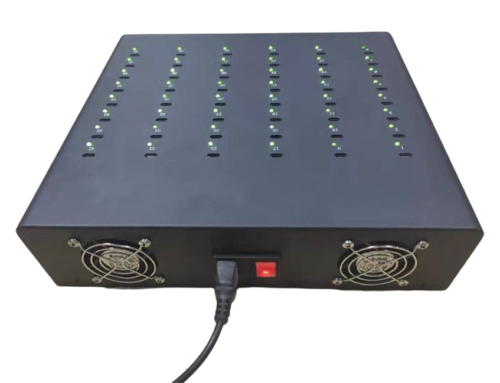
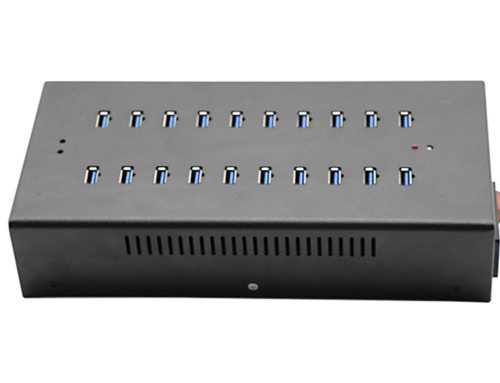
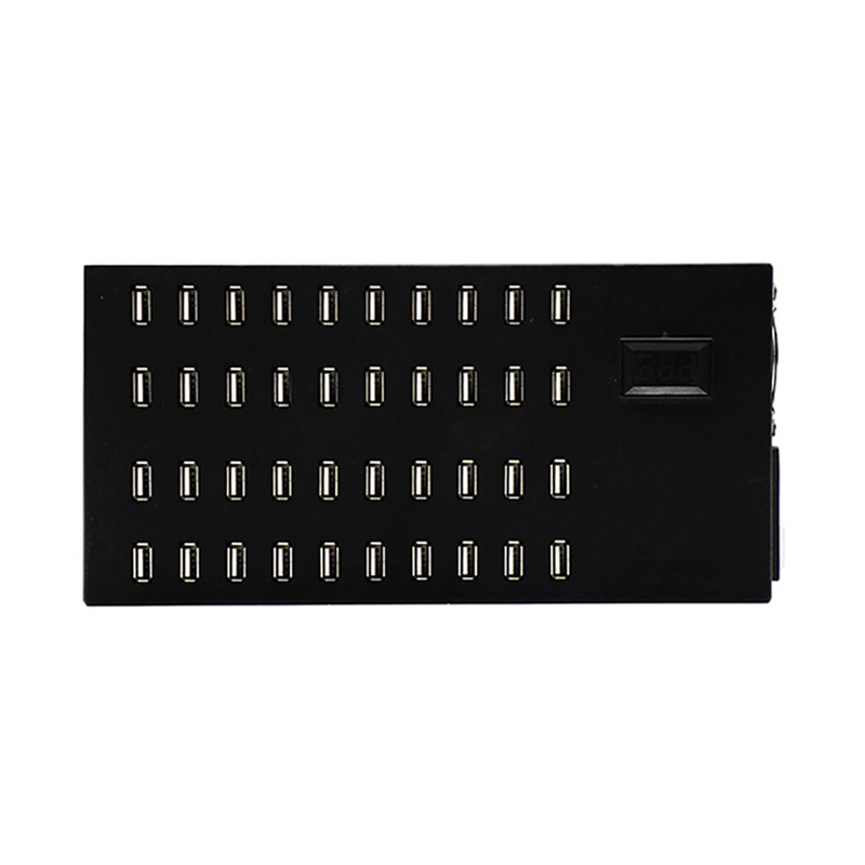
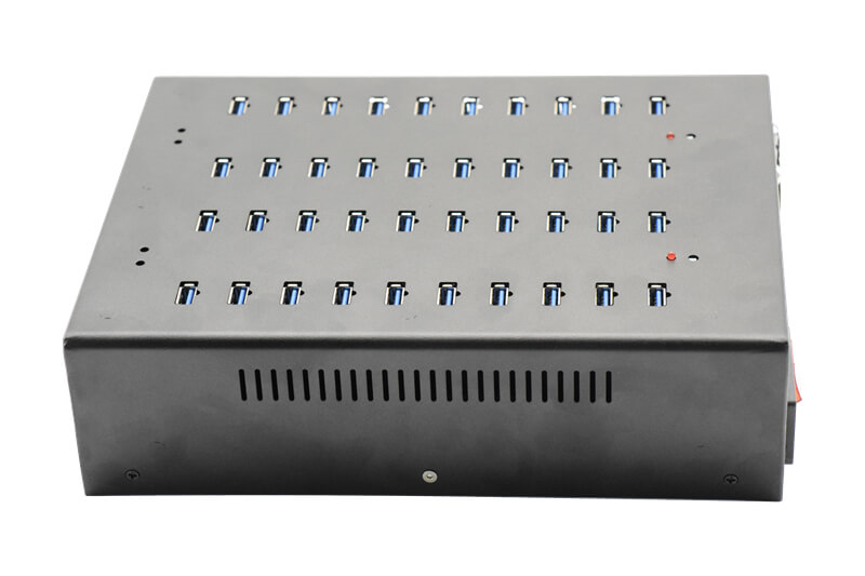
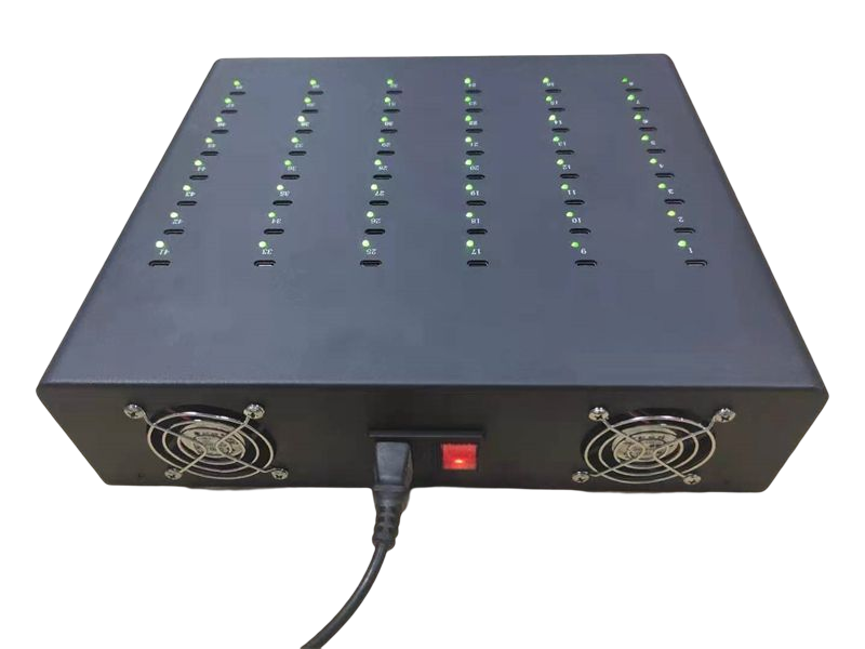
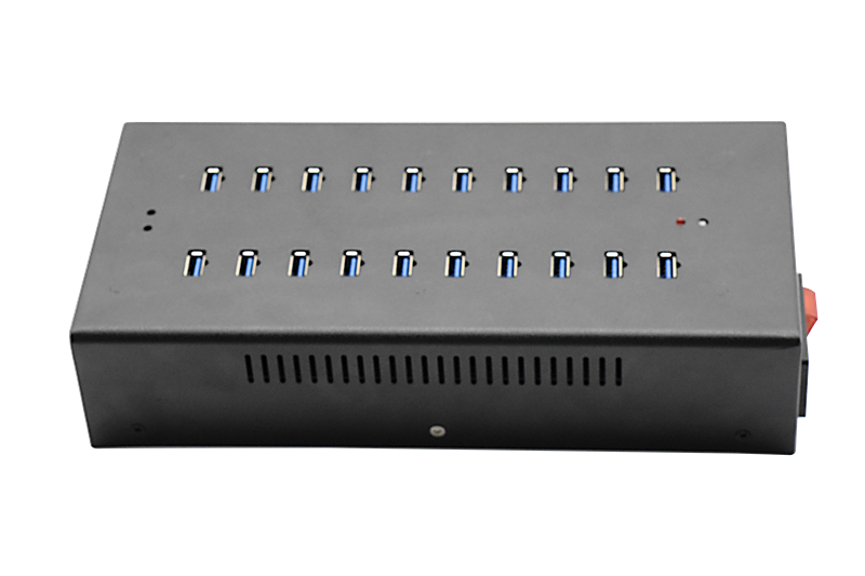
48 Port USB C Charger is a high-capacity charging solution designed to charge multiple compatible USB-C devices from one centralized system. Individual adapters may occupy numerous power outlets, create cable clutter, and make it difficult to maintain a consistent charging routine.
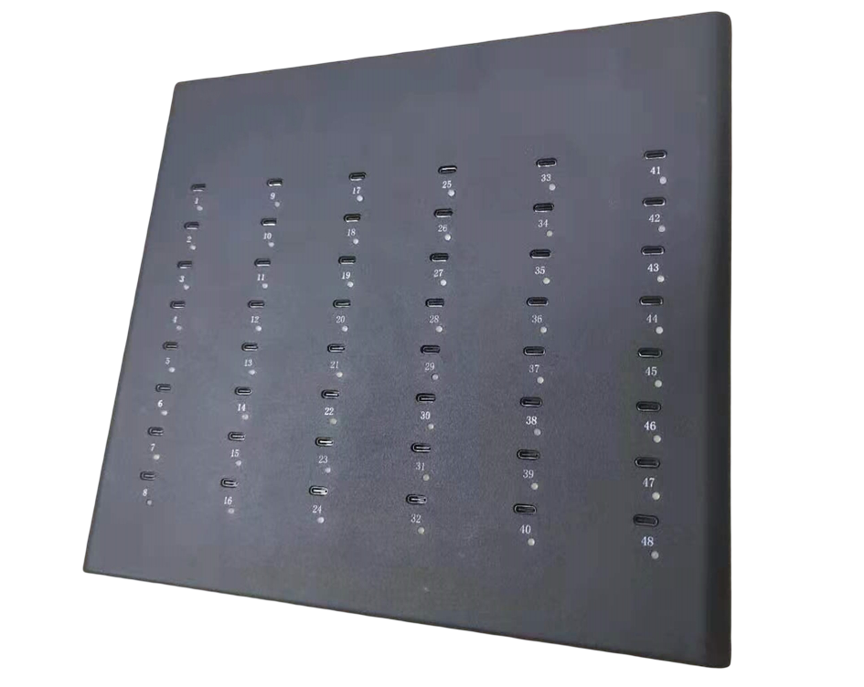
The 48 Ports USB C Charger is designed to address this challenge by providing 48 downstream USB Type-C Power Delivery ports in one centralized charging solution. Each port supports up to 20W, while the charger supports USB-C Power Delivery voltages ranging from 5V to 20V.
The charger is designed for tablets, smartphones, and other Type-C devices. The supplied specifications also identify Apple MacBooks, Chromebooks, and other USB-C-powered products as supported applications.
With its large port capacity and USB-C PD functionality, this charger can be useful wherever many compatible devices need to be charged and managed from a centralized location.
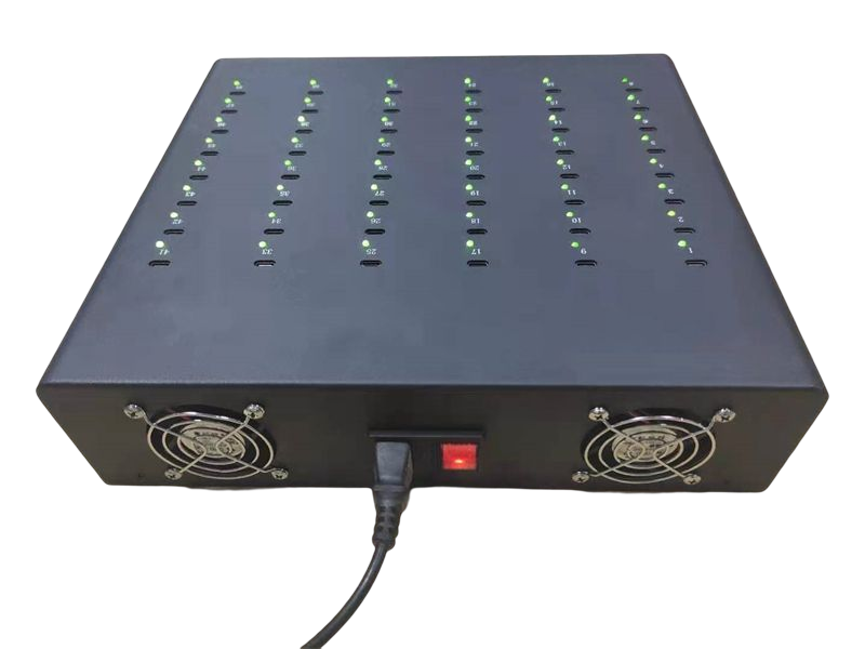
What Is a 48 Ports USB C Charger?
A 48 Ports USB C Charger is a high-capacity charging system equipped with 48 USB Type-C ports.
Unlike a conventional charger designed for one or two devices, a 48-port USB-C charging solution is intended for environments where many devices must be connected at the same time.
The product specifications include:
- 48 downstream USB Type-C PD ports
- Up to 20W per port
- Maximum stated 5V output of 4A
- USB-C Power Delivery support
- 5V–20V PD voltage range
- Support for tablets and smartphones
- Stated support for MacBooks and Chromebooks
- Centralized charging for multiple devices
This high-density configuration can simplify charging management in schools, offices, training facilities, and other shared environments.
Key Specifications
| Specification | Details |
| Product | 48 Ports USB C Charger |
| Number of Ports | 48 |
| Port Type | USB Type-C |
| Charging Protocol | USB-C Power Delivery |
| Maximum Output | Up to 20W per port |
| Maximum Current | 4A at 5V |
| PD Voltage Range | 5V–20V |
| Listed Profile | 5V / 4A |
| Listed Profile | 9V / 2.1A |
| Listed Profile | 12V / 1.7A |
| Supported Devices | Tablets, smartphones and other Type-C devices |
| Stated Laptop Compatibility | Apple MacBooks, Chromebooks and other USB-C products |
48 Downstream USB Type-C Power Delivery Ports
The main feature of this product is its 48 downstream USB Type-C Power Delivery ports.
This high port count makes it possible to establish a centralized charging station for a large collection of devices.
For example, a school may have dozens of tablets or Chromebooks that need to be charged at the end of every school day. An office may have employees who need a common location to charge smartphones and tablets. A training facility may use shared devices that need to be recharged between sessions.
Instead of using a separate charger for every device, a centralized 48-port system can provide one organized charging point.
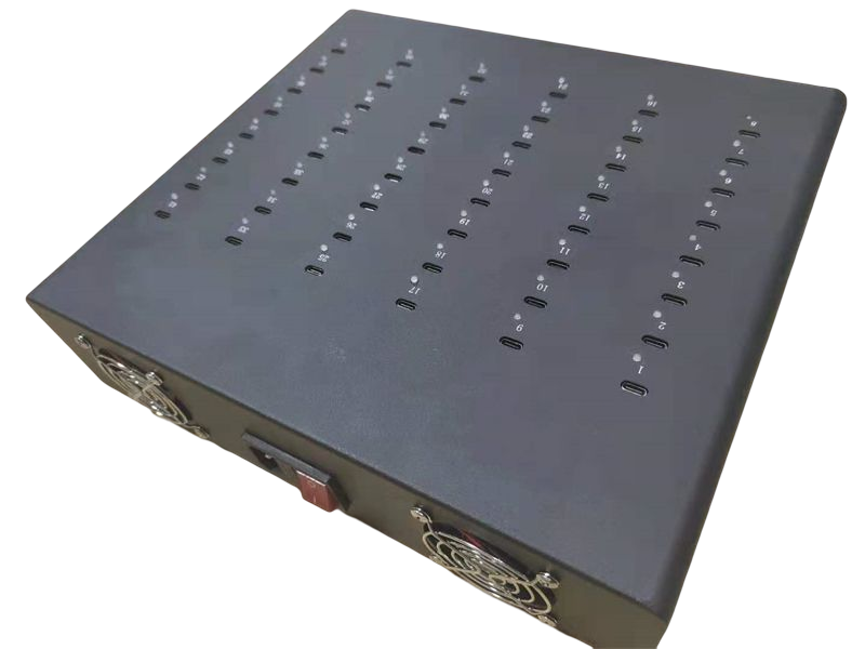
Up to 20W Per Port
Each Type-C port supports up to 20W according to the supplied specifications.
The stated 5V/4A profile demonstrates this maximum:
5V × 4A = 20W
This is a useful charging capability for many smartphones and tablets.
However, the 20W figure represents the maximum stated capability, not a guaranteed charging rate for every connected device.
Actual power delivery depends on several factors, including:
- Device charging requirements
- USB-C PD negotiation
- Battery condition
- Cable capability
- Device charging circuitry
- Supported charging profiles
- Overall system power availability
If a device only requests 10W, for example, it will not necessarily receive 20W simply because the charger supports up to 20W.
Understanding USB-C Power Delivery
USB-C describes the physical connector, while USB Power Delivery, or USB PD, is a power-management protocol that operates over compatible USB-C connections.
USB-C PD allows compatible devices and chargers to communicate and negotiate a supported power profile.
A simplified process is:
Charger → USB-C Cable → PD Negotiation → Suitable Power Profile → Device
This makes USB-C PD particularly useful for charging different categories of devices through one charging system.
5V to 20V USB-C PD Support
The charger supports USB-C Power Delivery voltages from 5V to 20V.
The supplied specifications provide the following examples:
| Voltage | Current | Approximate Power |
| 5V | 4A | 20W |
| 9V | 2.1A | 18.9W |
| 12V | 1.7A | 20.4W |
The relationship between voltage, current, and power is:
Power = Voltage × Current
For example:
9V × 2.1A = 18.9W
These are examples of supported output conditions. The charger does not necessarily deliver the same voltage and current to every device. The actual profile depends on the connected device and its USB-C PD requirements.
Why USB-C PD Is Important
Not all USB-C devices require the same amount of power.
A smartphone may require considerably less power than a tablet, while a Chromebook or MacBook may require more.
USB-C Power Delivery helps compatible devices negotiate a suitable charging profile.
This provides greater flexibility than a basic charger that provides only one fixed output level.
For organizations managing multiple device types, USB-C PD can make a centralized charging system more versatile.
Charging Up to 48 Devices
The charger is designed around 48 USB-C charging connections, making it suitable for large-scale device charging.
A typical charging workflow could be:
Collect Devices → Connect USB-C Cables → Charge → Check Devices → Disconnect → Return
This simple process can help organizations maintain a consistent device charging routine.
For example, students can return tablets after class, employees can place smartphones on a centralized charging station, or staff can connect shared devices after an event.
Charging Smartphones and Tablets
Smartphones and tablets are among the most common applications for USB-C charging.
Many modern mobile devices use USB-C connections and support various charging standards. The 48-port charger provides up to 20W per port according to the supplied specifications.
Actual charging performance depends on whether the individual device supports the relevant USB-C PD profiles.
For best results, users should check the manufacturer’s charging specifications for the devices being connected.
Can the Charger Charge 48 MacBooks?
The supplied product information states that the charger can charge 48 Apple MacBooks and other USB-C power-hungry products.
However, this claim should be considered alongside the 20W maximum per-port output.
Many MacBook models can require significantly more than 20W, especially when actively operating under load.
Therefore, the actual suitability of the charger depends on the specific MacBook model and its charging requirements.
Before using the charger as a primary MacBook charging solution, verify:
- MacBook model
- Required charging wattage
- USB-C charging compatibility
- Supported PD profiles
- Whether 20W is sufficient for the intended use
The same consideration applies to other USB-C laptops.
Can It Charge Chromebooks?
The supplied specifications also state that the charger can charge Chromebooks.
However, Chromebook models have different hardware and power requirements. Some may operate effectively within a 20W charging capability, while others may require higher charging power.
For a large Chromebook deployment, testing the actual models before full installation is recommended.
Understanding the 960W Calculation
Because the charger has 48 ports and each port supports up to 20W, it is possible to calculate:
48 × 20W = 960W
However, this is only the theoretical sum of the individual maximum port ratings.
The supplied product specifications do not state that the charger has a 960W total system power rating.
Therefore, the product should not be advertised as a confirmed 960W USB-C charger unless the manufacturer provides documentation confirming that system-level capacity.
Why This Distinction Matters
| Figure | Meaning |
| 20W per port | Maximum stated individual port capability |
| 48 ports | Number of available USB-C connections |
| 960W | Mathematical sum of 48 × 20W |
| Confirmed total system power | Not specified in supplied information |
Actual simultaneous output depends on the charger’s internal power architecture and connected device requirements.
Benefits of a 48-Port USB-C Charging Solution
High Port Capacity
With 48 USB-C ports, the charger is designed for environments with a large number of devices.
Centralized Charging
Multiple devices can be connected to one dedicated charging system.
USB-C Power Delivery
PD support provides negotiated power profiles for compatible devices.
Up to 20W Per Port
The stated 20W maximum is useful for many smartphones and tablets.
Reduced Adapter Clutter
A centralized charging solution can reduce the need for many individual charging adapters.
Easier Device Management
Organizations can establish a consistent charging area and workflow.
Scalable Charging
The large number of ports makes the product suitable for institutions and businesses managing numerous devices.
Applications of the 48 Ports USB C Charger
| Environment | Potential Application |
| Schools | Tablets and Chromebooks |
| Universities | Student and staff devices |
| Offices | Smartphones and tablets |
| Training Centers | Shared technology |
| Conference Rooms | Presentation devices |
| Libraries | Tablets and mobile devices |
| Events | Staff communication devices |
| IT Departments | Device charging and management |
| Shared Workspaces | Employee devices |
| Educational Facilities | Digital learning equipment |
48-Port USB-C Charger for Schools
Educational institutions often manage dozens of tablets, Chromebooks, and other mobile devices.
Without centralized charging, each device may require its own charger, cable, and wall outlet.
A 48-port charger can simplify the process by creating a dedicated charging station.
A typical routine might be:
Classroom Use → Device Return → Central Charging → Overnight Charging → Next-Day Distribution
This makes it easier for teachers and IT staff to maintain device readiness.
48-Port USB-C Charger for Offices
Modern offices increasingly use USB-C smartphones, tablets, laptops, and accessories.
A centralized charging station can be placed in:
- Meeting rooms
- Training rooms
- Employee areas
- IT departments
- Conference rooms
- Shared workspaces
Employees can charge compatible devices without occupying numerous wall outlets with individual adapters.
Comparing the 48-Port Charger With Individual Chargers
| Feature | 48-Port USB-C Charger | Individual Chargers |
| Charging Capacity | 48 ports | Usually 1–2 ports |
| Charging Setup | Centralized | Distributed |
| Device Management | Easier for large groups | More difficult |
| Cable Organization | Centralized | Can become cluttered |
| Shared Use | Excellent | Less convenient |
| USB-C PD | Supported | Depends on model |
| Scalability | High | Requires additional chargers |
The biggest advantage is centralized management rather than simply the number of charging ports.
How to Choose the Right USB-C Charger
Evaluate Device Count
A 48-port charger is most appropriate where many devices need regular charging.
Check USB-C Compatibility
Make sure the devices use USB-C charging and support appropriate PD profiles.
Check Power Requirements
Compare each device’s required charging wattage with the charger’s maximum 20W-per-port capability.
Check Laptop Requirements
For MacBooks, Chromebooks, and other USB-C laptops, verify the exact model and required charging power.
Consider Cable Quality
Use suitable USB-C cables designed for the intended power level.
Verify Total System Power
If many devices must operate at maximum charging power simultaneously, confirm the charger’s total system-level power specification.
Best Practices for Using the Charger
Use Compatible Cables
A suitable charger requires suitable cables. Damaged or inappropriate cables can affect charging performance.
Test Devices Before Deployment
Test representative smartphones, tablets, and laptops before connecting an entire fleet.
Organize Cables
A 48-device charging station can become difficult to manage without proper cable organization.
Do Not Assume Every Device Draws 20W
20W is the maximum stated output capability, not a guaranteed draw for every device.
Verify High-Power Devices
USB-C laptops should be evaluated individually because some require considerably more than 20W.
Do Not Treat 960W as a Confirmed System Rating
The 960W figure is a mathematical calculation and not a supplied total power specification.
Frequently Asked Questions
How many ports does the charger have?
The charger has 48 downstream USB Type-C Power Delivery ports.
What is the maximum output per port?
The maximum stated output is up to 20W per Type-C port.
Does it support USB-C Power Delivery?
Yes. The supplied specifications identify the ports as USB Type-C Power Delivery ports.
What voltage range does it support?
The charger supports USB-C PD voltages from 5V to 20V.
What output profiles are listed?
The supplied specifications include 5V/4A, 9V/2.1A, and 12V/1.7A.
Can it charge smartphones and tablets?
Yes. Smartphones and tablets are specifically included among the supported device types.
Can it charge 48 MacBooks?
The supplied product information states that it can charge 48 MacBooks, but actual charging suitability depends on the specific MacBook models because the charger supports up to 20W per port.
Can it charge Chromebooks?
Yes, Chromebooks are identified in the supplied specifications. Exact charging performance depends on the Chromebook model.
Does every port provide 20W simultaneously?
The specification states up to 20W per port, but a total system-level power rating was not supplied. Therefore, simultaneous maximum output across all 48 ports should not be assumed.
Is this a 960W charger?
Not based on the supplied specifications. 960W is the theoretical result of 48 × 20W, not a confirmed total system rating.
What determines actual charging performance?
Charging performance depends on the connected device, USB-C PD negotiation, cable, battery condition, device charging circuitry, and available system power.
Conclusion
The 48 Ports USB C Charger is designed to provide a centralized, high-capacity charging solution for environments managing many USB-C devices.
With 48 downstream USB Type-C Power Delivery ports, support for 5V–20V USB-C PD voltages, and up to 20W per port, the charger can support compatible smartphones, tablets, and other Type-C devices from one centralized charging system.
Its large port capacity makes it suitable for schools, universities, offices, training centers, conference rooms, libraries, events, IT departments, and shared workspaces.
The USB-C Power Delivery capability provides flexibility by allowing compatible devices to negotiate supported charging profiles. The listed profiles include 5V/4A, 9V/2.1A, and 12V/1.7A.
For MacBooks, Chromebooks, and other power-hungry USB-C laptops, users should verify the exact model and charging requirements because 20W per port may not be sufficient for every laptop, particularly during active use.
It is also important to distinguish between individual port capability and system-level power. While 48 ports multiplied by 20W produces a theoretical 960W, the supplied specifications do not confirm a 960W total system power rating.
When properly matched with the intended devices, cables, and charging requirements, the 48 Ports USB C Charger provides a scalable and organized approach to centralized multi-device charging.